Originally posted 2019, updated July 2026
There’s a huge variety of tools for working with clay, but you don’t need everything out there, especially if you are just starting out. There are a few basics that will do 95% or more of studio tasks, and these are the same tools that you’ll use over and over again as you continue to work with clay.
In general, it’s best to pay a bit more for quality, well-built tools that will stand the test of time. But lower-cost options can be fine too, especially if you are just trying pottery for the first time or are on a budget.
This post will cover a tool kit, 3 additional tools, one apron, and one tool bin recommended for beginners. Here’s a quick overview of the recommendations:
Kemper "Original" 8-piece Pottery Tool Kit, $16-$21: Shop at Amazon | Shop at Blick
Kemper F97 “hard” fettling knife, $7-$16: Shop at Amazon | Shop at Blick
Mudtools Shredder, $12.50–$16: Shop at Amazon | Shop at Blick
Kemper serrated rib, $3-$10: Shop at Amazon | Shop at Blick
Split-leg apron by Under Ny Sky, $35: Shop at Amazon
10.5” Translucent Art Bin, $5.50–$12: Shop at Amazon | Shop at Blick
Table of Contents
Basic Pottery Tool Kit
Fettling Knives
Clay Shredders / Rasps
Scoring tools
Aprons
Tool Boxes and Bags
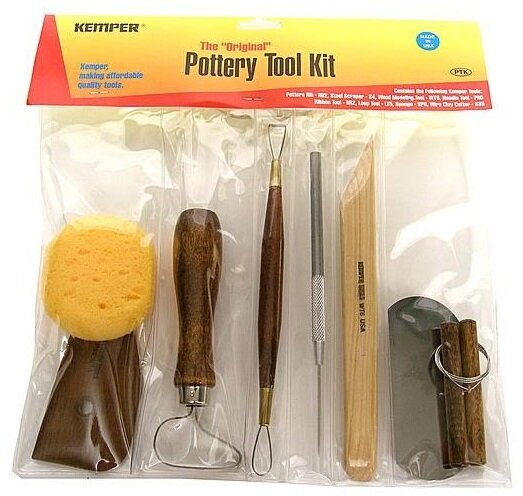
Kemper Pottery Tool Kit
The Kemper "Original" 8-piece Pottery Tool Kit includes the most-used tools for wheel throwing and hand building. All these tools are must haves.
The kit includes:
Wooden Rib
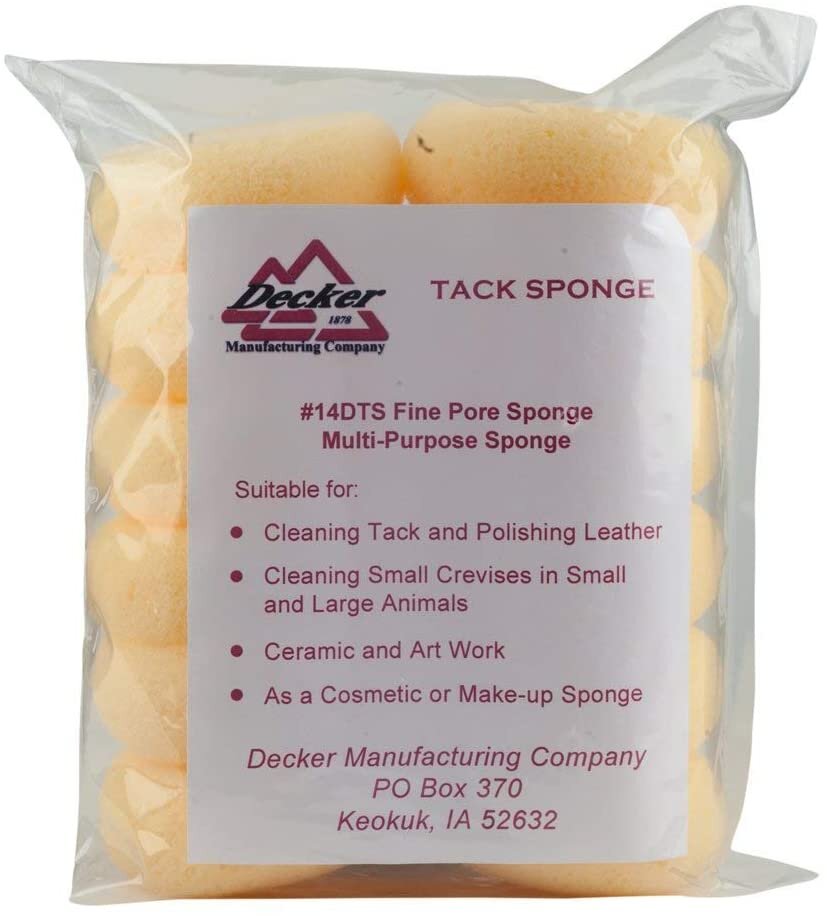
Sponge
Loop tool
Ribbon tool
Needle tool
Wooden knife or modeling tool
Metal Rib
Wire tool
At $21, that’s a great deal! This Kemper Original Tool Kit does cost a bit more than other kits, but that’s because it is made out of higher quality wood and metal. That means the loop tools will stay sharper longer, the wooden knife won’t warp, and the wooden rib will hold up for years of use. It’s worth the extra few bucks. Look for the dark brown wood aka hardwood, and you’ll know that you will soon be working with quality Kemper tools.
Kemper Pottery Tool Kit
$16–21 (often cheaper at Blick)
Budget Tool Kits
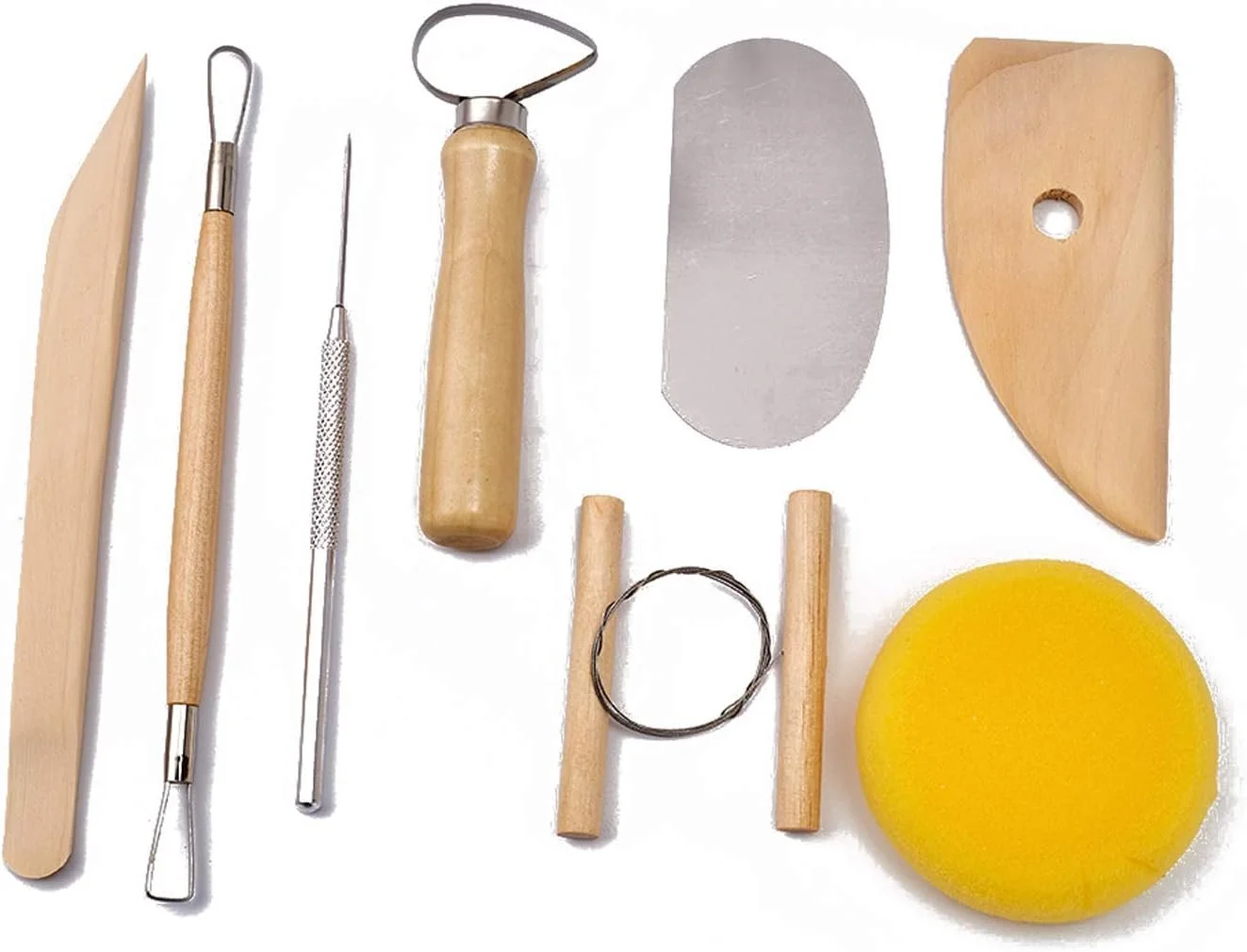
Economy 8 piece tool kit
If you are just starting out, there are options to get a tool kit for less than $10. The metal in the loop tools is thinner and the wood is “soft” on these kits, so it just doesn’t hold up under the wet, heavy use on a pottery wheel. These tools won’t last as long as the Kemper kit, but they’ll definitely last long enough to get you started. And then as they wear out, you can replace them with higher quality tools if you want to get serious.
Budget tool kit
$8 and up
Sharpening Tools etc
A final note on all tool kits: Students often ask me about sharpening the loop tools. Yes, you can sharpen these tools with a whetstone or bench grinder. But the metal, even on the Kemper kits, is not designed for sharpening over and over. Expect to be able to sharpen a loop tool 2 or maybe 3 times before the metal gets so thin that it’s unusable. At that point, it’s time to buy a new loop tool. A sharp, relatively new loop tool will result in faster and more even trimming. There are also thicker options that may be of more interest.
Check out our complete guide to loop tools here.
Fettling Knife
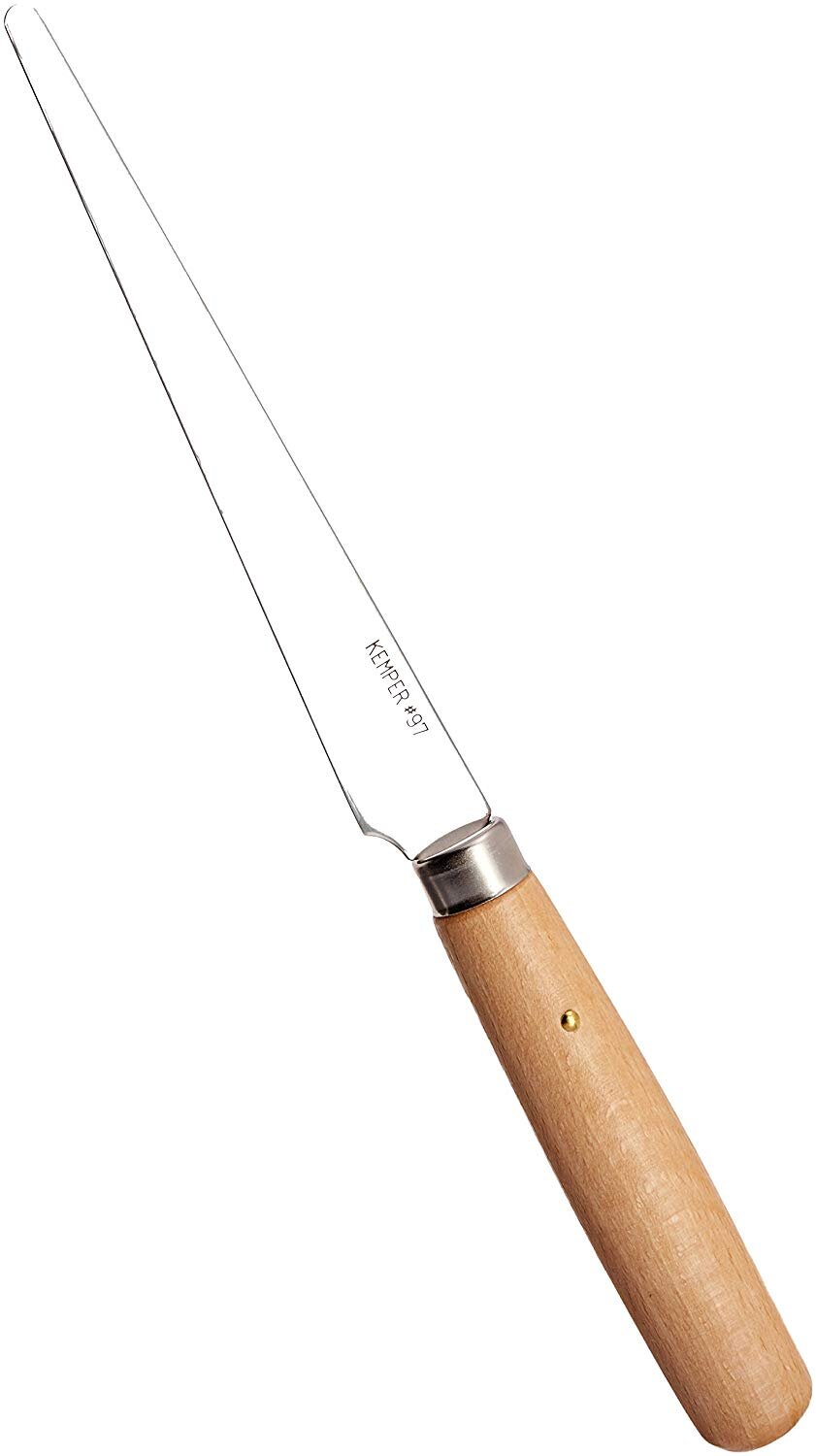
Kemper Fettling Knife
A fettling knife is a basic steel knife that is not too sharp, but not exactly dull either. The name comes from the word fettle, which means to clean up rough ends of cast metal or clay.
A fettling knife can be used to cut clay evenly and cleanly, and is a superior option to other knives when working with clay. Some use box knives or X-acto knives, but those dull quickly and are prone to rusting.
Like the tool kit, it pays to get a higher quality knife. The Kemper knives recommended here have better quality steel that isn’t likely to warp or bend under normal use, a better handle, and most importantly, better glue that will keep these two pieces attached. The cheaper knives tend to fall apart unless you are very careful with them.
The Kemper F97 “hard” fettling knife has a 4.5” steel blade, a 3.5” handle and harder steel that is less likely to bend. The Kemper F96 “soft” fettling knife has the same size and shape as the F97, but is more likely to bend under normal use.
An interesting option is the Xiem Tools Pottery Knife. A bit smaller than a fettling knife, the Xiem knife is 6” long and has the feel of a small kitchen paring knife and usually costs around $9.
Kemper F97 Hard Fettling Knife
$7–$16 (usually much cheaper at Blick)
Clay Shredder or Rasp
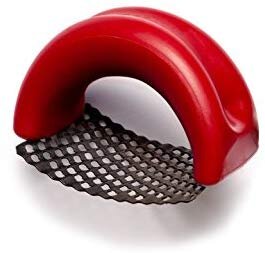
The Mudtools Clay Shredder
A clay shredder or rasp is an awesome tool. Once you have one, you’ll find a bunch of uses for it, including trimming, evening out slab work, cleaning up edges, or adding a bevel. I remember one of my early instructor’s calling these tools “the sculptor’s friend.” They work great on pots too.
There are a variety of options, but our favorite is the Mudtools Shredder. It’s got a comfortable, curved handle that doesn’t take up a lot of room in your toolbox, and the shredder blade is easily removed when you need to replace it. It’s also the easiest style of shaver to clean. If it’s easy to clean, you’ll reach for it first.
Mudtool Shredder
Various colors
$12.50–$16 (usually a bit cheaper at Blick)
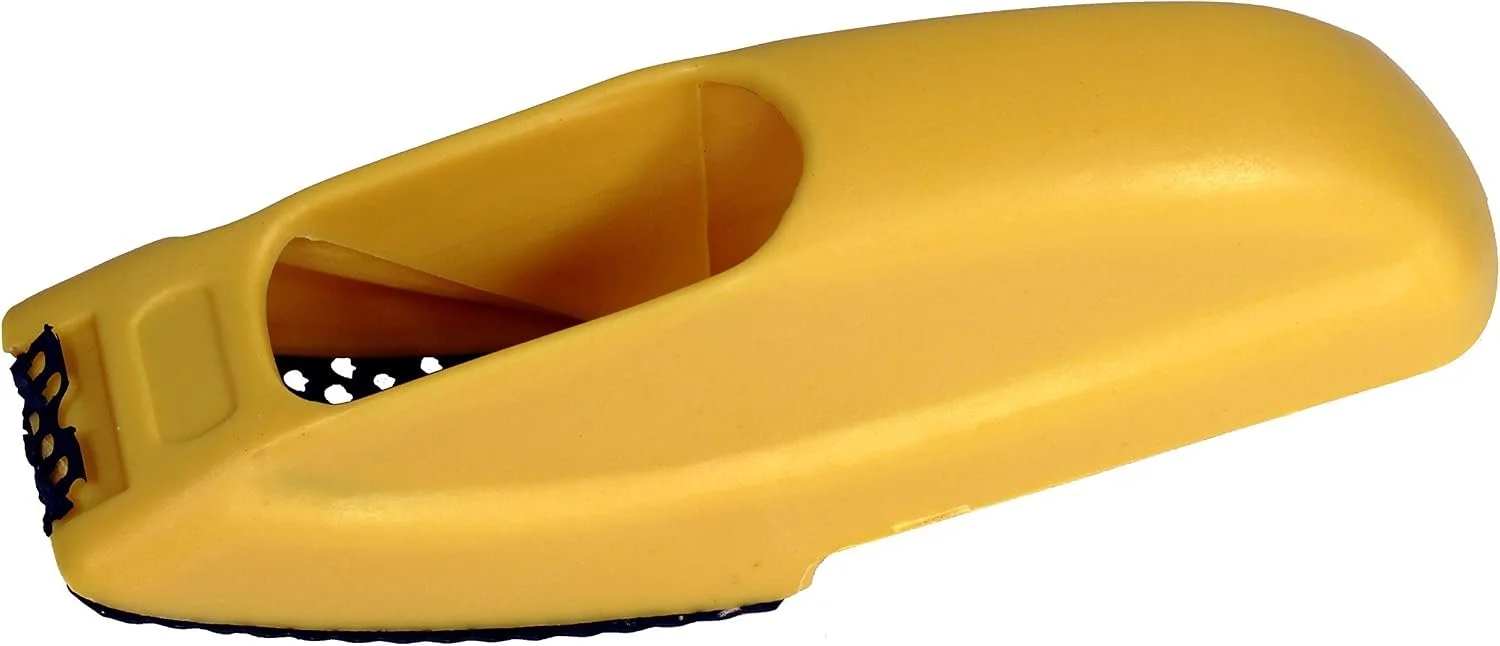
The Creative Hobbies Shredder
For a few bucks less, you can get a similar shredder from Creative Hobbies. The only drawback is that it has a larger handle and the blade is a bit enclosed, making it harder to clean. Otherwise, it’s a great option.
Creative Hobbies also has a longer handle version and a flat version, which are all under $10 and can be found at the shopping link.
Creative Hobbies Shredder
$9
Scoring Tool
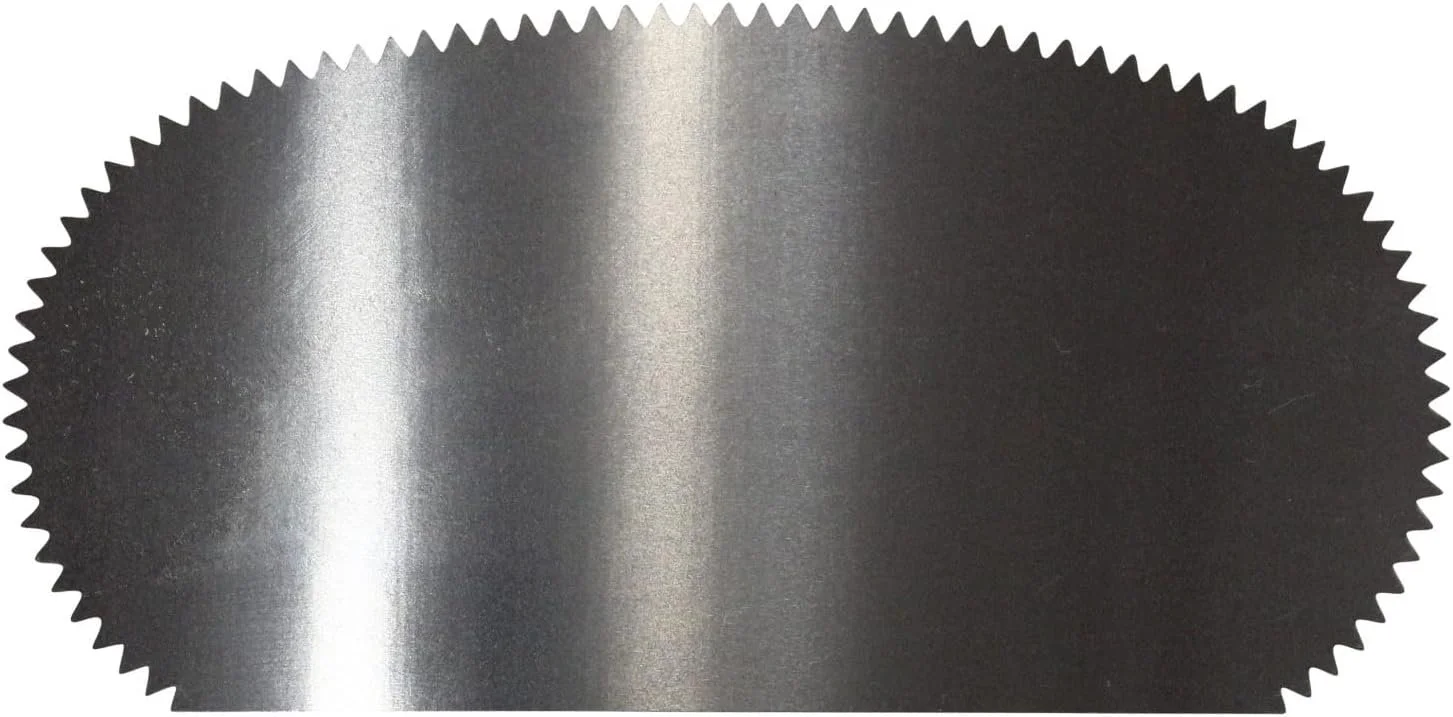
A serrated rib is one of the most useful tools in a ceramics studio.
These tools go by a variety of names including serrated rib or scraper, and scoring tool. If you want to go budget, find an old metal fork and it will do the job in a rough kind of way. But it can be nice to have a dedicated tool for this job and I use the serrated ribs over and over until they are dull, and then I buy a new one.
The best option is the Kemper serrated rib, which is available for about $3 at Blick and other sites. It has a small, compact seration that works great for joining clay with the score and slip method. The curve edges allow you to maneuver the tool any way you want to go, allowing you to quickly and effectively add scoring marks to your projects.
Kemper Serrated Rib
$3-$9 (usually much cheaper at Blick)
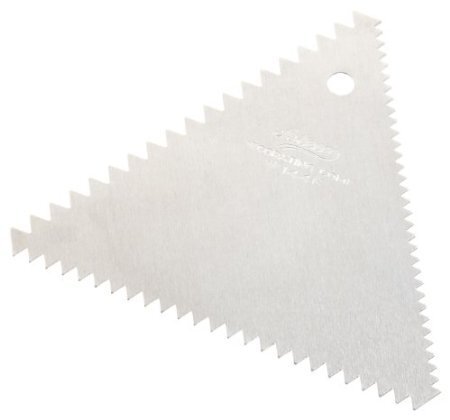
The Ateco Decorating Comb. Good for frosting and ceramics.
Another great option is the Ateco triangular decorating comb. It has bigger grooves, which can be great for adding design texture, or scoring the back of tiles.
Ateco Decorating Comb
$6
Apron
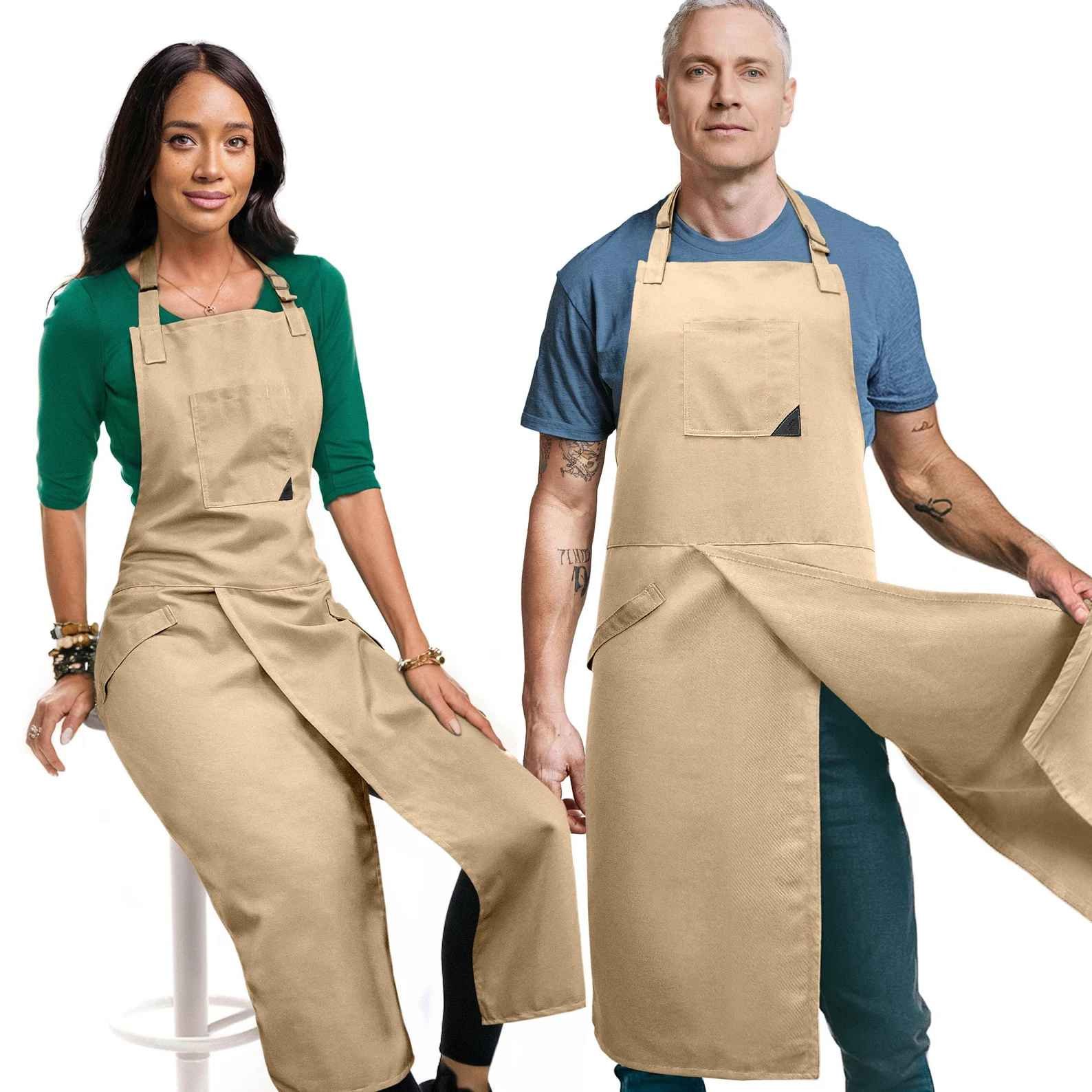
Split-leg cotton apron from Black Stallion
The Under NY Sky Pottery Apron is a great option for working with clay whether it is handbuilding or on the pottery wheel. It’s 43 inches long, has overlapping fabric at the legs, and an adjustable neck strap. It is made from an 82% cotton / 18” poly blend and is machine washable.
Under NY Sky Pottery Apron
Available in eight colors
$35
For more, visit our full review of pottery and ceramic aprons.
Tool Box
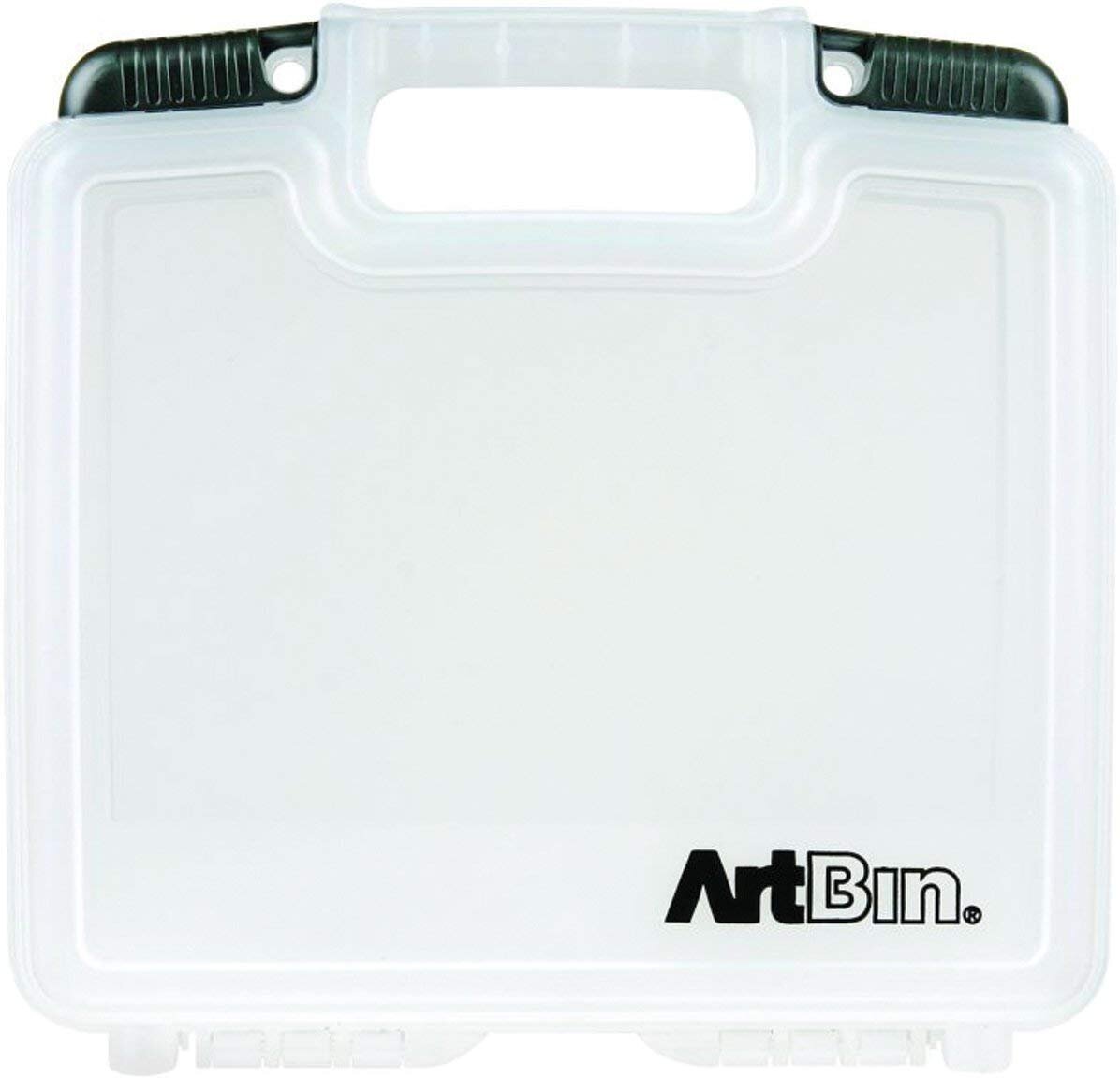
Once you have a variety of tools, a box or bin will help keep things organized. A large yogurt container or small bag with air and drainage holes can work, but my favorite option is a 10.5” Translucent Art Bin.
This bin is big enough to hold a basic kit of tools, but not so big that it’s hard to store. When closed it can be stored horizontally or vertically and if it gets dirty, the whole thing can be cleaned and rinsed. There’s also a variety of sizes, so you can pick the one that works best for you. If you’d like, you can also easily drill holes in this plastic for a bit of air circulation if you have to put your tools away wet.
ArtBin
Note: usually cheaper at Blick
10.5” $5.50–$11
12” $10.50–$16
14” $16.25–$27
16” $27
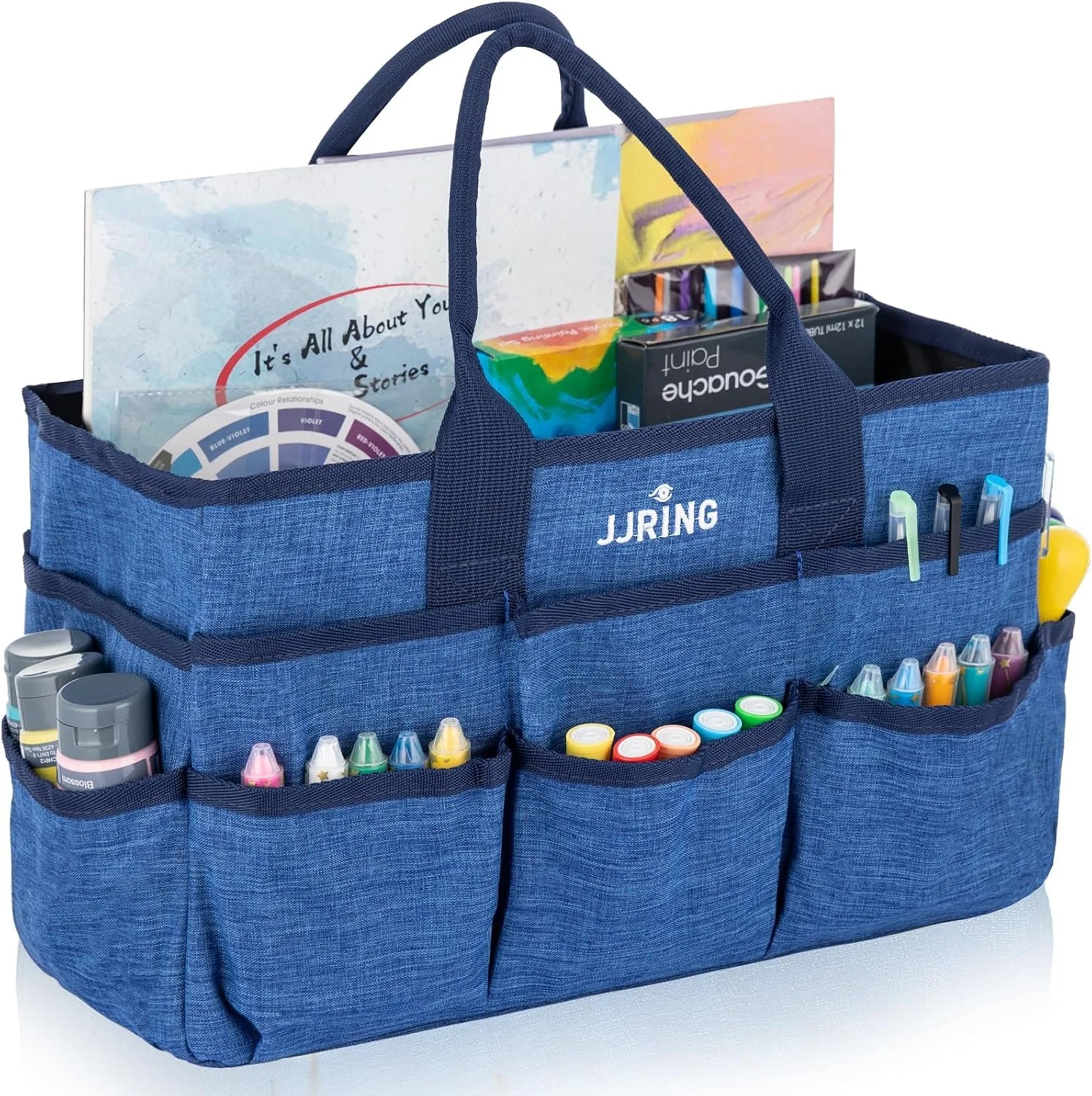
The JJring Artist Tote Bag
If you prefer an upright canvas tote, the JJring Nylon Artist Tote bag is a great option that comes in numerous different colors. For $20, it’s got a lot of features including 16 external pockets for small tools and a larger inner chamber.
Whichever box or bag option you decide on, keep in mind that open storage will allow your tools to dry and stay rust free whereas tools stored in boxes need to be dried first.
JJRing Artist Tote
Numerous color options
$20
This post has covered a number of basic tools that are essential for getting started in a pottery or ceramic studio.
What tools are your absolute essentials in the studio? Let us know in the comments.
Recent posts: