The Best Cleanup Tools for Ceramic and Art Studios

The Carlisle Mop Bucket, one of two top picks for a studio mop bucket.

The Carlisle Mop Bucket, one of two top picks for a studio mop bucket.

Originally Posted 2020. Latest update August 2026

In a studio, it’s important to have the right clean up tools to keep things neat, organized, and safe. This is especially true in ceramic and sculpture studios, where dust can be an issue. And while any sort of clean up tool will be better than nothing, high-quality, well-designed tools do stand the test of time and most importantly, really work.

This post is an overview of quality clean-up tools that get the job done. These are the exact tools that I use in my studio.


Table of Contents

  • Dust Pan and Bench Brush

  • Long Handle Dust Pans / Lobby Pans

  • Brooms

  • Sweeping Compound

  • Mop and Bucket: Rubbermaid Commercial and Carlisle

  • Large Yellow Sponges

  • HEPA Vacuum

  • Walk Behind Floor Scrubbers

  • Clean-Up Recommendations

  • Summary


Dust Pan and Bench Brush/Duster

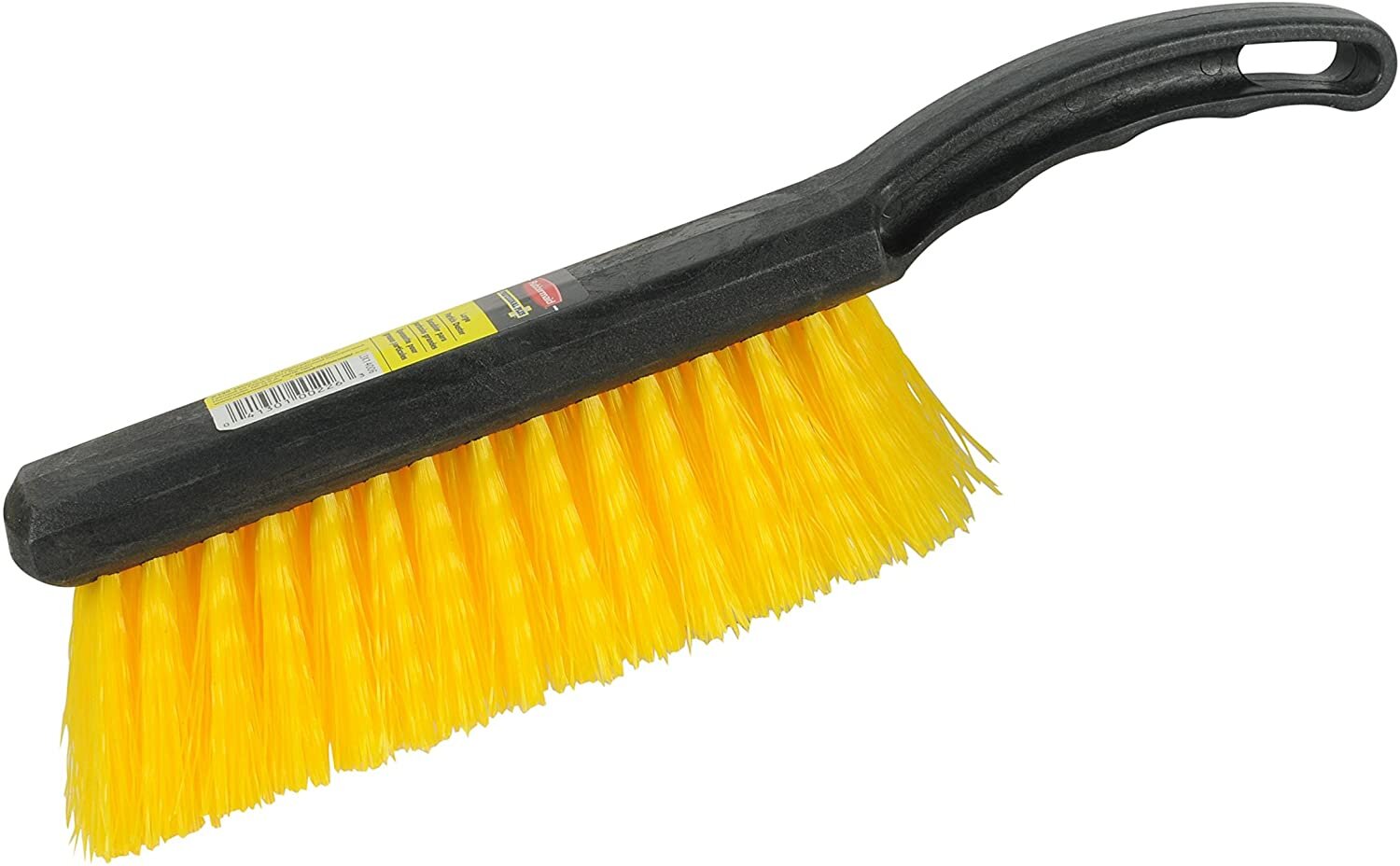
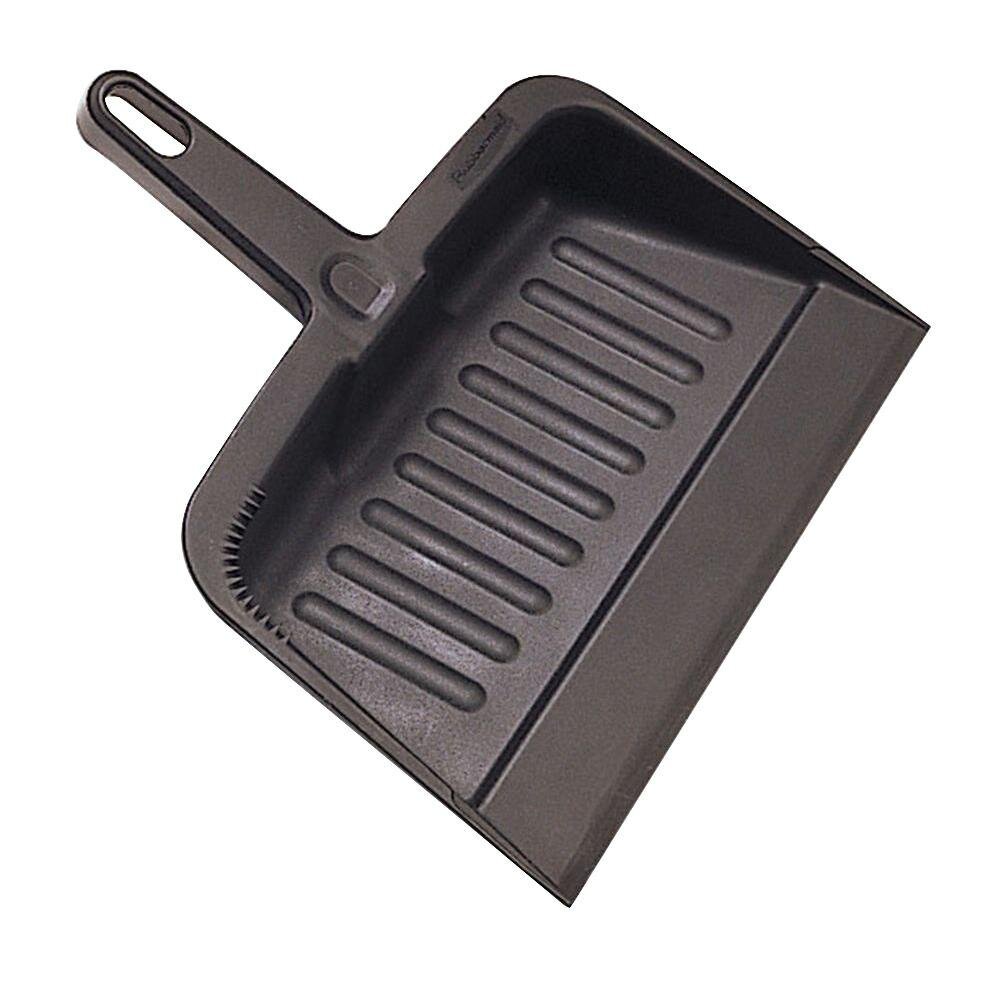
The Rubbermaid Commercial Dust Pan and Bench Brush/Duster are a great combo. The pan is sturdy, functional, and hangs nicely on the wall. It is 12.25” wide and about 3 inches deep at the tallest point.

The bench brush is where you really step up your cleaning game: It’s a heavy-duty brush with relatively soft bristles that clean evenly and completely, and can be washed if needed.

This combo is great for cleaning dirty tabletops, sweeping up larger chunks of clay, sawdust, brushing off a kiln shelf, or for light-duty floor cleaning.

When compared to other dust pan and brush combos, there is simply no comparison. These are long-lasting, functional upgrades to your studio. They will last years, if not decades, under normal use.

Rubbermaid Commercial Dust Pan
$8 - $10

Rubbermaid Bench Brush
$10.29

Long Handle Dust Pans / Lobby Pans

A long handle dust pan and broom are your other tool for dealing with chunks and dust. They really save your back and make cleanup that much easier. And in a shared studio space such as a community studio, having a long-handled dust pan will greatly increase the likelihood of studio members doing their part to clean up.


Oxo Good Grips Sweeping Sets

The slightly larger Oxo Good Grips Sweep Set with the extendable handle broom.

The slightly larger Oxo Good Grips Sweep Set with the extendable handle broom.

The Oxo Good Grips Sweeping Sets are my favorite long-handle dust pans and broom combos. Thoughtfully designed and sturdy, it’s what I currently use in my studio and I even purchased the smaller combo for use at home.

The larger “extendable handle” set has a 10.8” wide dust pan that is 3.5 inches tall. The dust pan handle is 35” high, and the broom handle can be extended from 35” to 53” inches. It retails for $46

The smaller set has a 9.5 inch wide dust pan that is 3 inches tall, and the dust pan and broom are around 35 inches tall or 38.5 inches when hanging upright. It retails for $32.

Both sets are made from the same sturdy plastic and design, including a swiveling dust pan that can lock in place. The thick rubber “comb” on the dust pan help clean the bristles of the broom. This is especially good for removing hair and dust balls that stick to the broom.

The dust pan handle also contains a handy snap, so the set clicks together for easy storage both upright or hanging. In the hanging mode, the head of the broom can be easily tucked into the dust pan. It’s an all-around great combo.

Oxo Good Grips Sweep Set
Small: $32
Large: $46


Rubbermaid Commercial Long Handled Lobby Dust Pan

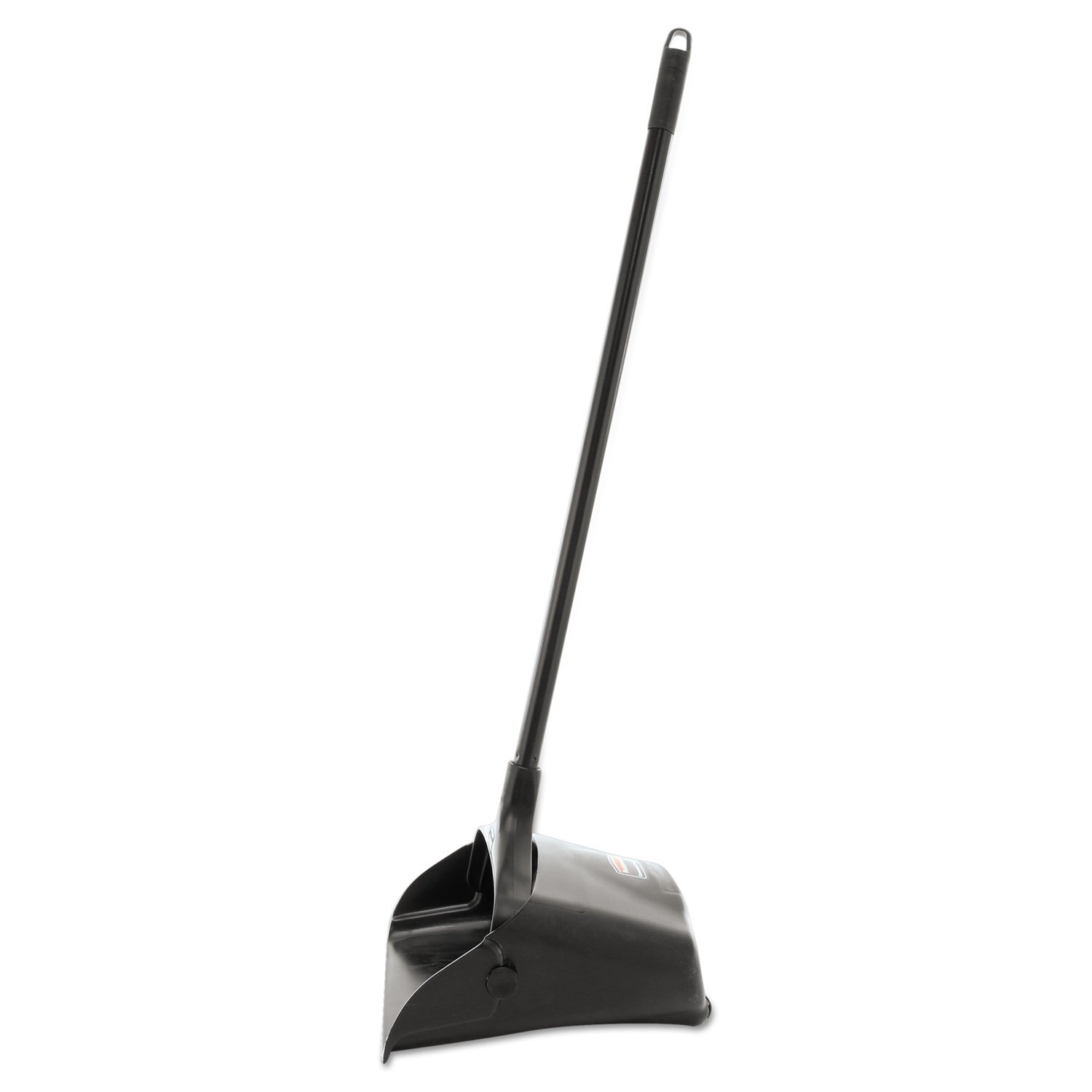
Another great long-handle dust pan option is the Rubbermaid Commercial Lobby Dust Pan. It has a much larger dust pan than the Oxo version, making it perfect for academic studios and larger spaces, such as community or garage studios. It is heavy duty, holds a large amount of dust and trash, and the pan swivels for picking up and dumpling. For storage, it will sit on the ground or can be hung up by the handle hook.
Rubbermaid Commercial Long Handle Lobby Dust Pan
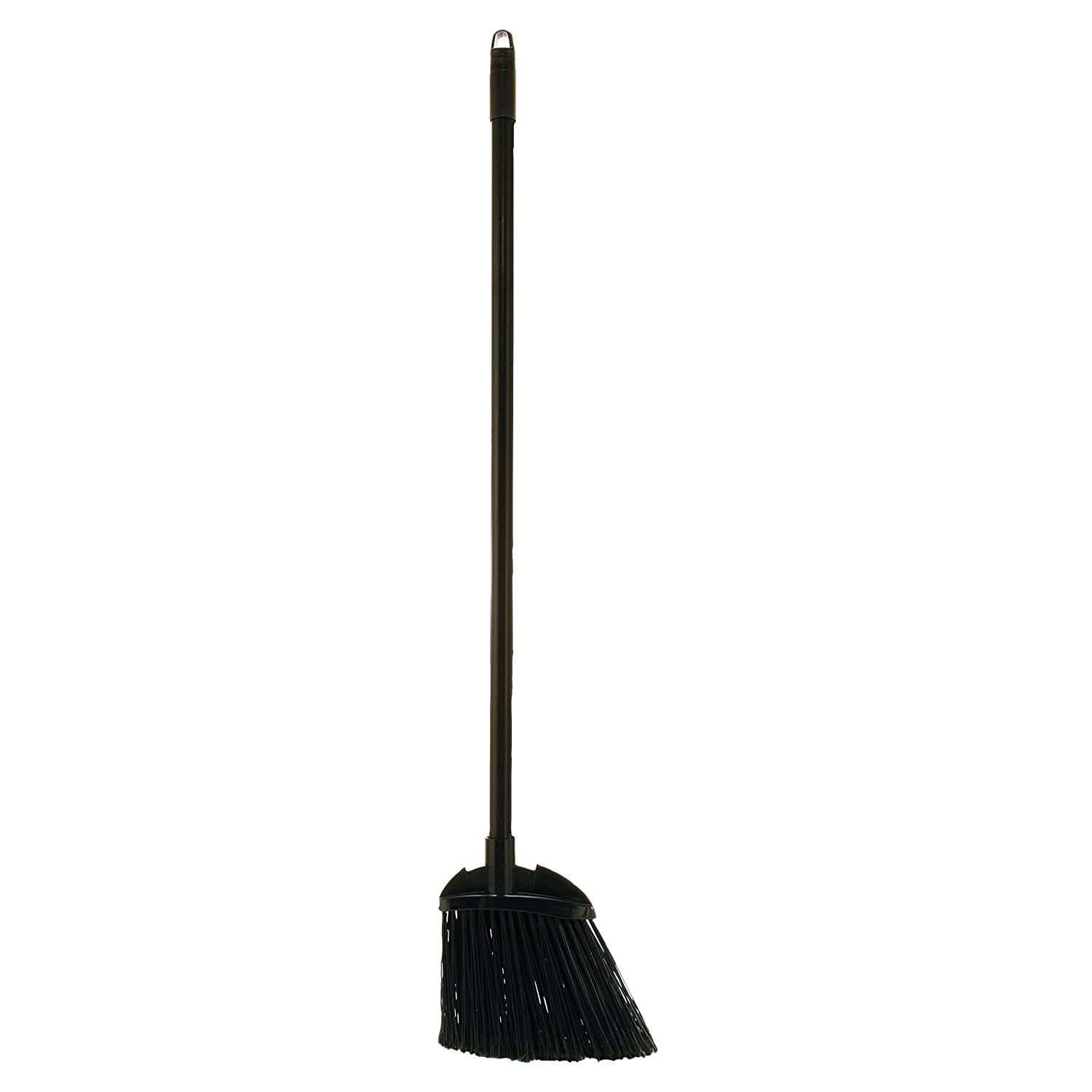
Rubbermaid Commercial Long Handle Lobby Dust Pan

Rubbermaid Commercial Lobby Broom. Just 7.5” wide, so a standard broom may be better for studios.

Rubbermaid Commercial Lobby Broom. Just 7.5” wide, so a standard broom may be better for studios.

This dust pan pairs well with either a standard angle broom or the small lobby broom. The lobby broom is 7.5” wide, putting it on the smaller side if your goal is to clean up dust. I generally prefer a standard angle broom (see below) but the lobby broom does have a shorter handle, hangs up easily, and is good for sweeping larger chunks into the dust pan.

My only complaint about this dust pan is it doesn’t have a clip to hold a broom in place. But like most other Rubbermaid Commercial products, this is a well-built tool that will last forever.

Rubbermaid Lobby Dust Pan
$32


Brooms
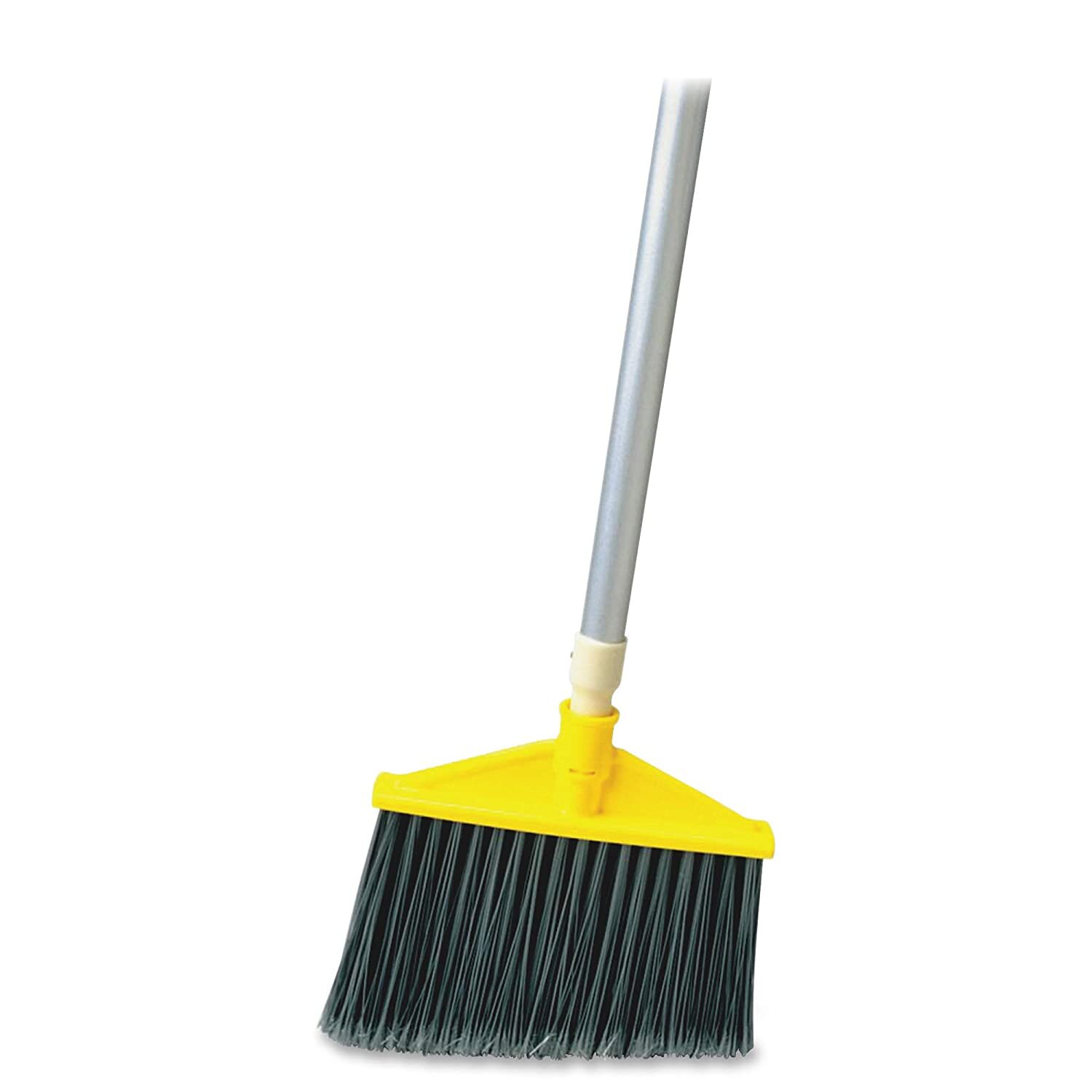
The Rubbermaid 10.5” Angle Broom.

The Rubbermaid 10.5” Angle Broom.

Angle Broom

If you are working in a studio that generates dust, such as a ceramic studio or woodshop, you need to be mindful when sweeping and generating any sort of dust. Sweeping compound can help trap dust at the ground level before it gets in the air, but another way to avoid creating airborne dust is to sweep gently with a soft-bristled broom. Move dirt deliberately into piles, then get it into your dust pan and you should be fine.

The best all-purpose broom for a studio is a simple angle broom. My favorite is the Rubbermaid Commercial 10.5” angle broom. It’s a quality broom and if you ever do actually wear out the brush head, you can buy replacement heads.

Rubbermaid Commercial Angle Broom
$13


Push Broom
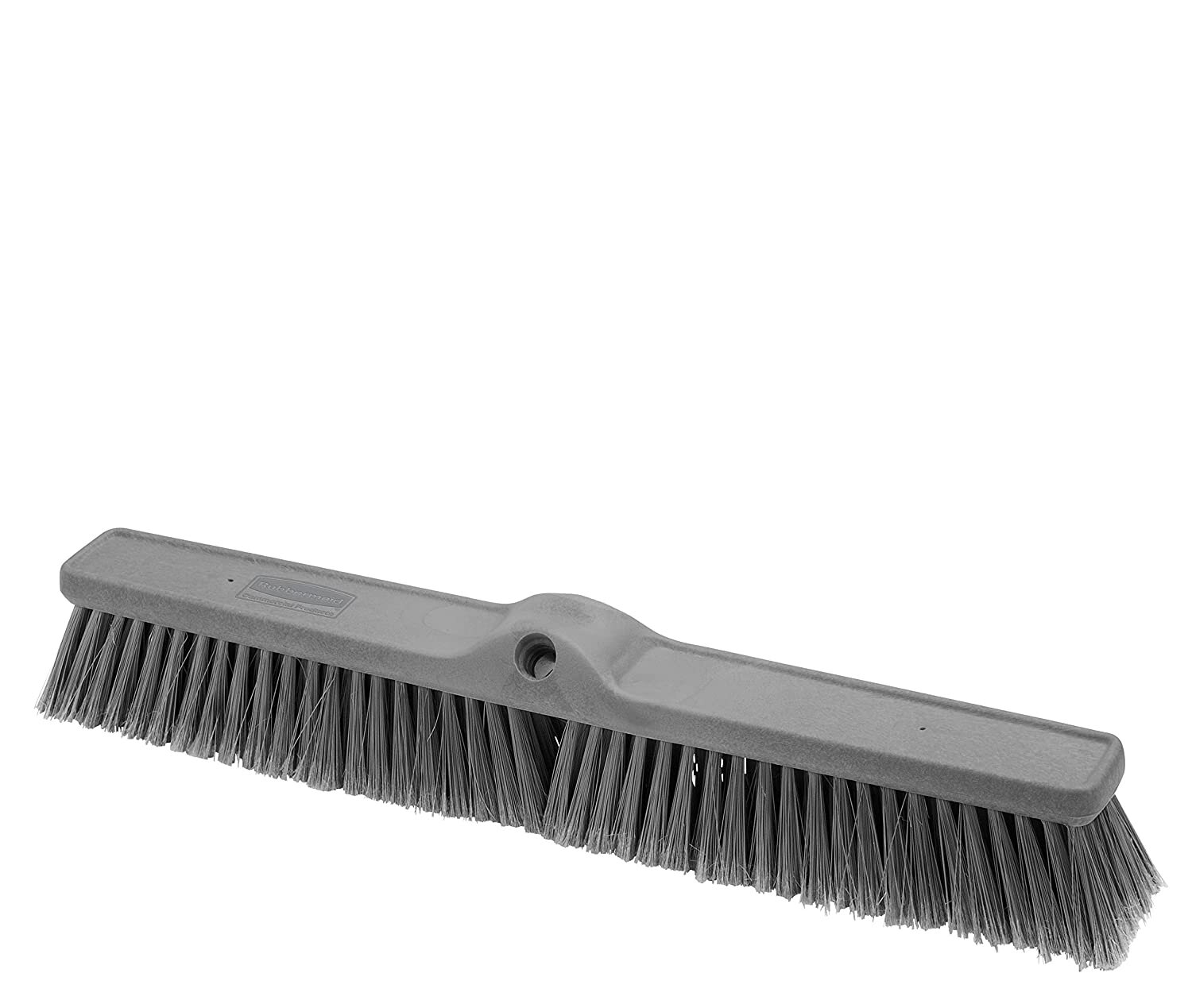
Rubbermaid Commercial Smooth Surface Fine Duty brush head for a push broom.

Rubbermaid Commercial Smooth Surface Fine Duty brush head for a push broom.

For larger rooms, you may want to also have a push broom or two. These are especially great for larger academic studios, outdoor concrete pads, or hallways. It’s harder to maneuver these around table legs and chairs.

As mentioned above, the way to go with possibly dusty floors is to get the softest bristles possible. For a push broom, the Rubbermaid Commercial Smooth Surface Fine Duty brush head is the way to go. Pair it with a broom handle, and you’ll have a great broom.

There are also a variety of generic options for $18-$25 linked here:


Sweeping Compound
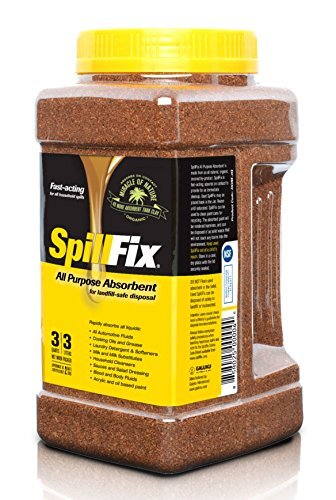
SpillFix all purpose absorbent / sweeping compound.

SpillFix all purpose absorbent / sweeping compound is one option among many for a sweeping compound.

Anytime you are sweeping a dry or dusty floor, sweeping compound will greatly reduce or eliminate any potential airborne dust and help you grab all the dust and debris. Sweeping compound is typically some form of oily sawdust. It is tacky enough to grab dust and dirt, but dry enough that there is no trace of oil left on the floor. Some sweeping compounds also double as absorbents for oil or other materials.

The best way to use sweeping compound is to fill a plastic cup with a bit of sweeping compound and fling it in a low, horizontal motion in order to distribute it evenly. Then, sweep as normal.

For busy studios, sweeping compound can be ordered in large bags or drums from most hardware stores or warehouse supply stores. Sweeping compound will dry out over time, so it’s best to order what you can use in 6 to 12 months. For smaller studios or if you are trying sweeping compound for the first time, the smallish jar of SpillFix linked below is a great way to test it out. Once you start using sweeping compound, you’ll wonder how you ever swept a studio floor without it.


Mop and Bucket
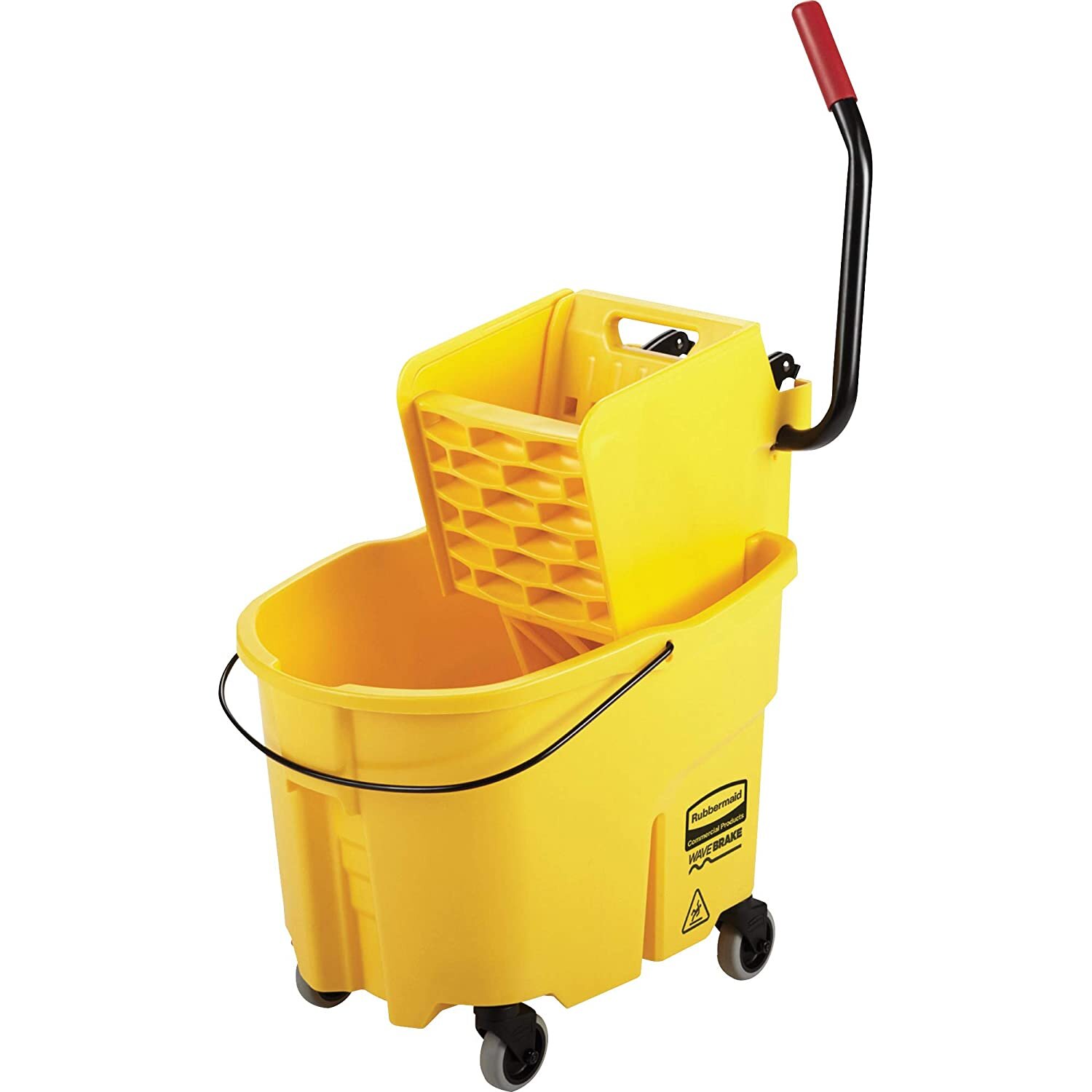
Rubbermaid WaveBreak Wringer Bucket

Rubbermaid WaveBreak Wringer Bucket

A mop and wringer bucket is an important part of any studio clean-up operation, especially if you are working with clay and want to avoid dust. The best wringer bucket is the Rubbermaid Commercial Wavebreak Bucket Wringer Set and for the mop, my preference is the Rubbermaid Side Gate Mop Handle with a blue mop head.
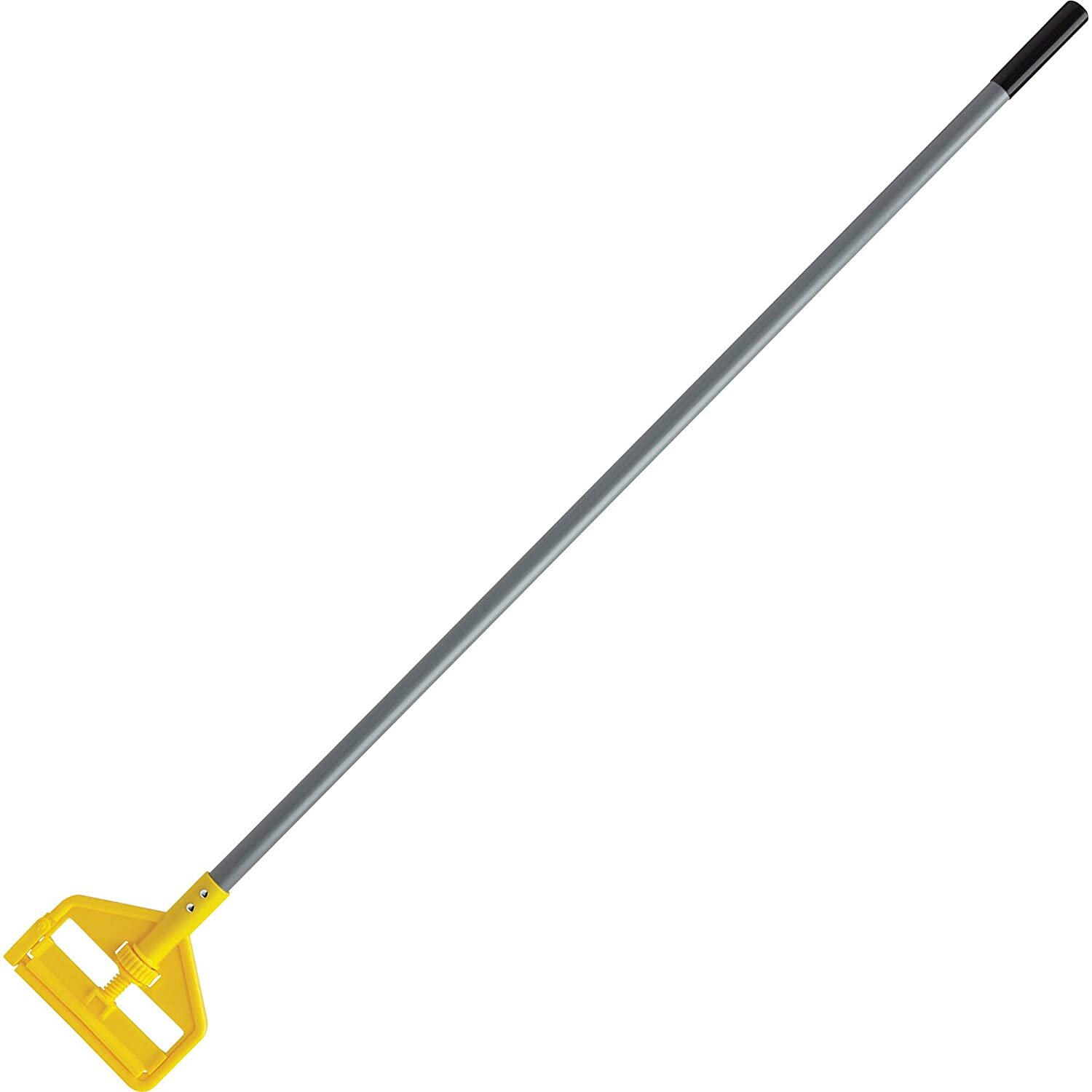
Rubbermaid Side Gate Mop Handle

Rubbermaid Side Gate Mop Handle

I know this post is starting to seem like it’s all Rubbermaid Commercial products, but I have used and can vouch for the quality, durability, and design of these products. (For a review of a Rubbermaid product I don’t endorse, read about 10 gallon buckets here) The good news on wringer buckets is there are a variety of side-press wringer buckets that are all about the same price and are highly reviewed, including Carslisle and Amazon Basics.

The main additional feature of the Rubbermaid is the “WaveBreak” system, essentially two flanges inside the bucket to help control the water when you are rolling the bucket. For me, the WaveBreak doesn’t add much, but I do appreciate the quality of the caster wheels and the wringer system on the Rubbermaid.

For a mop head, I find that the blue headband-style mop heads hold the longest. I prefer the standard 20” length, but there are options out there.

Rubbermaid Commercial Wringer
26 quart: $93
31 quart: $68
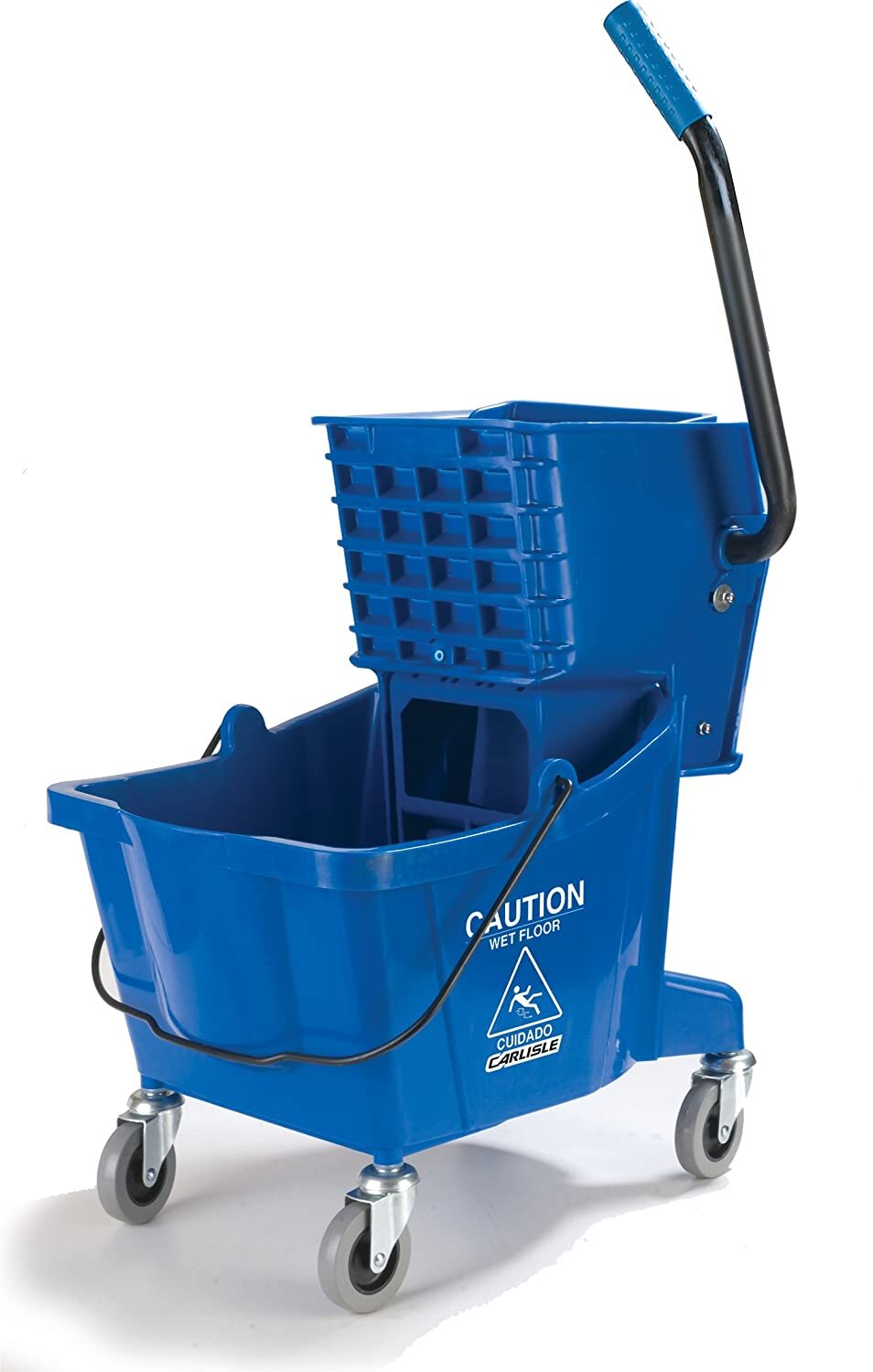

The Carlisle Mop Bucket is available in a 35 and 26 quart size.

The Carlisle Mop Bucket is available in a 35 and 26 quart size.

Carlisle Mop Buckets

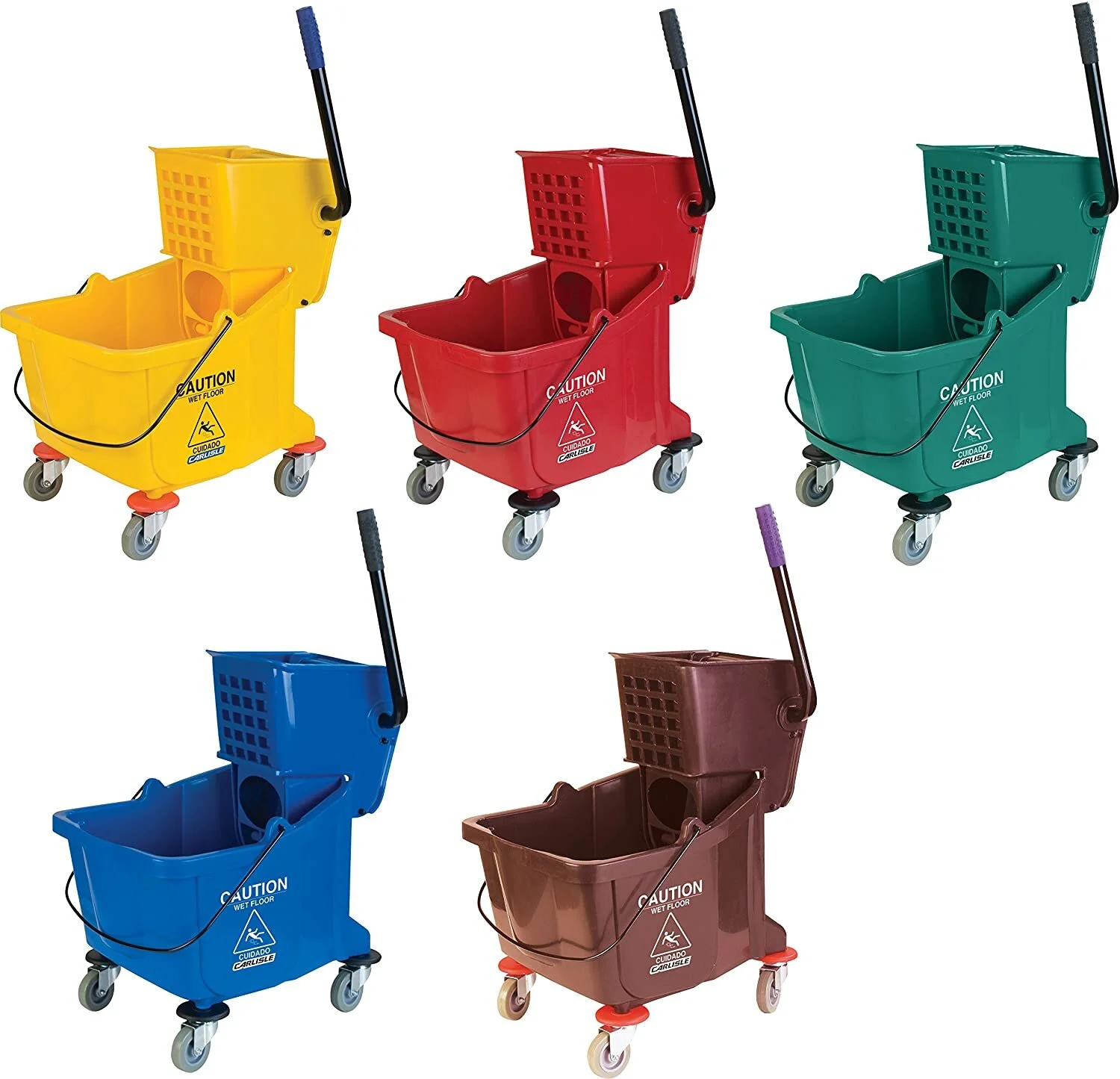
For an alternative to the Rubbermaid Mop Bucket, check out the Carlisle Mop Buckets. It can hold 26 quarts and is available in a variety of colors. The smaller size is appropriate for smaller studios, under 1,000 square feet. These wringer buckets do not feature the “Wavebreak” middle bumper found on the Rubbermaid bucket, but this actually makes it easier to clean out the grime that settles to the bottom of the bucket.

I use and stock the 35 quart Rubbermaid bucket in larger studios, but in my own personal studio, I have the 26 quart Carlisle bucket. The mop wringer top part is the same size as the larger model, but the 4.5 gallon bucket takes up less room while providing enough water for cleanup. The casters don’t seem as robust as the Rubbermaid buckets, but overall, it’s basically the same, well-built mop bucket.

Carlisle Mop Bucket
26 quart: $68-76 depending on color
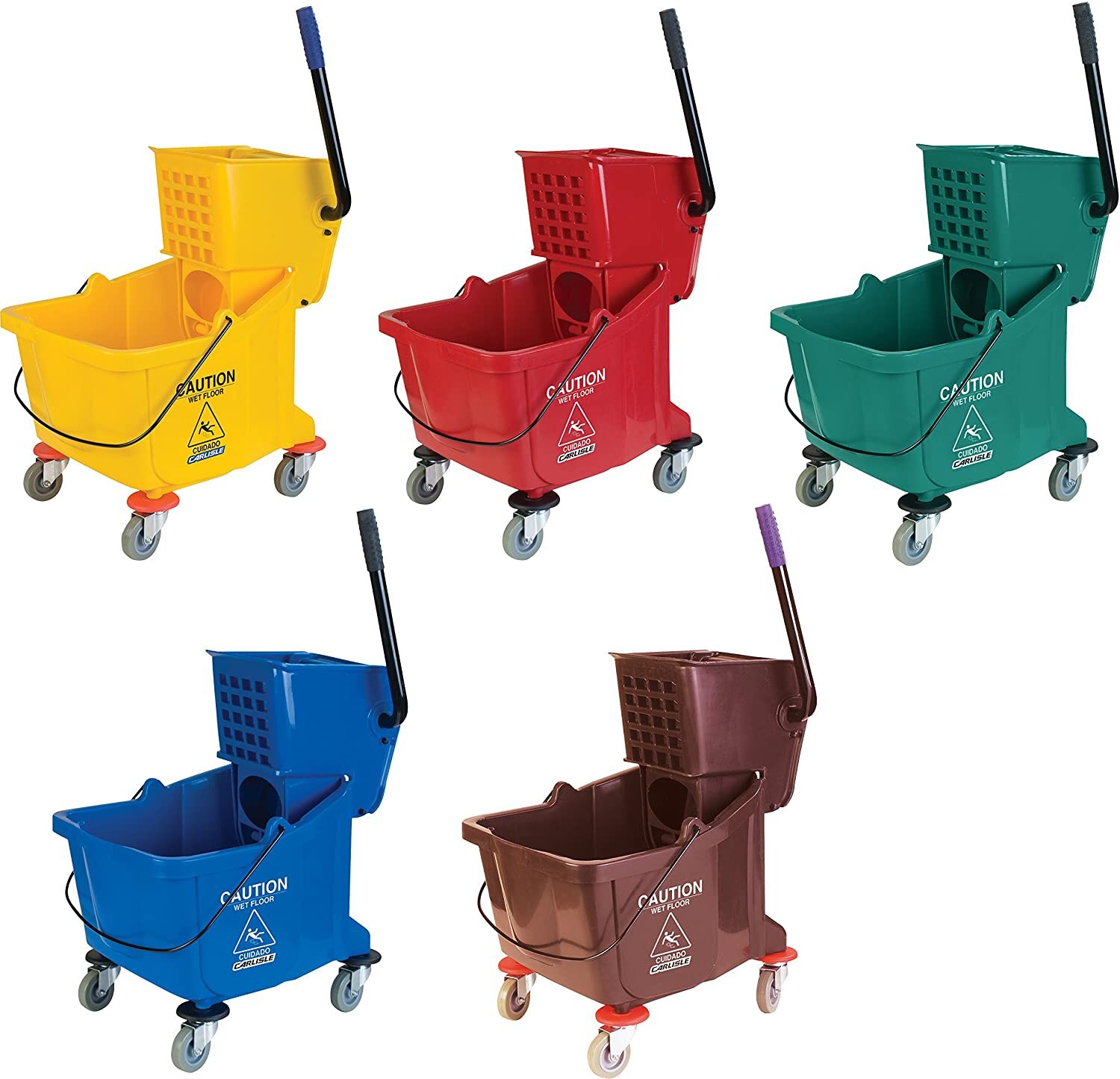
 
The Carlisle Mop Buckets are also available in a five colors.

The Carlisle Mop Buckets are also available in a five colors.


Large Yellow Sponges
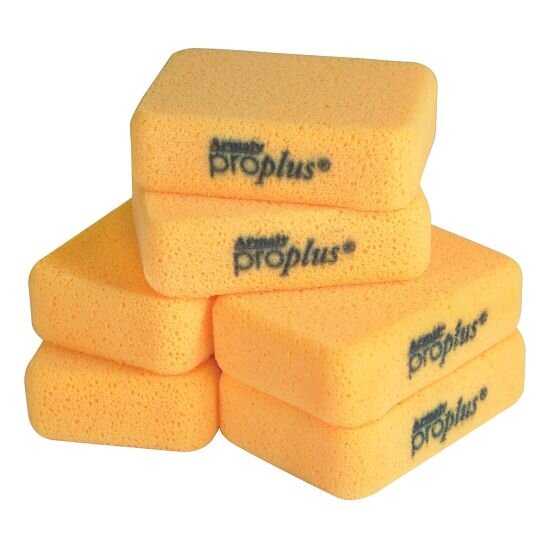
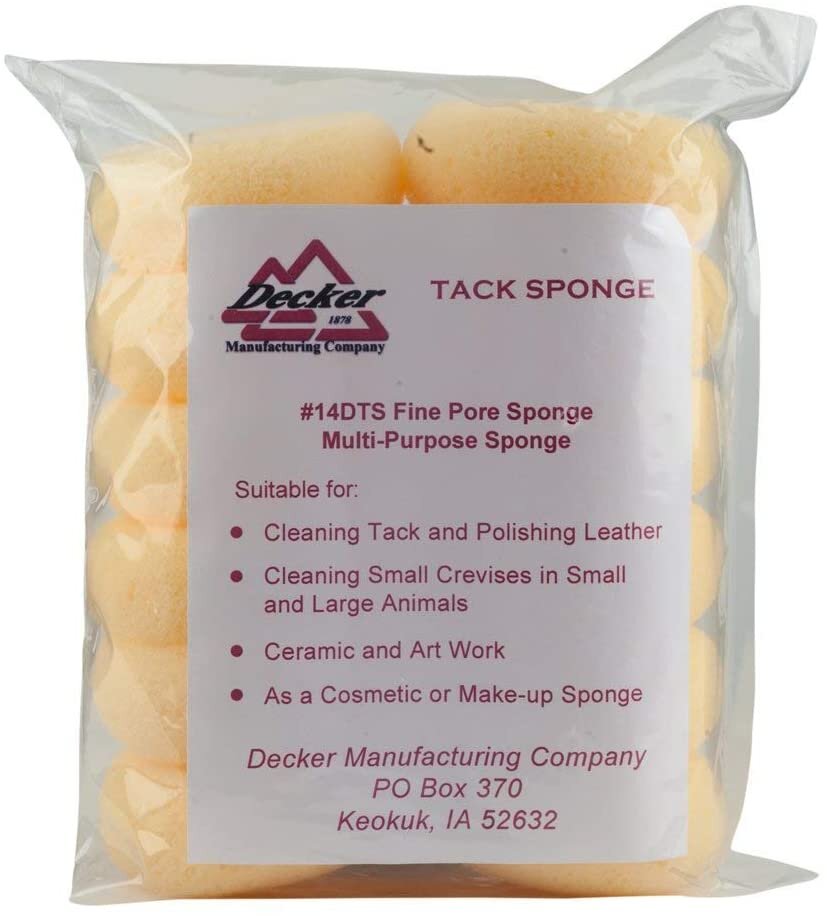
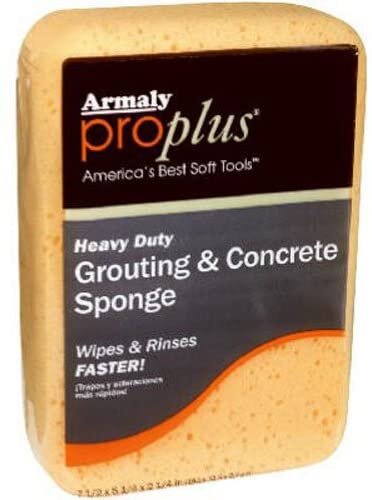
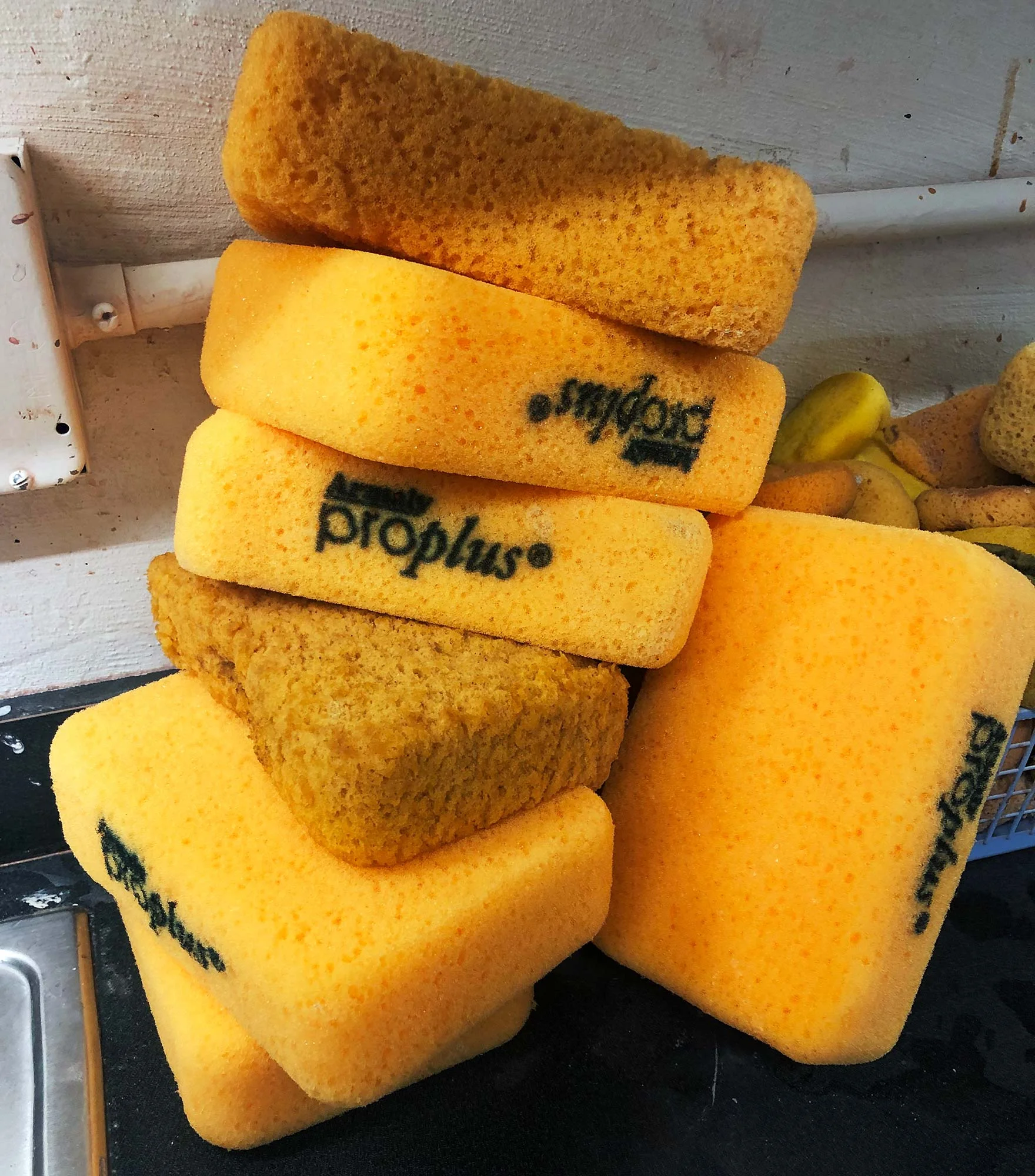
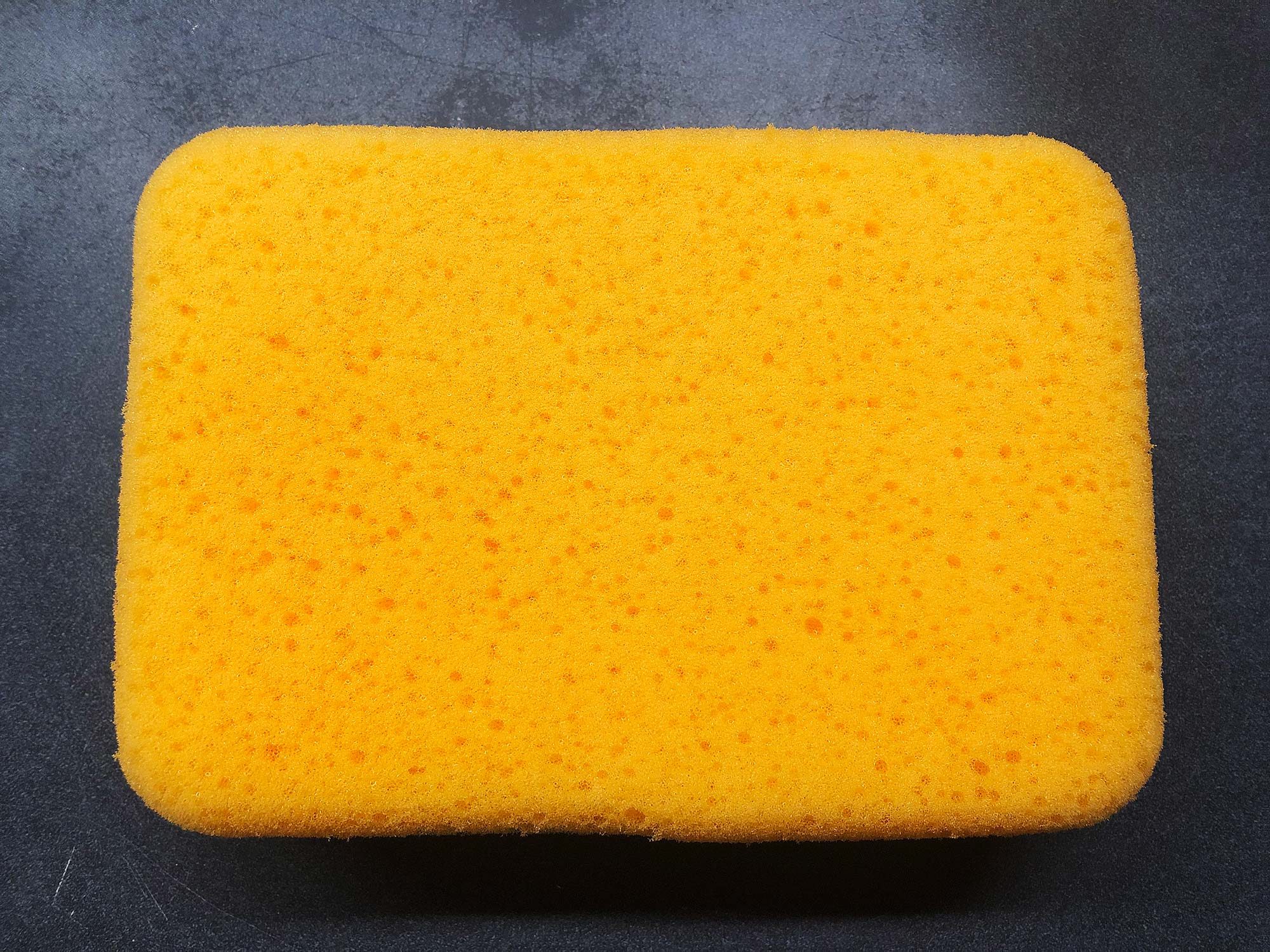
Large yellow sponges are one of the best cleanup tools for the size, versatility, and ability to pick up large volumes of liquid. I use them every day in the studio and have tried just about every brand name and generic out there.

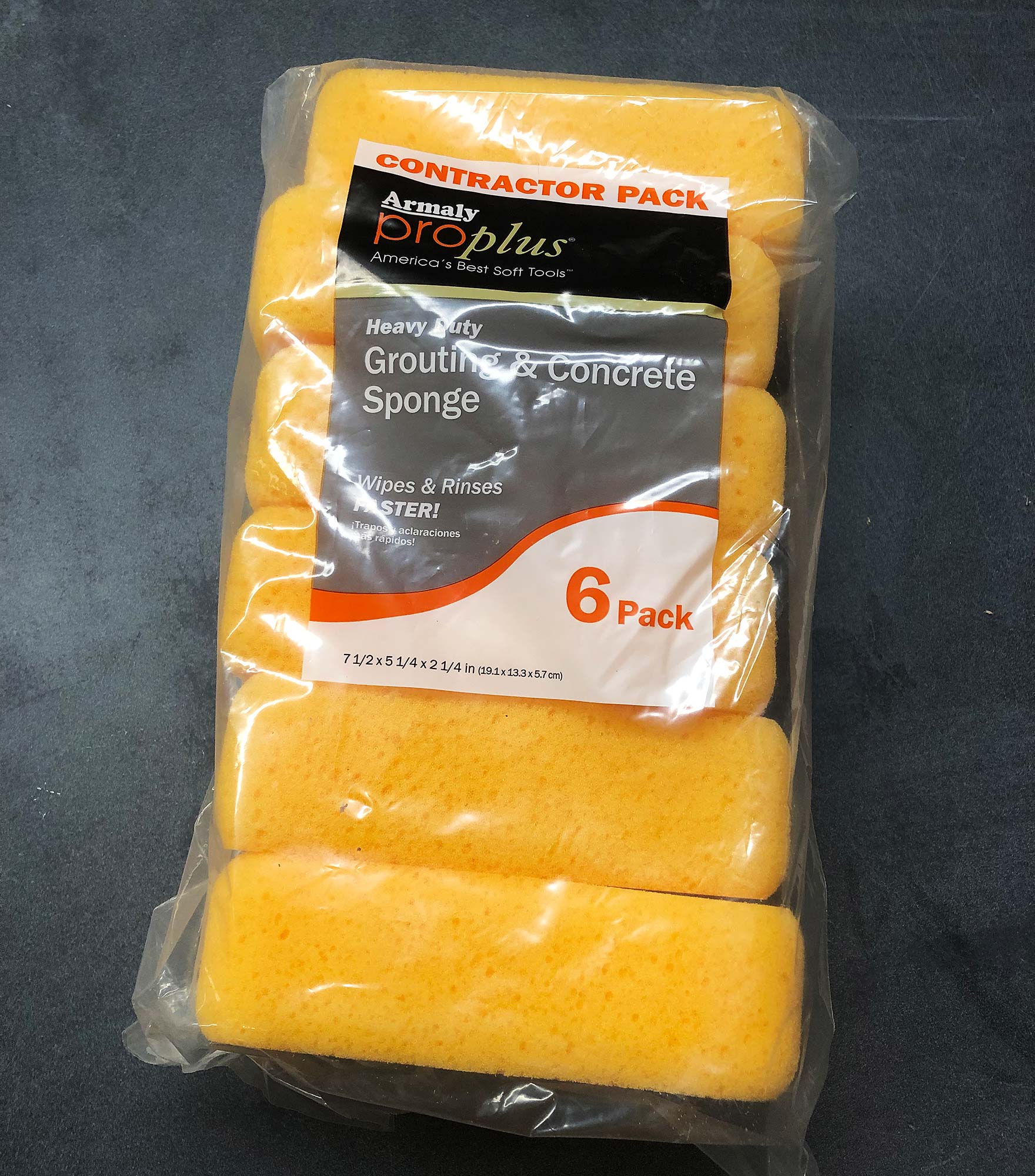
My advice is to go for quality on yellow sponges, and my favorite is the Armaly ProPlus Grouting and Cleanup Sponge. It does cost more, but it lasts so much longer. The generic packs you’ll find online contain sponges that usually fall apart in weeks. The Armaly Pro sponges last 6 months or longer under heavy use in the community studio I manage, and should last even longer in a personal studio.

Another decent option is the QEP yellow sponge, which will also last longer than generics. For a full rundown of heavy-duty cleanup sponges, click here. If the prices online seem too high, you may be able to find these sponges for less at big box hardware stores.

Armaly Pro Plus Sponge
6 pack: $16 at Lowes
3 pack: $11 at Amazon


HEPA Vacuum

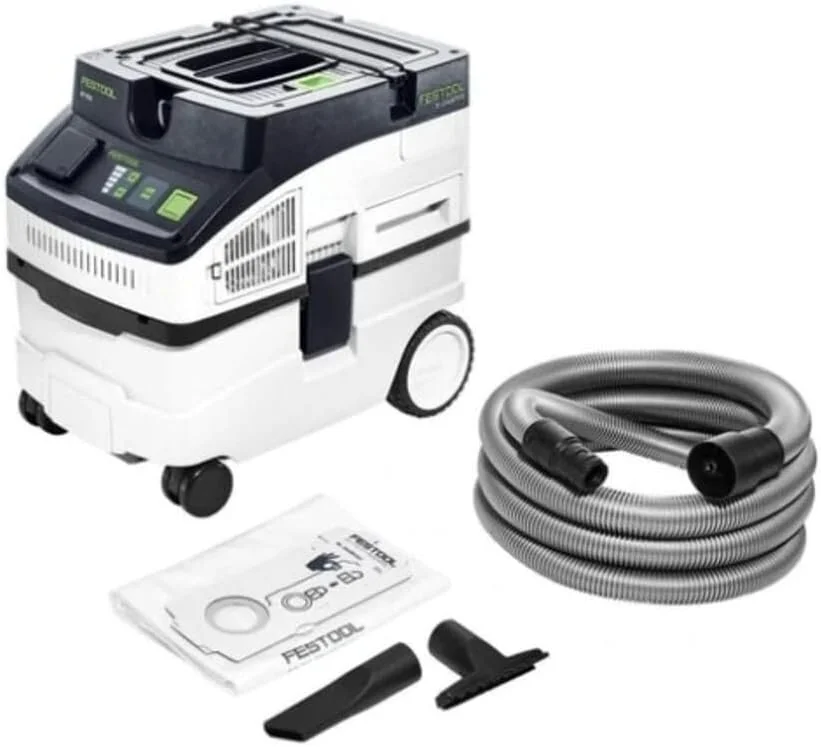
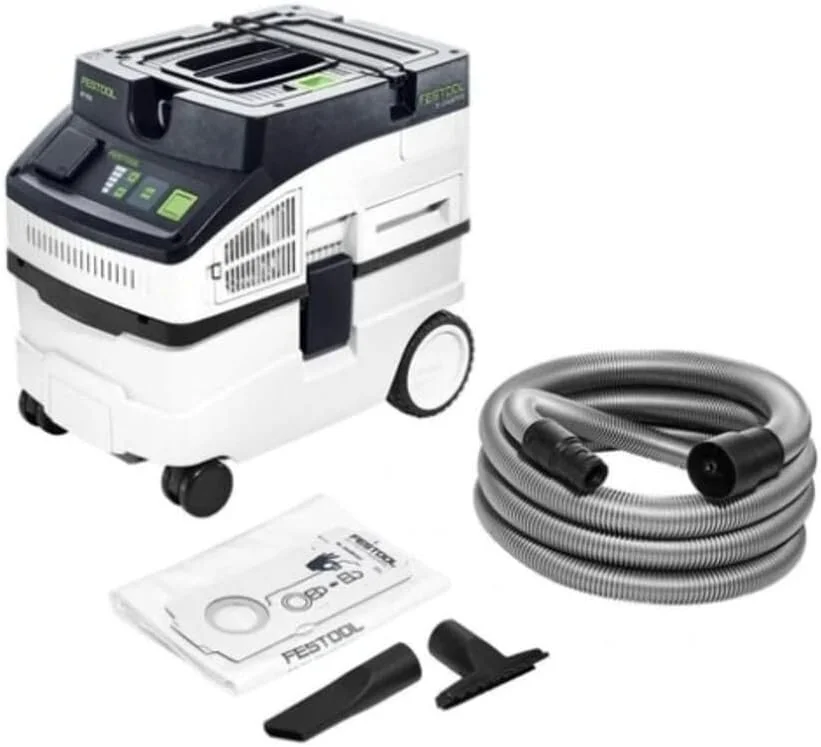
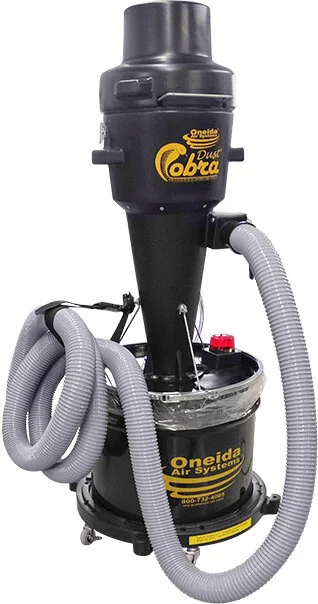
A quality HEPA vacuum is a must-have in any studio, especially if you are working with clay, plaster, or wood and generating dust. It’s always best to wet mop (or use sweeping compound) to avoid putting dust in the air, but if you do use a vacuum, you want to know that you have good filters and are not putting the fine dust back in the air. And for situations like cleaning the inside of a kiln, you definitely need a good vacuum.

The Nilfisk Alto Aero HEPA vacuum is a good balance of quality, and design. It is certified for drywall dust abatement. It’s on the more expensive side for a wet/dry vac, but it’s on the cheaper side for high quality HEPA dust vacuums. (I personally use a 20-year-old Nilfisk GM80. Those are great vacuums if you have $1400…)

I have used other Nilfisk vacuums at various shops and have always been impressed with their quality. Expect this to be an investment that lasts for years or decades.

For a complete review of HEPA vacuums that work for silica dust abatement, click here.

Nilfisk Alto Aero 26 HEPA Vacuum
$563


Walk Behind Floor Scrubbers

The Clark Vantage 14, a walk behind floor scrubber made by Nilfisk-Advance.

The Clark Vantage 14, a walk behind floor scrubber made by Nilfisk-Advance.

For larger studios, a battery-operated floor scrubber can be a quick and effective way to clean up. These machines put water down, scrub and clean with a rotating head, and then a rear squeegee helps collect water that is sucked back into the machine.

Available in a variety of sizes, these machines will make short work of even thousands of square feet of studio space. They do costs thousands of dollars, making them more appropriate for larger studios. But in the end, a unit like this will save time and result in cleaner floors. One piece of advice is to definitely get a cordless model.

A smaller option for this type of machine is the Clarke Vantage 14, which is made by Nilfisk-Advance. It has a 14 inch scrubber head, 3 gallon capacity, 100 minutes of battery life, and produces a relatively quiet 64 dB of noise when in operation.

Small Floor Scrubbers
$1,700 and up

Tennant T2 Walk Behind Floor Scrubber
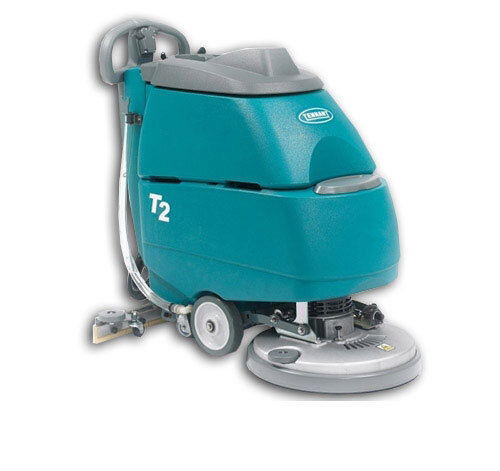
The Tennant T2 floor scrubber.

The Tennant T2 floor scrubber.

A larger, battery-powered floor scrubber is the Tennant T2. It has a 17 inch wide scrubbing disc, a 7 gallon capacity for water or cleaning solution, and a 9.5 gallon reservoir for soiled water. It has a quiet, 68 dB operating noise and is somewhat compact at 44 inches long, 27 inches wide, and 36 inches tall.

Walk Behind Floor Scrubbers
$2,500 and up


Clean Up Recommendations

Here is how I clean up:

Tables and countertops
Use bench brush and dust pan to clean large chunks. Then wipe clean with water and large yellow sponges.

Floors
Spot-sweep as needed with broom and long-handled dust pan.
Use sweeping compound and sweep. Vigorous sweeping can produce airborne dust, so work slowly and carefully.
After sweeping, then mop floors. If needed, a second mopping should get things spotless.

Kiln room
Kilns are vacuumed as needed with a HEPA vacuum.
Floors are cleaned as described above.
As kiln rooms are sources of a lot of dust from ware storage, kiln wash, kiln shelf maintenance, etc, I am extra vigilant about cleaning frequently in kiln rooms.


Summary

This post has covered all the clean up tools I use in my own studio and studios that I manage. These recommendations are made based on years of personal experience and what has worked for me and other studio members. Cleaning up is an incredibly important part of the art making process, and you want to have the right tools to make the job efficient and effective.

What clean up tools do you use in your studio? Let us know in the comments.


Best Ware Carts and Mobile Shelves for Pottery, Ceramics, and Sculpture Studios

Originally posted 2020. Most recent update: August 2026

Ware Carts are specialized storage shelves for ceramics, often on wheels, and they can add a lot of storage space to your studio. Ware carts with wheels will make your studio even more flexible and allow you to maximize space. As a piece of specialized equipment, ware carts can be quite expensive but there are other shelving options that will provide similar functionality at a lower price point.

There are six ware carts made for ceramic studios, but you can also use wire shelving and even bakery carts. This post will cover every type of ware cart, along with recommended picks. In truth, any of these will be quality additions to your studio. You’ll just need to select the cart that works for your space and budget.

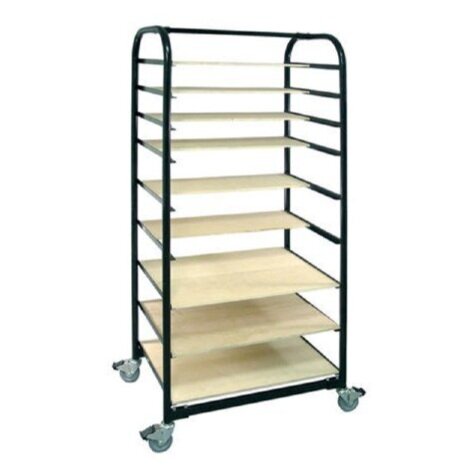
The Brent Ware Cart: our top pick for a ware cart / mobile shelving in a ceramic studio.

The Brent Ware Cart: our top pick for a ware cart / mobile shelving in a ceramic studio.

Top Pick: Brent Ware Cart

The Brent Ware Cart is a favorite for a few reasons. It has the typical Brent overbuilt / bombproof construction; it’s tall; and it’s made with round steel pipe. As ware carts are designed to move, the round sides are comfortable to grab and roll. It’s a small difference, but a detail that really makes this cart stand out. The center top bar is also less conspicuous, and I like the rounded look. Brent makes a few other carts, including a mobile shelf cart, if you want to go for a matching look too.

This cart ships flat and assembles by bolting together the cross bars and adding plywood shelves. It comes with 4” locking casters, and measures 35 inches wide, 24 inches deep, and 72 3/4” tall. The shelves are 24” x 32” and it can hold up to 9 full shelves, or you can use it with a combination of 12 x 32” half shelves.

Brent Ware Cart
$1,053 without shelves
$1,597 with shelves


Budget Pick: Wire Shelving on Wheels

Seville Classics 2’ x 4’ x 6’ tall heavy duty wheeled wire shelving.

Seville Classics 2’ x 4’ x 6’ tall heavy duty wheeled wire shelving.

For about one fourth of the cost of a Ceramic-specific cart, you can get heavy duty wire shelving on wheels. The open wire provides a lot of airflow, and you can use ware boards or drywall as shelving.

For wire shelving used as a ware cart, I’d go for something that is 18 inches or 24inches deep shelving such as the Seville Classics 24” x 48” x 72” tall unit with 3 inch casters. The whole unit is rated to hold 500 lbs. This is lower than the 750 to 1000 lbs that a ceramic ware cart will hold, but should be plenty for most studios.

Seville Classics Mobile Wire Shelving
24” x 48” x 72” tall, $229
18: x 48” x 72” tall, $219


amazon basics wire shelving on wheels.jpg

Ultra-Budget Pick: Amazon Basics Wire Shelving on Wheels

For a mobile wire shelving unit that is perfect for smaller studios, you can’t beat the $55 Amazon Basics mobile wire shelving. It’s got 5 shelves, measures 14” deep x 30” wide x 64.75” tall. It’s not as strong or big as a ceramic ware cart but it should hold up under individual / light duty use. Just don’t expect these to survive in an academic or community studio with heavy use.

Amazon Basics mobile shelving
14” x 30” x 64.75” tall
$55


Budget Pick: Bakery Carts

The Gridmann Bakery Cart with locking casters.

The Gridmann Bakery Cart with locking casters.

Bakery carts are another option for ceramic studios. They aren’t as sturdy or designed for the weight of clay or plaster, but can work for light-duty purposes. They are also cheaper and are often easy to find used. They tend to be smaller, built around the size of an 18” x 26” sheet pan. You’ll need to cut your own plywood shelves or with the narrow width, you can also make shelves with drywall.

Bakery carts are especially popular with tile makers as they really expand your storage area and they work with homemade drywall shelves.

Commercial Bakery Rack
$190 (plus the cost of shelves)

These are just a few of the options for a studio. The post continues below with information on every ware cart on the market.

A Note on Plywood Shelves: Most ware carts have the option of adding precut shelves. You can also make your own with 3/4” interior-grade plywood. Cut it yourself with a plunge saw or table saw, or have a lumber yard cut it for you. You could use 1/2” plywood, but that will bend or warp over time. 3/4” plywood is a better investment as it is more likely to stay flat. It’s worth it to get the best grade of plywood you can afford, you’ll be happy you did years down the road.

If you get a narrow cart, such as a bakery cart, you can also make shelves out of drywall. Just be sure to cover the edges with duct tape or gummed paper packing tape, so that you won’t get drywall crumbs all over your studio.


Table of Contents

  • Top Pick: Brent Ware Cart

  • Budget Pick: Mobile Wire Shelving and Bakery Carts

  • Runner up: Bailey Ware Truck

  • North Star Ware Cart

  • Axner Ware Cart

  • Laguna Ware Cart

  • Debcor Ware Cart

  • Bakery Carts

  • Summary


Other Top Pick: Bailey Ware Cart

The Bailey Ware Cart, pictured here with the 13 shelf option.

The Bailey Ware Cart, pictured here with the 13 shelf option.

The Bailey Ware Cart is another great option that is about the same size as the Brent Ware Cart but has more shelves and is cheaper. It’s a slightly different style, more of a box shape whereas the Brent Cart is curved at the top.

The Bailey cart is made of square steel bars and angle iron, measures 24” deep x 34 1/2” wide x 74 1/4” tall. It has 6” casters and is available with 13 or 26 shelves. The 13 shelf unit retails for around $790 while the 26 shelf unit is around $1,100. The 26 shelf unit has a 2.5” spacing and is great for studios that do a lot of tile work, whereas the 5” spacing on the 13 shelf unit should work for most studios.

When considering this unit, do note the top bars in the front and back. You will either have to use the top shelf for shorter ware, or as is more common, not use the top shelf or two.

Bailey Ware Cart
13 division / shelves: $786
26 division / shelves: $1,104


Other Ware Cart options:

North Star Ware Truck

The North Star Ware Truck has easy-to-change shelf supports.

The North Star Ware Truck has easy-to-change shelf supports.

The North Star Ware Truck is characterized by it’s flexible shelf supports that hook in place without any tools. It’s an easy to use design, but you will have to gauge how often you need to change the set up of your ware cart to know if this model makes sense to you.

The entire unit is 39” wide, 24” deep and 67” tall and has 6” locking casters. It’s a bit shorter than most ware carts. It can hold up to 22 shelves, but it comes standard with 8 brackets, which gives you 4 shelves in addition to the bottom shelf. This package typically costs around $1,400.

This is a well thought out cart and is a great option if you want something shorter. Personally, I’d go with a taller cart like the Brent or the Bailey, but the North Star is one of the more flexible options.

North Star Ware Trucks
Without shelves: $1,100
With Shelves: $1,400


Axner Ware Cart

The Axner Ware Cart is almost square, with shelves measure 32” x 36” inches.

The Axner Ware Cart is almost square, with shelves measure 32” x 36” inches.

The Axner Ware Cart is the biggest cart reviewed here. 36” wide, 32” deep, and 84” tall, this boxy behemoth will hold more ware than you’ll know what to do with. It has the potential for 11 shelves and is listed at a 1000 lb max load with 6” casters. A deeper version of the Bailey ware cart in a way, that I’m sure is made with good quality from Axner / Laguna. At $500, it’s a good deal.

Halve shelves are listed at $10 each, it would be $220 for all 22. You could probably cut your own for cheaper.


Laguna Ware Cart

The Laguna Ware Cart in the distinctive Laguna teal paint job.

The Laguna Ware Cart in the distinctive Laguna teal paint job.

The Laguna Ware Cart has a center support column that can accommodate 18 half shelves. A distinctive design, it is easy to load even on the top shelf. The drawback is that it’s harder to grab and roll this cart, and you can occasionally catch yourself on the protruding shelf supports.

The cart measures 24” deep x 38” wide x 58” tall with 4” casters, with the shelves measure 12 x 36”. The cart retails for $610 and includes six shelves. It’s a good deal, but it is a shorter shelf and it’s a bit harder to grab and move this cart when you want to.


Debcor Ware Truck

The Debcor Ware Truck

The Debcor Ware Truck

The Debcor Ware Truck is the shortest option for ceramic ware carts, measuring 24” deep x 32” wide x 54” tall with 4” locking casters. The half shelves measure 12” x 28”, or 24” x 28” for full shelves. Like the Laguna Ware Cart, the Debcor Truck has a top cross bar that doesn’t interfere with loading ware. Although it’s shorter, this could potentially be a great option if you use the top layer for loading tall work.

This cart retails for $575 with 12 plywood half shelves. The cart can accommodate 8 full shelves or 16 half shelves, so you may want to cut a few extra.

Debcor Ware Truck
Without shelves: $983
With shelves: $1,210


Summary

Shelving on wheels just makes every studio better, and a quality ware cart is an investment that will last for decades while maximizing studio space. This post has covered every ceramic-specific option I’m aware of, along with wire shelving and bakery carts. The Brent Ware Cart is my favorite, followed closely by the Bailey Ware Cart, but truthfully, any ware cart is a better option that immobile shelving or no shelving at all.

What do you use for mobile shelving in your studio? Let us know in the comments.


The Best Sandpaper, Grinding Blocks, and Abrasives for Pottery and Ceramics

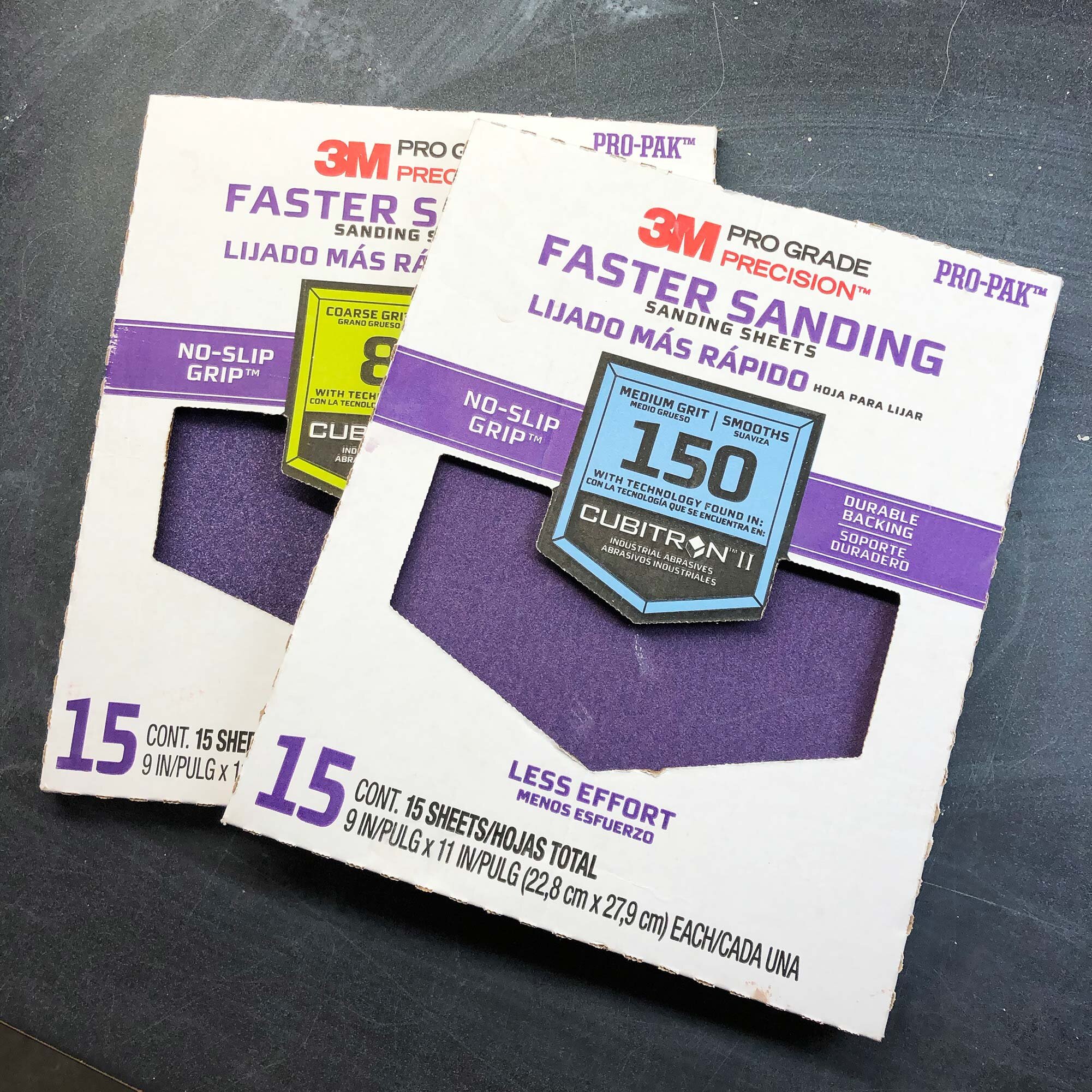
3M Pro Grade Sandpaper is a plastic-backed, long-lasting sandpaper that can be used wet for safe sanding.

3M Pro Grade Sandpaper is a plastic-backed, long-lasting sandpaper that can be used wet for safe sanding.

Originally posted 2020. Last updated, August 2026

In ceramics, there’s always a need to sand something. Whether it is cleaning the foot of a pot or dealing with a massive glaze run on a kiln shelf, there are a few different tools that will take care of these problems in effective, safe, and economical ways. This post will cover the best abrasives, sandpaper, and grinding blocks, as well as how to use them. You probably won’t need every single one of these tools, but they’re covered here so that you can find what will work best in your studio.

Safety note: Keep in mind that any sort of sanding or grinding can produce dust. Wear a dust mask or respirator, or when possible, sand wet. (For a complete guide to dust masks in the studio, click here.)

Most Used / Top Pick: The thing I reach for the most is the plastic-backed, purple, pro-grade sandpaper made by 3M. (Pictured at top) It is economical, long lasting, and can be used wet. It’s a simple, versatile tool that has a place in any studio.


Table of Contents

  • Sandpaper

  • Grinding Blocks and Whetstones

  • Diamond Hand Pads

  • Silicon Carbide Stones for Power Tools

  • Wet Grinders

  • Sanding Tips and Tricks

  • Summary


Sandpaper

There are two sandpapers that I use in the studio: 3M Pro Grade Sandpaper and Emory Cloth. Other sandpapers, such as those designed for wood, don’t hold up under the heavy use needed with ceramics and clay. One advantage of sandpaper, as opposed to solid blocks, is that it is flexible and can be bent, creased, or cut into a variety of shapes if you need to sand hard-to-reach spots.

Detail shot of the front and back of the 3M Pro Grade No Slip Sandpaper.

Detail shot of the front and back of the 3M Pro Grade No Slip Sandpaper.

3M Pro Grade Sandpaper

The purple, plastic-backed 3M Pro Grade Sandpaper is the main tool in my sanding arsenal. It lasts longer than other sandpapers and can be used wet or dry. The plastic backing is advertised as “no-slip grip” and it is easy to hold and control, even when wet.

The paper measures 9 x 11 inches and is available in a variety of grits. I generally stock 80 and 150 grit, but a range of 4 grits from 60 to 220 would probably cover most needs.

The sandpaper can be found in smaller packs ranging from 3 to 6 sheets, or bulk packs with 20 or 100 sheets. 20 sheets will last a long time for individual use, or around 6 months for a busy academic or community studio.

3M Pro Sandpaper
6 sheet packs: $9
20 sheet packs: $15-$22


Roll of 1 inch wide brown sandpaper

A roll of sandpaper can be economical and functional.

Sandpaper Roll

There are a wide variety of sandpapers out there, and you can probably find what you need at a local hardware store. But an interesting option is a sandpaper roll.

A sandpaper roll is ideal if you need small pieces of paper that you can just rip off. There are even sets where you can get multiple grits.

Sandpaper Roll
1” wide by 20 feet
$8 and up


Grinding Blocks

There are a variety of grinding blocks that are useful in the ceramic studio. A block might be used in place of sandpaper, but I usually stock both sandpaper and blocks. The bigger blocks are especially useful for dealing with glaze drips and cleaning kiln shelves while a whetstone can be used to sharpen tools and clean up pots.

A silicon carbide rubbing block with a handle.

A silicon carbide rubbing block with a handle.

Silicon Carbide Rubbing Block

A silicon carbide rubbing block (or grinding block or brick) is one of the most effective ways to deal with glaze drips and to clean up kiln shelves and kiln posts. The blocks come in a variety of sizes, with or without handles, and some have fluting. The fluting is especially useful for grinding rough kiln shelves flat again. A flat-sided block is better for cleaning up the foot of pots or the bottoms of sculptures.

Detail of the fluted bottom of a typical silicon carbide rubbing block.

Detail of the fluted bottom of a typical silicon carbide rubbing block.

Silicon carbide blocks can be used wet, which is a plus for me because I’m always looking for ways to minimize dust in a studio.

A downside of these rubbing blocks is they are prone to cracking if dropped. This is especially a problem if you crack one with a handle. But don’t despair if you crack a block, the pieces are still useful until they are completely ground down

Another downside is they are typically on the rough side, around 20 to 60 grit. This is fine for kiln shelves, but you’ll want to follow up with something a bit finer, such as sandpaper or emory cloth, if you’re sanding the bottom of a pot.

The block with handles are typically 6” x 3” x 1”, but these sizes vary by manufacturer.

60 Grit Rubbing Block with Handle
$22

You can also find 20 grit rubbing blocks for around $15 or a 2 pack of 20 grit blocks for around 20

A longer, thinner, fluted silicon carbide rubbing block without a handle.

A longer, thinner, fluted silicon carbide rubbing block without a handle.


120 Grit Rubbing Block

Bon 120 Grit silicon carbide rubbing block gray black rectangular block

The Bon 120 grit rubbing block

After using a 20 or 60 grit block, a 120 grit rubbing block can help fine tune anything you are rubbing or sanding. At $12, this solid block is a great deal.

Bon 120 Grit rubbing block
$11.75


Aloxite Blocks and Whetstones

An aloxite sanding block.

An aloxite sanding block.

Available at ceramic suppliers, aloxite (aluminum oxide) blocks are smooth, hard, and extremely durable blocks. They are very long lasting, they don’t “shed” a lot of material when used, and they are especially great for sanding the bottom of pots. (Shop Aloxite block at Laguna)

Silicon carbide whetstone, with two grits — 120 and 240.

Silicon carbide whetstone, with two grits — 120 and 240.

Alternately, and easier to find, you can use whetstones designed for sharpening knives. Generally not as hard as aloxite, whetstones are another great option for cleaning small glaze runs, burrs, or rough patches on fired ceramic. They can also be used to sharpen studio tools, such as scissors or fettling knives.

Neither of these smaller blocks are particularly good for cleaning large areas of kiln shelves, but they’re great to use on pots.

Both aloxite stones and whetstones can be used wet, which keeps dust out of the air.

120 / 240 grit Whetstone
$16


Diamond Hand Pads

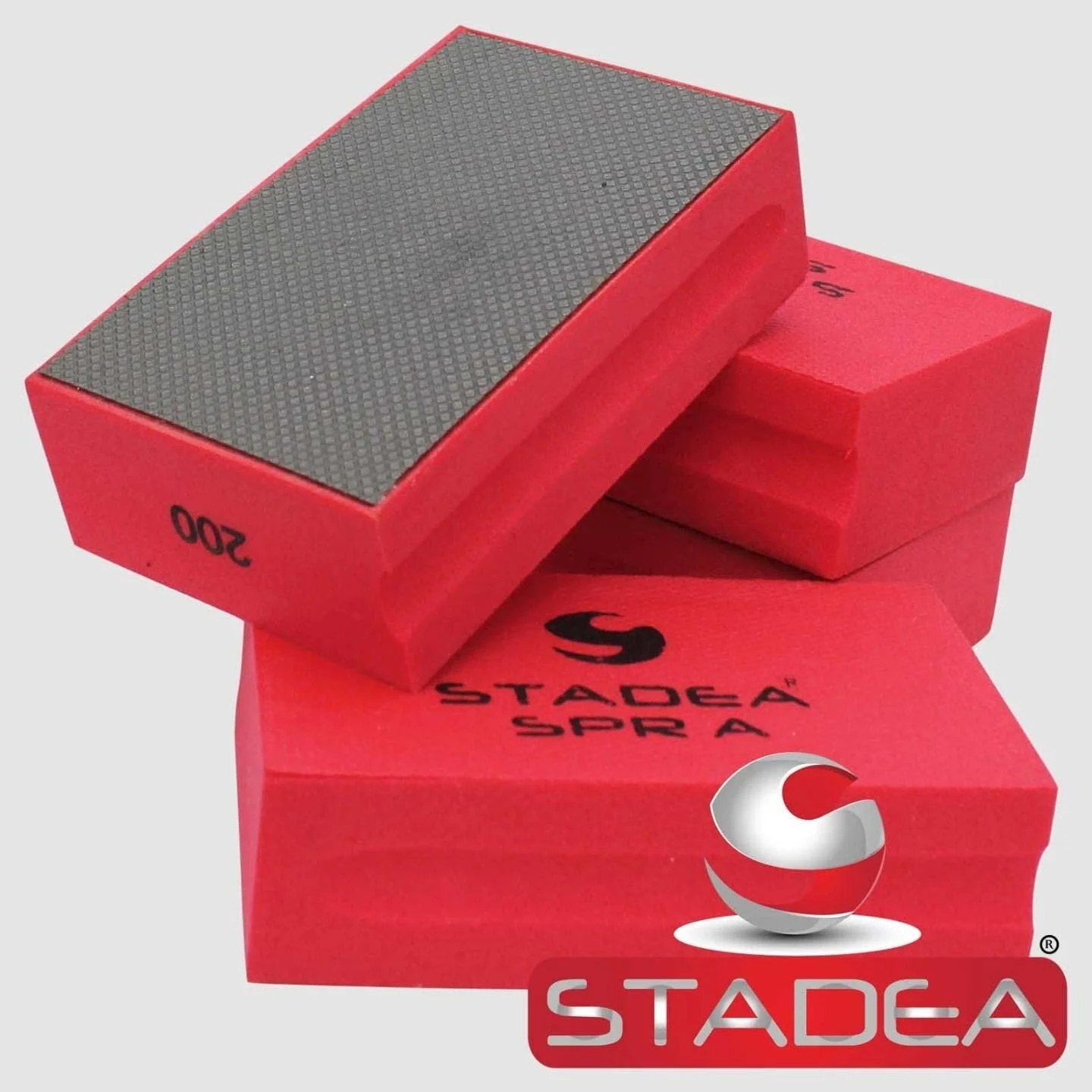
Semi-hard foam-backed diamond hand pads from Stadea.

Semi-hard foam-backed diamond hand pads from Stadea.

Diamond hand pads are the perfect way to sand away burrs, small glaze drips, and rough patches on pots, sculptures, or kiln shelves and posts. Made of industrial-grade diamonds embedded in plastic, these are available from a variety of manufacturers as either soft, flexible pads or semi-hard, foam-backed pads. The foam-backed pads are my favorite because they provide structure and support your hand, but the flexible pads are useful for sanding more complicated shapes. Available as sets or individual pads, my recommendation is to get four individual pads in the range of 50 grit, 100 grit, 200 grit, and maybe 400 grit.

Semi-flexible diamond pads from Diamond Core Tools.

Semi-flexible diamond pads from Diamond Core Tools.

The soft pads are available from Diamond Core Tools, while foam backed pads are available from Diamond Core and other manufacturers such as Stadea or various generic names on Amazon. Expect to spend $15 to $30 per pad, but if used just when needed (use sandpaper for more everyday tasks), they should last for some time, maybe even years.

Like many other tools listed here, these can be used wet, which keeps sanding dust out of the air. And any foam block also float in water, which is great if you drop them while sanding over a bucket.

Shop semi-flexible pads at Diamond Core.

Single Diamond Hand Pads, available in a variety of grits
$18 each

These pads are more expensive because they have a slightly flexible diamond surface

Diamond Hand Pad sets
$14 for 4 pads

These pads are cheaper because they have an nonflexible, small metal plate with the diamond grit glued to the foam pad.


Interchangeable Diamond Hand Pad

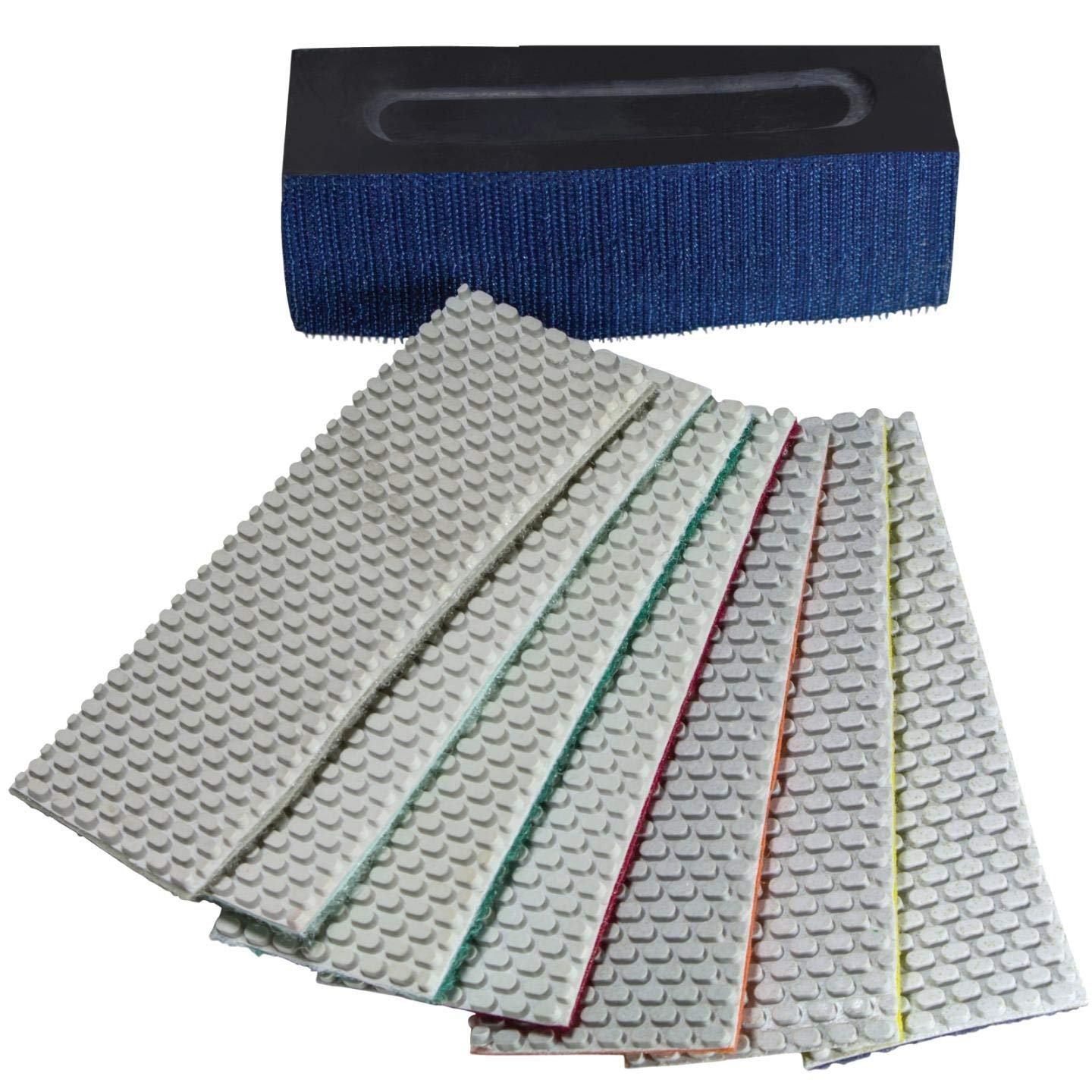
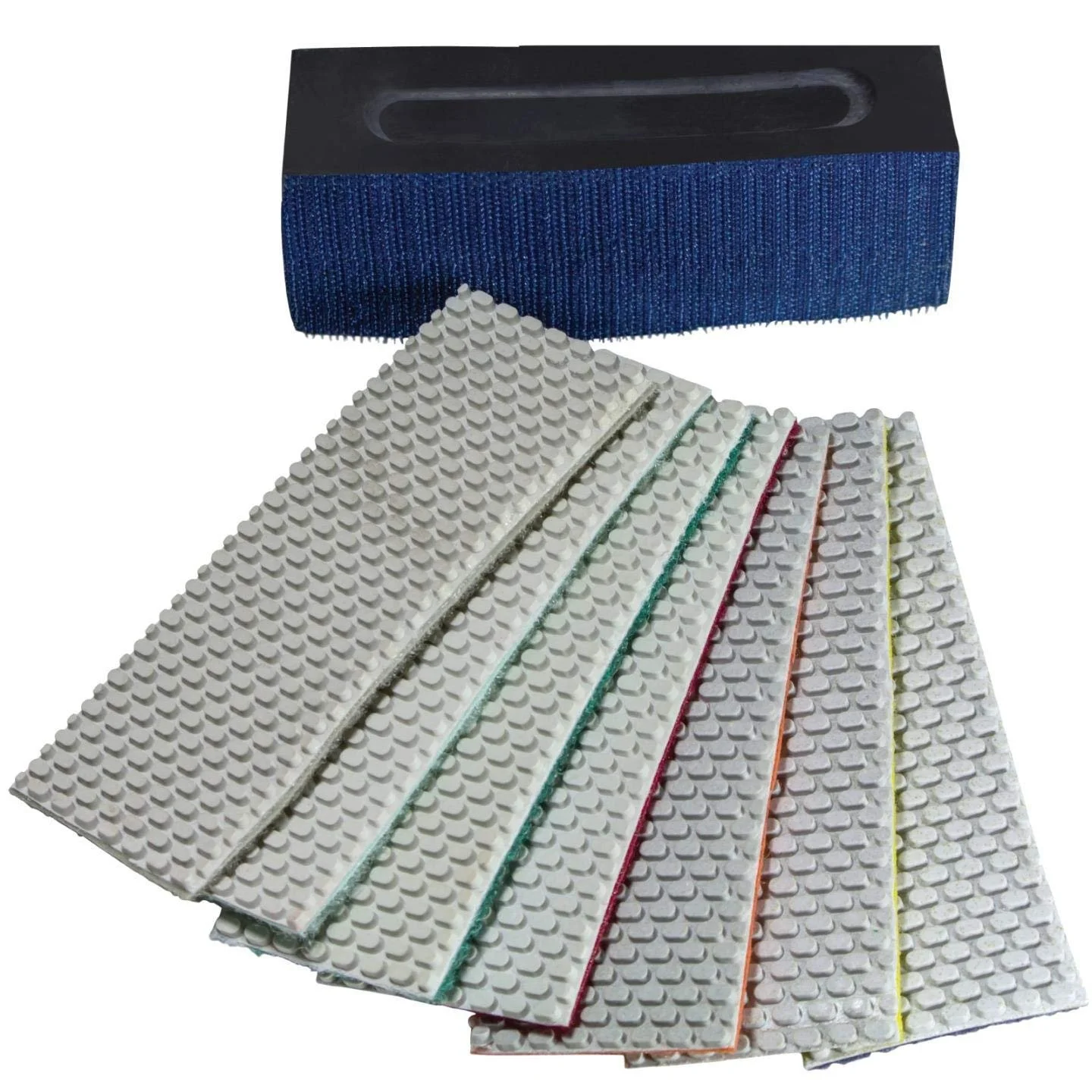
Diamond Hand Pad with seven velcro-backed pads

This set is a really nice option for sanding. For around $40, you get a comfortable foam block and seven velcro backed flexible diamond pads ranging from 50 to 3000 grit. This product seems to show up under a variety of generic names, but the set in my studio has held up under heavy use for a few years.

There is one major caveat with this set: it’s hard or almost impossible to find individual replacement pads. This is not a problem if you use all the pads equally, but in my studio, the 50 and 100 grit pads are what gets the heavy use. I don’t want to spend $30 for a full replacement set when I only need those two.

But, for someone looking for a nice set of pads that doesn’t take up much room, this is a great option.

Interchangeable DIamond Hand Pad kit
$37


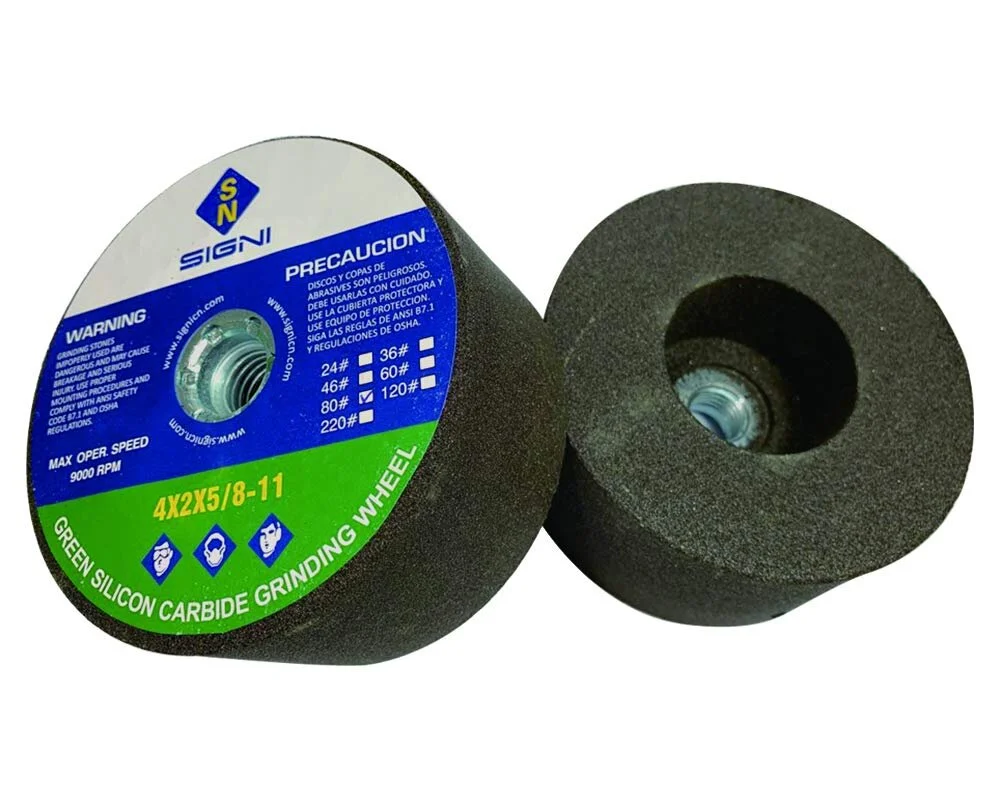
Silicon Carbide Grinding Wheels and Cups for Power Tools

A green silicon carbide bench grinder wheel.

A green silicon carbide bench grinder wheel.

If you have a bench grinder or angle grinder, you should get silicon carbide stones that fit these tools. Silicon carbide will grind through material such as glaze and ceramic without producing excess heat, and it’s the appropriate material to use with non-metallic materials including ceramic, stone, and concrete.

This especially comes in to play with using a bench grinder to clean up glaze drips. If it are not using silicon carbide, the wheel and glaze may get too hot, resulting in potentially dangerous melted bits of glaze. Stick with silicon carbide wheels that are properly dressed and kept in shape. (If you don’t have a dressing tool to keep your wheel even, definitely get one of those too.)

Silicon Carbide Grinding Wheel
$23

Silicon carbide grinding cups for use with angle grinders.

Silicon carbide grinding cups for use with angle grinders.

For angle grinders, there are also silicon carbide cups that can quickly clean kiln shelves. These are especially useful if you need to take off all the kiln wash and start with a fresh coat. Keep in mind that angle grinders produce a lot of dust, so do use this tool with caution. Or see the recommendation below about switching to a wet grinder for these types of uses.

Silicon Carbide Grinding Cups
$25 each


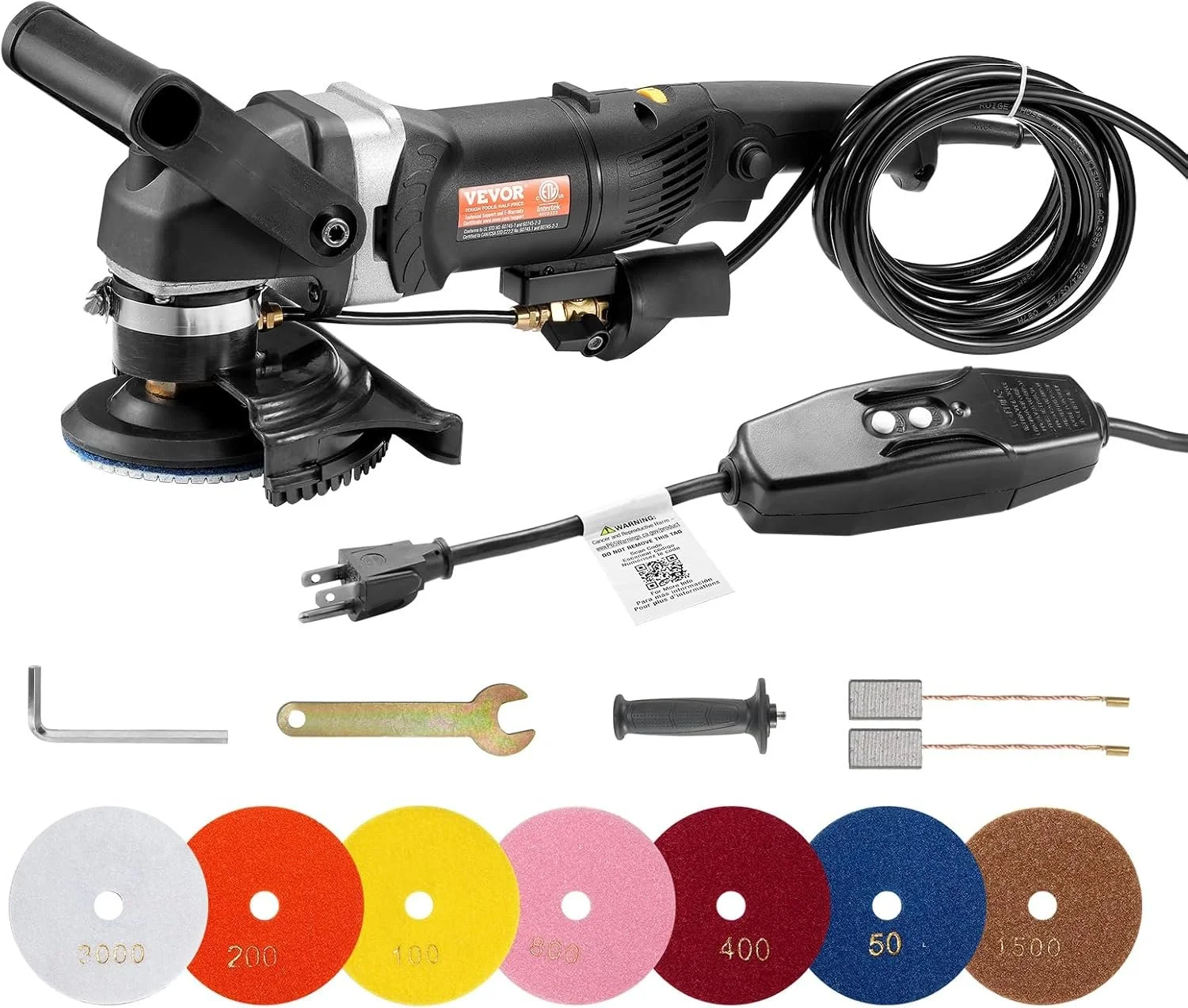
Wet Grinders

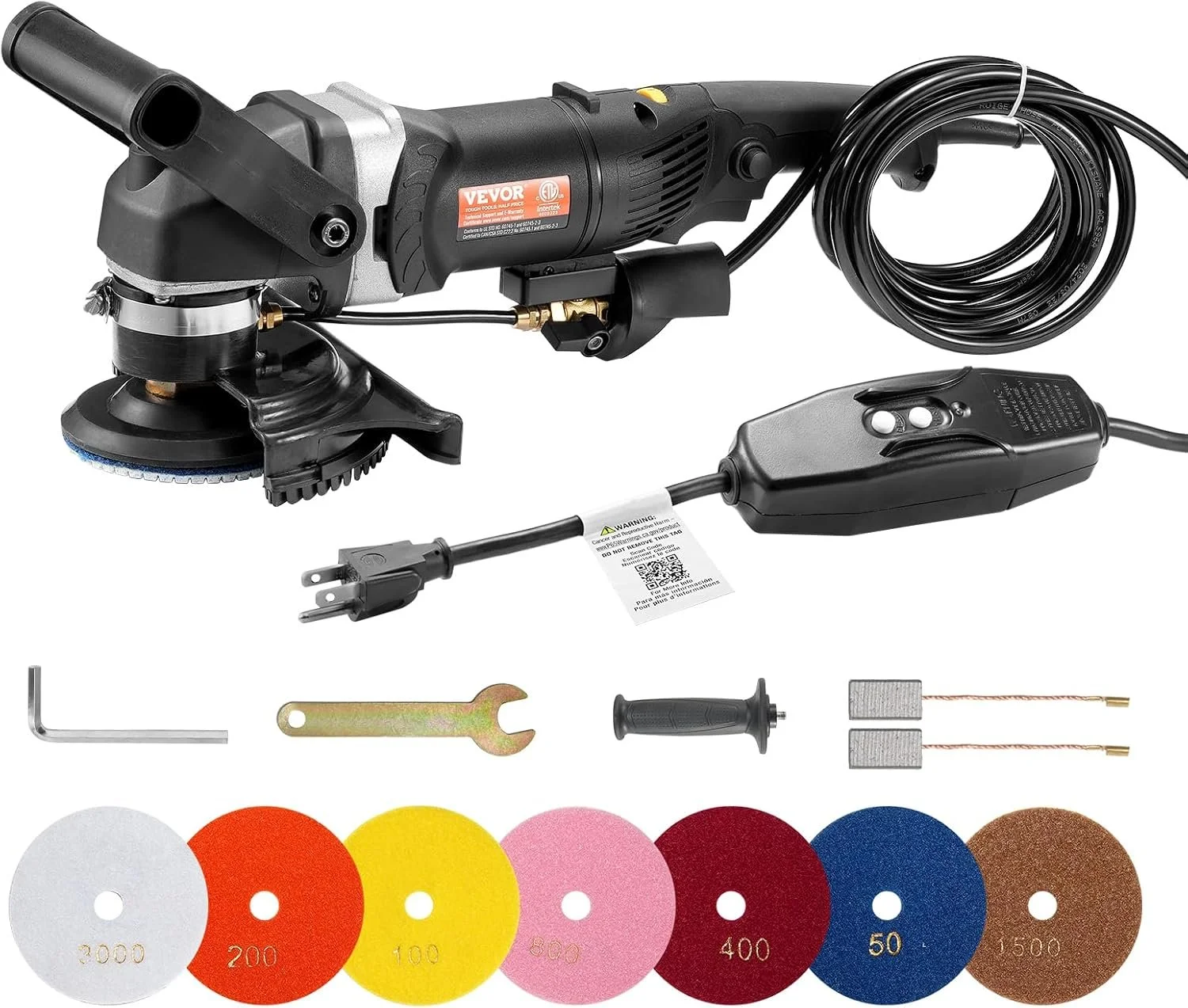
Vevor variable speed wet grinder kit with sanding pads

Vevor variable speed wet grinder kit

Rather than an angle grinder, which definitely make a lot of dust, consider a wet grinder for quickly dealing with bad glaze runs or cleaning kiln shelves. A wet grinder has a water feed that keeps a stream of water flowing out of the center arbor hole on the grinder. They can spray water and sanded bits all over, but if you have a tub or large sink to catch the water, it is not that bad.

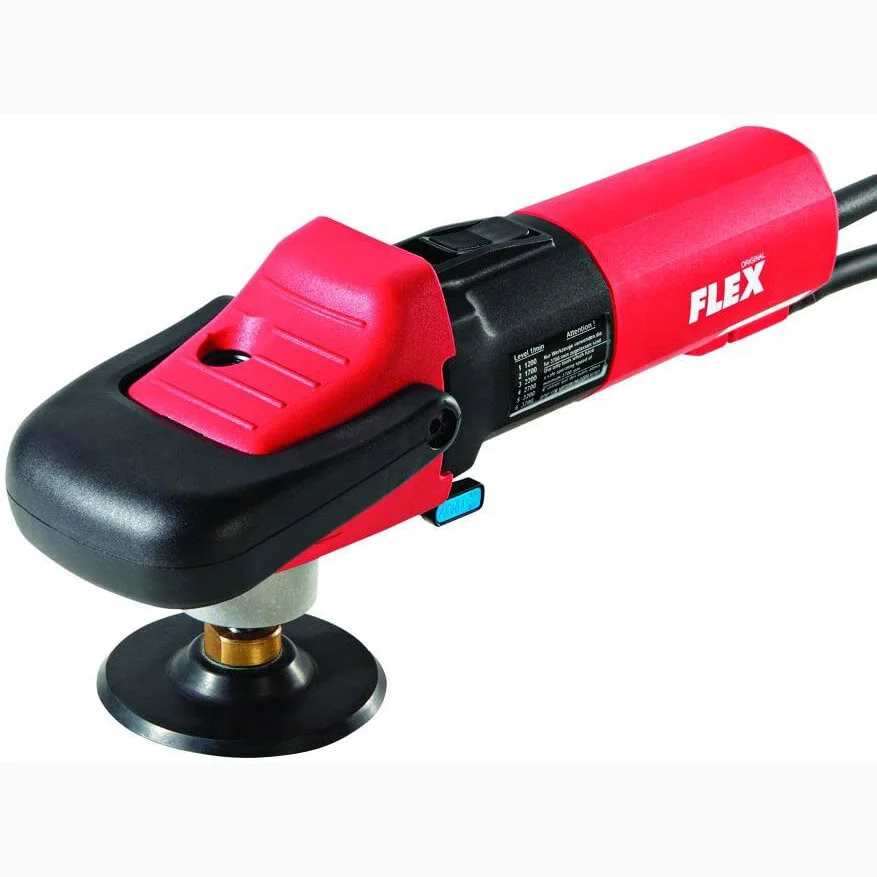
A variable speed wet grinder is the way to go, as that allows you to control the speed. Slower speeds don’t whip as much water around. Wet grinders are generally used with diamond pads. As with hand pads, in my experience a range of grits from 40 or 60 to around 400 get the job done. I’ve had good luck with Stadea pads (shop at Amazon), both the 4 and 5 inch sizes. The lower grits can wear out quickly, depending on use, so you may want to order a few of those. I originally purchased an entire set that goes all the way up to 3000 and buff, but for cleaning up glaze drips, 400 suits me, so I prefer to purchase individual pads to use with the wet grinder.

One drawback with wet grinders is figuring out the right hose connection. Expect to make a few trips to the hardware store to find the right fittings to connect your wet grinder to a hose or faucet.

There have been some changes in the Wet Grinder market in recent years, and our current top pick is the Vevor Variable Speed wet grinder / polisher. At $152, it’s an economical option.

For a complete guide to wet polishers / wet grinders, click here.


Sanding Tips and Tricks

A few ideas to put into practice in your studio:

  • Broken pieces of kiln shelves, especially silicon carbide shelves, make excellent sanding blocks and stones.

  • Rub the bottom of two pots together for a quick post-firing sanding / cleanup. To reduce dust, this can be done wet under running water or dip quickly into a bowl of water.

  • A set of sharp chisels and a rubber mallet can help in removing glaze drips from kiln shelves, then follow up with sanding tools.

  • Check out our tutorial for a DIY Interchangeable Grinding Disc

  • Whenever possible, sand wet! It’s the safest way to keep dust out of the air.

Safety Note

Any type of sanding, grinding, or rubbing will create dust. Take appropriate precautions with wearing dust masks or respirators, and eye protection too, when sanding or using power tools.


Summary

This post has covered and reviewed a variety of sanding and grinding tools and abrasives for use with ceramics and pottery.

My most-used tools are sandpaper and a silicon carbide rubbing block, but I also have a wet grinder with diamond pads and hand pads. I also keep broken pieces of kiln shelves to use as grinding tools. All of this is done wet, when possible, or I use proper safety protection such as a dust mask and safety glasses when sanding. Sanding, grinding, and cleanup are an inevitable part of working with fired ceramic and the best tools will get the job done for you in a safe, effective, and long-lasting way.

What sanding or grinding tools do you use in the studio? Let us know in the comments.


Wall Mounted Clay Extruder Buyer's Guide

Originally published 2020, updated August 2026

Clay extruders are an efficient way to make hollow forms, coils, and other shapes. They are basically tubes with a die attachment and a lever, and there are just enough models on the market to make it a bit confusing to choose. This guide will cover recommended models, and includes a comparison chart of all the models on the market so that you can pick the best extruder for your studio.

The models covered here will make hollow forms ranging from about 2 inches wide to 8 inches wide, although most models will extrude forms up to around 3 inches wide. They will also make solid coils and other shapes, and all models have blank dies that you can customize to suit your needs or some manufacturers will make custom dies. The smaller sized barrels, such as the Bailey 4” wide extruder, will be the best choice for most studios. But there are larger models and upgrade picks to consider as well.

When choosing a model, consider how you will be using it. If you will mostly make solid coil, handle, or other shapes, stick with a 4” wide model as that will be easiest to manage. If you will be making mostly hollow forms, any size model will be relatively easy to extrude; just choose a model that will be big enough for your needs. Other options to consider are the lever style, die options, and ease of cleanup.

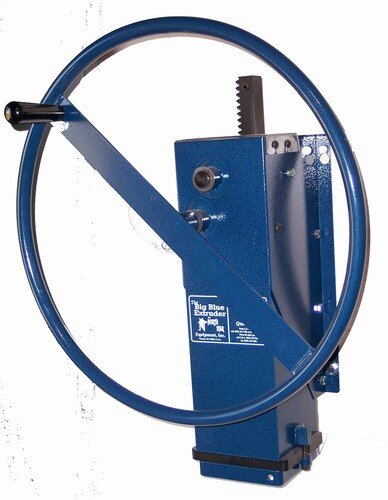
The North Star Big Blue Extruder, the only extruder on the market with a round “wagon wheel” handle. It’s wall mounted with a variety of dies.

The North Star Big Blue Extruder, the only extruder on the market with a round “wagon wheel” handle. It’s wall mounted with a variety of dies.

TOP PICK

The top pick and I believe most innovative extruder on the market is the North Star Big Blue Extruder. Featuring a wagon wheel handle, it is easy to use, has a large capacity barrel, and is durable and long lasting. It’s one of the more expensive extruders (aside from powered extruders) but the size, versatility and easy of use more than compensate for the high price point. The gear system allows you to turn the handle and extrude with ease, and the barrel can hold up to 25 lbs of clay.

The Big Blue extruder is listed at $1,759 and typically retails from around $1,600 to full price, depending on shipping options


The Bailey 4 inch extruder features a wall mount, lever handle, and interchangeable dies.

The Bailey 4 inch extruder features a wall mount, lever handle, and interchangeable dies.

BEST FOR MOST STUDIOS

For most studios, a basic Bailey 4” extruder is a great option. The 4 inch square barrel allows you to make hollow forms up to 3 inches in diameter, but it’s not so large that it’s hard to extrude the clay. This extruder typically costs around $425 and the die kit is an additional $150. It’s one of the better options when you consider price and the die options, but drawbacks include installing the dies and that the barrel is welded to the wall mount, making clean up harder.


If you are looking for a handheld, mini extruder, or “clay gun,” check out our Handheld Extruder Guide here.

A complete review of wall mounted clay extruders follows.


Table of Contents

  1. Top Pick: North Star Big Blue Extruder

  2. Runner Up: Bailey 4, 5 or 9 inch extruders

  3. North Star 4 inch extruder

  4. Scott Creek 4 or 5 inch extruder

  5. Brent Extruders

  6. Other Wall Mounted Extruders

  7. Powered Extruders

  8. Extruder Tips

  9. Extruder Comparison Chart

  10. Summary


Top Pick: North Star Big Blue Extruder

The North Star Big Blue Extruder.

The North Star Big Blue Extruder.

The North Start Big Blue Extruder combines a big barrel capacity with an easy-to-turn wagon wheel handle and a wide selection of dies. It does cost a premium, typically $1,600 to $1,759, but the size and versatility makes it a wonderful addition to any studio.

The Big Blue has a 6 x 6 x 12 inch tall aluminum barrel that will hold up to a full 25 lb bag of clay. The dies can extrude up to a 4.5 x 4.5 inch wide hollow form, and the dies are a sturdy, hard plastic.

To use the extruder, the die and bottom brace are attached to the barrel with two hex screws. The dies have helpful channels to lock into place. Then, the barrel is filled with clay, and this whole unit is slid up and in and attached to the machine. On one hand, this is an advantage as the dies and clay can be added at a workbench, but the drawback is that you have to move up to about 30 lbs in to place and secure it on the ledge “lip” that will hold the barrel securely. Overall, I find it easy to use, but you want to make sure that you don’t drop a clay-filled barrel on your feet so a shelf or stool underneath can help.

The wagon wheel handle and rack and pinion gears are the real selling point for me, as it makes it much easier to extrude large amounts of clay for extra long tubes and coils. Every other extruder on the market uses some form of a lever handle, which can be dangerous if left sticking out into your space, and they can be hard to pull down. The wagon wheel handle is also relatively compact, or at least it doesn’t stick out into your space.

The Big Blue Extruder is not cheap, typically priced anywhere from $1,600 to $1,759, and the dies cost about $50 each. But, it’s an amazing machine that if properly cared for, will work for decades. I simply keep it clean and add some grease to the gears from time to time.

North Star Big Blue Extruder
$1,759 but usually available for $1,600 and up


Runner Up / Best for Most Studios: Bailey 4”, 5” or 9” Extruders

The Bailey 4 wall mounted extruded with a 4” barrel.

The Bailey 4 wall mounted extruded with a 4” barrel.

Bailey makes a great line of clay extruders that are well built and available at a lower price point than the North Star Big Blue. The Bailey models feature a barrel welded to the wall mount, dies that attach with a brace, and a plunger with a lever that slides up and down the pole.

The models include a 4” barrel, a 5” barrel, and a much larger 9” barrel. The 4” and 5” models are available in mild steel or stainless steel—you’ll want to go with stainless if you are using porcelain and are worried about rust. Bailey also makes two sizes of die kits, one kit fits both the 4 and 5 inch barrels, while there’s a larger kit for the 9” extruder. There’s also an extension kit that adapts the small dies to the bigger barrel. If you want, there’s also an upgraded powered version with a variety of stands and other tools suitable for a production studio. When considering the Bailey models, keep in mind the cost of the die kit because the models only come with one coil die and two blank plates, so you’ll definitely have to buy dies.

Overall, it’s a flexible system that is well engineered and is suitable for a wide variety of studios. On the 4 and 5 inch models, the die is attached to the bottom of the barrel via a brace with swinging arms, which are then screwed tight with wing nuts. Then, clay is added to the barrel, the plunger is inserted and you pull the lever to extrude the clay. The 9” model only differs in that the die is held on with C clamps. On all models, hollow form dies are held in place with a cross bar—it screws on to the dies so if you are frequently using multiple hollow forms, plan to buy extra cross bars to save time.

The Bailey 9” extruder can make hollow forms up to 8” in diameter.

The Bailey 9” extruder can make hollow forms up to 8” in diameter.

It’s a bit cumbersome to attach the dies but once in place, these are easy to use. One drawback is the Baileys are harder to clean as the barrel is mounted to the wall. If you have time, let any clay inside dry completely, scrape it out, and then wipe clean with a large sponge. It’s helpful to oil moving parts and the dies as needed, to prevent rusting. It’s also easy to lose the wing nuts with the Bailey models, so keep track of those! If you are doing a serious amount of extruding, you’ll also want to research the various expansion boxes and powered models that Bailey makes.

Understanding the models

The 4” models will hold 11 lbs of clay. The 5” will hold 17 lbs of clay. The die kit is the same for both of these models, ranging from 2 to 3” diameter for hollow forms. The 5” models allow you to extrude longer or more forms, but it may be harder to pull the lever with the increased volume of clay.

Standard 4” typically costs between $424, while the Stainless 4” is $466, and the die kit costs about $150. The Standard 5 typically retails for $513. There is also a Stainless 5 option, but it’s only available with a custom build.

The 9” model will hold up to 29 lbs of clay andtypically retails for $765, and the die kit for this model costs around $175.

Overall, for most studios I would recommend the 4” model as that will be the easiest to extrude and 11 lbs of clay will result in a decent amount of extruded forms.

Bailey 4” Extruder
$424 and up


North Star 4” Stainless Extruder

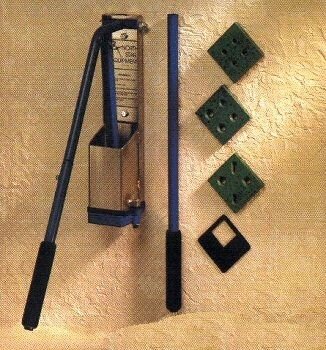
The North Star 4” Stainless extruder comes with the 3 dies picture and the lockout plate.

The North Star 4” Stainless extruder comes with the 3 dies picture and the lockout plate.

In addition to the Big Blue Extruder, North Star makes a lever-style extruder with a 4” wide steel or upgraded stainless barrel. The lever is fixed, as opposed to the sliding style of the Bailey, making it a safer to operate. (There’s a chance of pinched fingers with the Bailey if you’re not careful). There’s also a lever extension that will help make extruding easier. The trade off with the fixed lever is the barrel is smaller, holding just 8 to 9 pounds of clay. But, this should still extrude hollow forms that are 15 to 18 inches tall or more, you’ll just have to reload the barrel a bit more frequently.

The North Star 4” Standard Extruder is made with mild steel.

The North Star 4” Standard Extruder is made with mild steel.

The compact size, fixed lever, simplicity of use, and optional stainless upgrade make this a great extruder for most studios. The steel barrel typically retails for around $370, while the stainless model is around $700, and the extruder does come with 4 coil dies. You will need to purchase the hollow die set separately.

Another consideration with either of these models is that there is a 6” expansion box that allows you to use the same dies as used in the Big Blue Extruder. If you wanted to keep open an upgrade possibility, this is the model for you.

The Stainless option exists for those who work in porcelain and want the smallest possibility of rust possible. But if you keep your extruder clean and maintained, it should stay rust free.

This extruder is available at many clay suppliers or direct from North Star.

North Star 4” Extruder
$370 and up


Scott Creek 4” and 5” Extruders

The Scott Creek 4” Extruder

The Scott Creek 4” Extruder

Scott Creek makes a 4” round barrel and 5” square barrel extruder with an interesting twist: a stair-step lever crank that you move up and down as needed. These extruders also have a great feature: a quick-release die cap to make installing and switching dies a breeze.

Both models feature an aluminum barrel, which will never rust and can be used with porcelain. The barrels also can be removed from the wall mount for easy cleaning, which is a noteworthy feature for an extruder.

All in all this is a great system. You pay extra up front for features such as the aluminum barrel and quick-release end cap, but the ease of use will more than make up that cost over traditional steel extruders.

Scott Creek 5 inch extruder.gif

The 4” round barrel typically costs around $550 and the dies range from $32 to $210, and the 5” square barrel costs around $650 plus the dies. There are also expansion boxes for each model and associated dies, and Scott Creek makes table mounts and and a free-standing extruder stand.

With all this great stuff (especially that quick-release cap) I still would favor the Bailey system over these because of the flexibility of using the same die sets in different Bailey models. With the Scott Creek, you are locked in to that size die, or the specific expansion box that goes with that model. But if you take a look and find that the die sets and sizes work for your needs, then by all means, get one of these extruders. It will be a workhorse and there are many positive reviews of these models.

These extruders are available at speciality ceramic suppliers or directly from Scott Creek.

Scott Creek 4” Extruder
$550 and up


Brent Extruders

The Brent HD Extruder features a removeable barrel and quick-release end cap.

The Brent HD Extruder features a removeable barrel and quick-release end cap.

Amoco Brent makes the HD Extruder, which combines a lot of the best features of other manufactures in a typical sturdy (some would say overbuilt) Brent style, allowing it to take all kinds of use and abuse such as what you might find in an academic studio. But you will pay extra, with a retail price tag of almost $1,000.

The Brent HD extruder has a 4” round steel barrel that will hold up to 10 pounds of clay. The barrel attaches to the wall bracket with 2 quick-release pins, making it easy to remove and clean. It also has a twist-and-turn end cap to hold dies, making it way less fussy than the Bailey extruders. Another thoughtful feature is a built-in hook to hang the end cap when not in use. Finally, it has a “clutch” lever to facilitate either raising or lowering the plunger and lever.

In addition to the wall mount, Brent makes a table mount and a mount designed to fit on a Brent slab roller. Like Brent slab rollers, this is an overbuilt workhorse that does come at a premium price. A drawback is a relatively limited selection of hollow dies. In general, all round barrel extruders just don’t have as much space and die options as a similar-sized square barrel.

If you have a Brent slab roller or love Brent products, then go with this extruder. It’s well built and has a lot of features, but for the main thing that you want an extruder to do—extrude shapes, especially hollow forms!—this extruder has limitations. But custom dies might solve your problems. For more info on this model and dies, the Brent website has the best info but you might find it for sale for less at online retailers or ceramic suppliers.

Brent HD Extruder
$995


Other Wall Mounted Clay Extruders

There are a few more extruders that are on the market. But with limited availability, I’m reluctant to recommend these until they are sold at more locations and it’s clear there will be long-lasting product support from the manufacturers. But if you see features and prices that work for you, go ahead and order a whole set up.

Clay Master 4” Extruder

The Clay Master extruder is available at a few ceramic suppliers. It’s unclear who manufacturers this device and the die options are limited. But, other square 4 inch dies will most likely work with this extruder. It has a fixed or “anchored” handle and will hold about 8 pounds of clay, and is listed at $445. Find it at clay-king.com or other ceramic suppliers.

EX-115 4” Extruder

Another extruder with limited availability is the EX-115 4” Extruder. This model features a fixed lever, a round barrel, and square dies. Bailey or North Star dies will most likely work with this model. It is listed at $350 Find out more at clay-king.com.


Powered Extruders

If you have a production studio or just want an easier way to extrude, powered extruders are available. They are not the main focus of this article, but for more info check out these websites:

Bailey System 3 Power Drive, starts at $1,706 but you’ll need to order barrel, dies and other parts. See more at baileypottery.com

MudTools Push Extruder, $2,000. See more at mudtools.com.

Peter Pugger Hydraulic Extruder, $7,199. See more at clay-king.com.


Extruder Tips

A few tips for getting the most out of your extruder.

  1. Keep it clean! A clean extruder stays rust free and functional. You can put a light oil on moving parts to keep things functional.

  2. For cleaning, get big blocks of clay out and if you have time, you can let other clay bits dry. Then knock them out and proceed with cleaning. It’s always easiest to clean completely dried clay.

  3. Use the most moist clay you can as this will be easier to extrude. But, if you are working with bigger forms, stiffer clay can hold more structure right away.

  4. Some people recommend spraying cooking oil inside extruders. I never do this for two reasons. 1) cooking oil can “gum up” if left sitting places and 2) while I do oil moving parts and hinges on extruders, there’s no need to mix any sort of oil with clay. Keep the barrel clean and use clay that is the right consistency, and it should be easy to extrude.

  5. Let forms “hang” for a bit before cutting off. This will allow them to stiffen up and stay true to form, which is especially important as you move into hollow shapes that are 4 inches in diameter or more.

  6. Protect your dies from being bent. Don’t over-push the lever or wheel as you can bend or ruin dies. If the machine won’t go any further, don’t push it.

  7. For project ideas, check out the books Extruded Ceramics or The Extruder Book.


Wall Mounted Clay Extruder Comparison Chart

This chart is organized first by barrel size and then alphabetically by manufacturer.

Model Typical Price Barrel
Shape
Barrel
Diameter
Barrel
Material
Capacity Lever Detachable
Barrel
Warranty
Bailey Standard 4 $424 Square 4" Mild Steel 11 lbs Slide No 2 Years
Bailey Stainless 4 $466 Square 4" Stainelss 11 lbs Slide No 2 Years
Brent STD $574-$675 Round 4" Mild Steel 10 lbs Slide No 1 Year
Brent HD $548-$685 Round 4" Mild Steel 10 lbs Slide Yes 1 Year
Clay Master $445 Square 4" Stainless 8 lbs Fixed No ?
EX-115 $350 Round 4.5" Stainless 7 lbs Fixed No ?
North Star 4" Standard $370 Square 4" Mild Steel 8-9 lbs Fixed No Lifetime
North Star 4" Stainless $440 Square 4" Stainless 8-9 lbs Fixed No Lifetime
Scott Creek 4" $550 Round 4" Aluminum 8-9 lbs Stepped Yes 2 Years
Scott Creek 5" $650 Square 5" Aluminum 12 lbs Stepped Yes 2 Years
Bailey Standard 5" $513 Square 5" Mild Steel 17 lbs Slide No 2 Years
North Star Big Blue $1,600–$1,759 Square 6" Mild Steel 25 lbs Wagon Wheel Yes 2 Years
Bailey Standard 9 $765 Square 9" Mild Steel 29 lbs Slide No 2 Years

Summary

Wall mounted clay extruders are a great tool in the studio. The are the best way to make hollow forms, such as tubes, squares, hexagonal or custom shapes. Most models also include a test tile form, which can speed up that process. Overall, all the extruders above will be long-lasting and durable. They differ on size, die options, lever options, and material. Overall, my favorite is the North Star Big Blue Extruder as I find it the easiest and most practical to use. But a simple lever option, such as the Scott Creek, North Star, or Bailey, are also affordable and durable.

What is your favorite extruder? Let us know in the comments.

You Might Also Enjoy:

The Best HEPA Vacuum for Ceramic Studios

Best Scales for Weighing and Mixing Glazes

Best Banding Wheels for Ceramic Studios

Gift Guide for Potters and Ceramic Artists

See all Tool Review posts


Pottery Wheel Comparison Chart

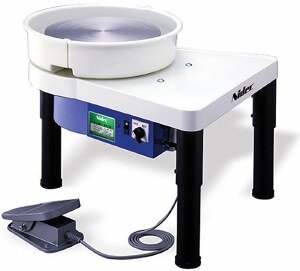
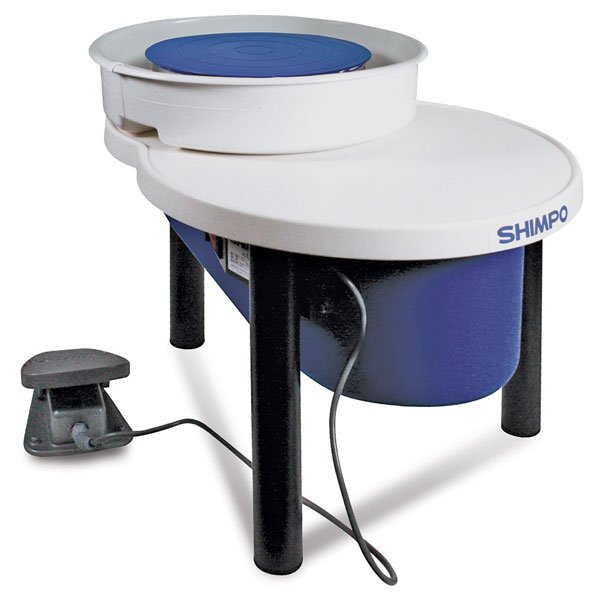
The Shimpo VL-Whisper, the top pick in our Pottery Wheel Buyer’s Guide.

The Shimpo VL-Whisper, the top pick in our Pottery Wheel Buyer’s Guide.

This chart includes every wheel made by dependable manufacturers, including Bailey, Brent, Bth, Lockerbie, Pacifica, Shimpo, Skutt, Soldner, and Speedball. The chart includes specifications, typical price ranges, and other information to help you make a decision when shopping for a wheel.

This chart compiles all the data on different models of wheels, so that you can really dig into the technical specifications and compare wheels.

For a complete guide to wheels, please visit our Pottery Wheel Buyer’s Guide. The buyer’s guide includes recommendations, reviews, and advice on where and how to buy wheels.

Note: The chart below uses affiliate links with Blick and Amazon. If you click a link and make a purchase, we may receive a small commission at no extra cost to you.

Bailey Pottery Wheels

Available at baileypottery.com
Model List Price Typical Price Motor (HP) Wheelhead
Diameter
Bat Pin
Diameter
Reversible Dimensions Weight Speed (RPM) Warranty Capacity
ST $1,687 $1,351 1/4 HP 12" 10" Yes, plug 22.5 x 25.5 x 21" 93 lbs 0-200 5/10 years 50 lbs
ST-X $2,055 $1,541 1/4 HP 13" 10" Yes, switch 24.5 x 29 x 20.25" 103 lbs 0-200 10 years 50 lbs
ST-XL $2,154 $1,702 1/2 HP 13" 10" Yes, switch 24.5 x 29 x 20.25" 123 lbs 0-200 10 years 100 lbs
PRO-50R $1,874 $1,499 1/4 HP 12" 10" Yes, plug 24.25 x 29 x 20.25" 92 lbs 0-200 10 years 50 lbs
PRO-X $2,109 $1,581 1/4 HP 13" 10" Yes, switch 24.5 x 29 x 20.25" 102 lbs 0-200 10 years 50 lbs
PRO-XL $2,141 $1,692 1/2 HP 13" 10" Yes, switch 24.5 x 29 x 20.25" 116 lbs 0-200 10 years 100 lbs

Brent Pottery Wheels

Click links in the chart to shop at Blick or Amazon.
Model List Price Typical Price Shopping Link Motor (HP) Wheelhead
Diameter
Bat Pin
Diameter
Reversible Dimensions Weight Speed (RPM) Warranty Capacity
B $2,700 $2,200-$2,300 Blick
Amazon
1/2 HP 14" 10" Yes, switch 21 x 28 x 21.5" 119 lbs 0-240 10 years 150 lbs
B Black $2,750 $2,100 1/2 HP 14" 10" Yes, switch 21 x 28 x 21.5" 119 lbs 0-240 10 years 150 lbs
C $2,800 $$2,100 Blick 3/4 HP 14" 10" Yes, switch 21 x 28 x 21.5" 121 lbs 0-240 10 years 225 lbs
C Black $2,850 $2,150 Blick 3/4 HP 14" 10" Yes, switch 21 x 28 x 21.5" 121 lbs 0-240 10 years 225 lbs
CXC $2,975 $2,200 Blick 1 HP 14" 10" Yes, switch 21 x 28 x 21.5" H 129 lbs 0-240 10 years 300 lbs
CXC Black $2,975 $2,250 Blick 1 HP 14" 10" Yes, switch 21 x 28 x 21.5" H 129 lbs 0-240 10 years 300 lbs
Model 16 $4,975 $4,200 Blick 1/2 HP 12" 10" Yes, switch 36 x 36 x 21-35" H 287 lbs 0-240 2 years 150 lbs

Bth Pottery Wheels

Available at The Ceramic Shop and other suppliers.
Model List Price Typical Price Motor (HP) Wheelhead Diameter Bat Pin Diameter Reversible Dimensions Weight Speed (RPM) Warranty Capacity
B2 $1,058 $849 500 watt 12" 10" Yes, switch 31 x 26 x 23" 51 lbs 0-300 rpm 5 years 88 lbs
D3 Andromeda $1,680 $1,344 400 watt 14" 10" Yes, with switch 28 x 25 x 16.5-20.5" 89 lbs 0-300 rpm 5 years 130 lbs

Lockerbie Pottery Wheels

Available at axner.com and other ceramic suppliers.
Model Typical Price Motor (HP) Wheelhead Diameter Bat Pin Diameter Reversible Dimensions Weight Speed (RPM) Warranty Capacity
Kickwheel $1,735 N/A 13" 10" N/A 42 x 36 x 30" 325 lbs N/A 5 years N/A
Electric $2,070 1/3 HP 13" 10" No 42 x 36 x 30" 365 lbs 0-157 5 years 50 lbs
Electric-Reversible $2,230 1/3 HP 13" 10" Yes 42 x 36 x 30" 365 lbs 0-157 5 years 50 lbs


Pacifica Pottery Wheels

Click the links to shop at Blick.
Model List Price Typical Price Motor (HP) Wheelhead
Diameter
Bat Pin
Diameter
Reversible Dimensions Weight Speed (RPM) Warranty Capacity
GT400 $1,752 $1,523 1/4 HP 13" 10" Yes 31 x 27 x 20" 92 lbs 0-260 5 years 80 lbs
GT800 $2,068 $2,068 1/2 HP 13" 10" Yes 31 x 27 x 20" 105 lbs 0-260 5 years 100 lbs

Nidec Shimpo Pottery Wheels

Click the links below to shop at Blick or Amazon.
Model List Price Typical Price Shopping Link Motor (HP) Wheelhead
Diameter
Bat Pin
Diameter
Reversible Dimensions Weight Speed (RPM) Warranty Capacity
Aspire table top $807 $700 Blick 1/3 HP 100w 7" 6" No 14.5 x 20 x 9" 25 lbs 0-230 hand, 0-250 foot 5 years 20 lbs
VL-Lite $1,225 $1,077 Blick 1/2 HP 100w 12" 10" Yes, switch 22 x 28 x 21" 85 lbs 0-250 5 years 25 lbs
RK-Whisper $1,974 $1,648 Blick 1/2 HP, 400w 12" 10" Yes, switch 20 x 21 x 20" 118 lbs 0-250 5 years 100 lbs
VL-Whisper $2,152 $1,830 Blick
Amazon
1/2 HP, 400w 14" 10" Yes, switch 23.2 x 27.5 x 22.75" 122 lbs 0-250 5 years 100 lbs

Skutt Pottery Wheels

Click the links in the chart to shop at Blick.
*Note that Skutt does not provide RPMs or Centering Capacity.
Model List Price Typical Price Shopping Link Motor (HP) Wheelhead
Diameter
Bat Pin
Diameter
Reversible Dimensions Weight Speed (RPM) Warranty Capacity
Prodigy $1,950 $1,560 Blick 1/3 HP 12" 10" No 24 x 30 x 24" 94 lbs - 10 years -
Removable splash pan:
Legend $2,800 $2,240 Blick 1/3 HP 14" 10" Yes, switch 24 x 30 x 24" 117 lbs - 10 years -
Built-In Splash Pans:
Classic $2,700 $2,160 Blick 1/3 HP 14" 10" Yes, switch 24 x 30 x 24" 127 lbs - 10 years -

Soldner Pottery Wheels

Available at Bluebird Clay.
Model List Price Motor (HP) Wheelhead
Diameter
Bat Pin
Diameter
Reversible Dimensions Weight Speed (RPM) Warranty Capacity
S100 $3,450 1/4 HP 14" 10" Yes, switch ? x ? x 21.5-26" ? lbs ? ? ?
S150 $2,350 1/2 HP 14" 10" Yes, switch ? x ? x 21.5-26" ? ? ? ?
P200 $3,750 1/2 HP 14" 10" Yes, switch 38 x 28 x 21.5-26" ? ? ? ?
P250 $2,650 1/2 HP 14" 10" Yes, switch 38 x 28 x 21.5-26" ? ? ? ?
P400 $3,995 3/4 HP 14" 10" Yes, switch 38 x 28 x 21.5-26" ? ? ? ?
P450 $2,750 3/4 HP 14" 10" Yes, switch 38 x 28 x 21.5-26" ? ? ? ?

Speedball Pottery Wheels

Click the model name to shop at Blick or Amazon.
Model List Price Typical Price Shopping Link Motor (HP) Wheelhead
Diameter
Bat Pin
Diameter
Reversible Dimensions Weight Speed (RPM) Warranty Capacity
Artista table top $749 $600 Blick
Amazon
1/3 HP 11" 10" No 24 x 18 x 9" 26 lbs 0-220 2 years 25 lbs
Clay Boss $1,349 $1,050 Blick 1/2 HP 14" 10" Yes, plug 21 x 26 x 19.5" 83 lbs 0-240 10 years 100 lbs
Big Boss $1,749 $1,400 Blick 1 HP 14" 10" Yes, plug 21 x 26 x 19.5" 89 lbs 0-250 10 years 150 lbs
Boss Elite SQ $1,999 $1,600 Blick 1 HP 14" 10" Yes, plug 21 x 26 x 19.5" 96 lbs 0-240 5 years 175 lbs

Sources and Research

The information in the chart was compiled by visiting manufacturers’ websites, reviewing product manuals, and researching products on various retailers’ websites. Every effort has been made to provide accurate, up-to-date info. If you notice any errors, please contact us.

Click here for our complete Pottery Wheel Buyer’s Guide.

Or check out our Table Top Wheel Buyer’s Guide.


For more info on Pottery Wheels and where this data was sourced from:

Bailey: baileypottery.com

Brent: amaco.com/t/equipment/brent/wheels

Lockerbie: www.lagunaclay.com/potterswheels

Pacifica: www.lagunaclay.com/potterswheels

Nidec Shimpo: Japan www.nidec-shimpotougei.jp/en/pe; North America: www1.ceramics.nidec-shimpo.com

Skutt Thomas Stuart: skutt.com/pottery-wheels

Soldner: bluebirdclay.com

Speedball: speedballart.com


Pottery Wheel Buyer's Guide — The Best Wheels For All Studios

 
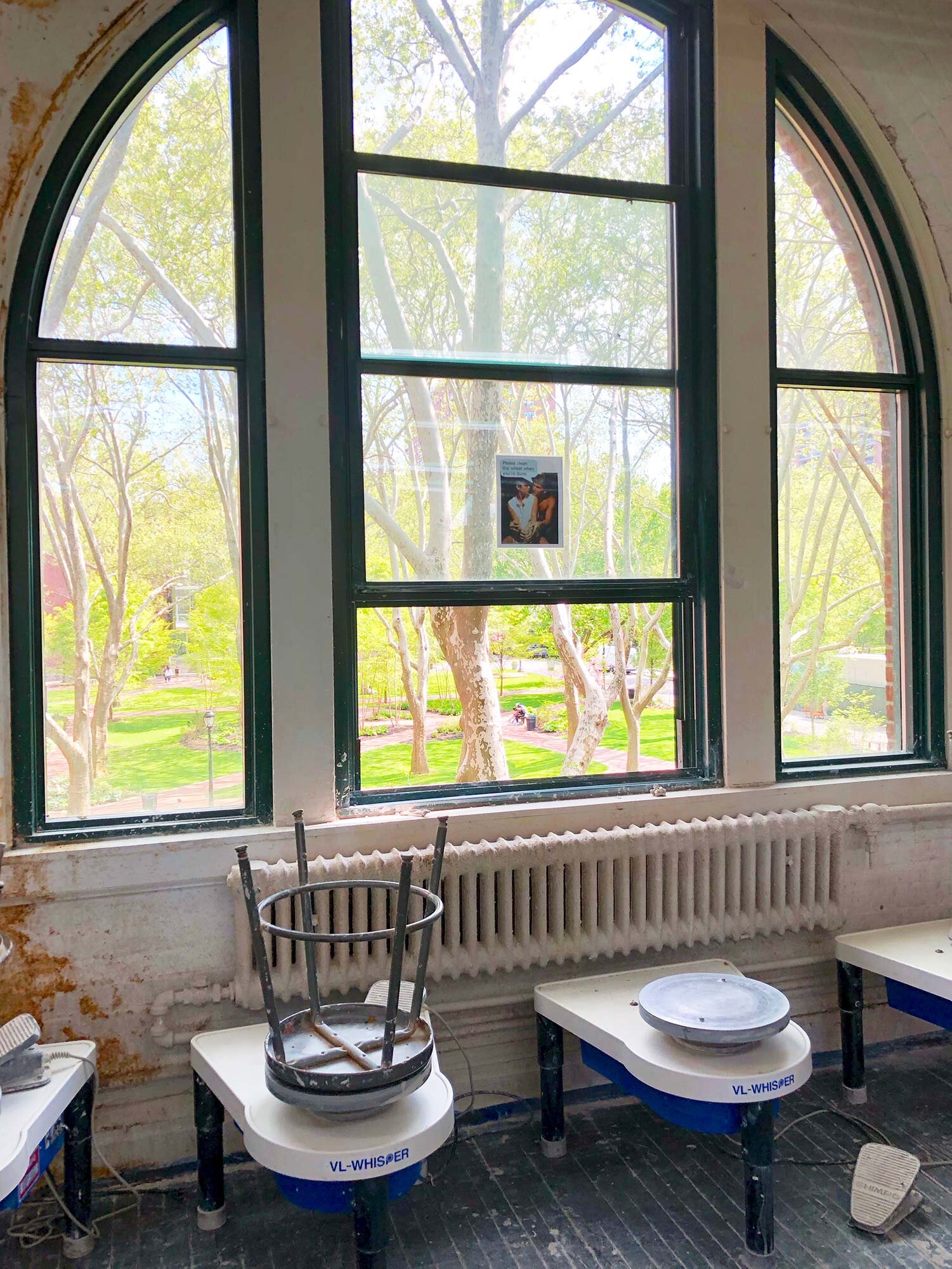
A classroom set of our top pick, the Shimpo VL-Whisper pottery wheel. The latest model of the Whisper has a slightly different table top shape but same super-quiet motor.

A classroom set of our top pick, the Shimpo VL-Whisper pottery wheel. The latest model of the Whisper has a slightly different table top shape but same super-quiet motor.


Updated August 2026. Originally published 2020.

Buying a pottery wheel can be a big decision and this guide breaks down all the features and options of all the wheels on the market. The information is based on decades of experience of working in ceramic studios, repairing wheels, helping students select wheels, and product feedback. The goal is to explain all the features of each wheel, along with information on how to select, purchase, and get a wheel delivered to your home or studio.

This guide starts with a quick overview of recommended picks, before going more in depth on each brand and model. This guide focuses on regular size pottery wheels. If you are looking for portable or table-top wheels, check out our guide to tabletop wheels here. Or, if you just want all the data to compare wheels, check visit our Pottery Wheel Comparison Chart.

First, a quick rundown of our top picks, with more detailed descriptions below:

Shimpo VL-Whisper pottery wheel

The Shimpo VL-Whisper is our top pick for a pottery wheel.

TOP PICK:

As in previous guides, our top pick for all studios is the Shimpo VL-Whisper. It’s a super-quiet workhorse with a 1/2 horse power motor that usually costs around $1,800.


The Shimpo VL-Lite is our top pick for a budget wheel.

BUDGET PICKS:
For a budget / entry level wheel, we love the Shimpo VL-Lite. It’s got a belt-driven, 1/2 horse power moter and usually retails for around $1,100. It is also one of the most affordable wheels designed for professional use.


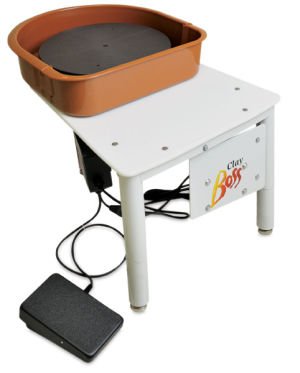
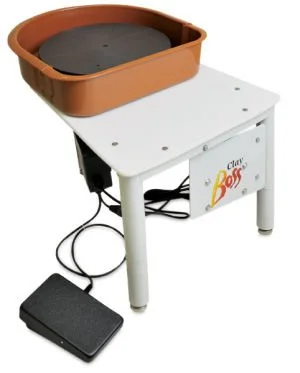
The Speedball Clay Boss is another great wheel that is available at a more budget-friendly price.

Another great budget wheel is the Speedball Clay Boss, which also has 1/2 HP belt-driven motor. It typically retails for just under $1,100.


The CXC is the top-of-the-line Brent Wheel and has a 1 HP motor.

UPGRADE / PRO PICK:
Any of the above wheels are great and are used by many professionals, but for extra power and a heavy-duty build, check out Brent wheels such as the Model C or CXC; a Skutt Wheel, especially the Skutt Classic with an aluminum splash pan; or a Soldner Wheel. Both Skutt and Brent wheels usually retail for $2,100 and up and Soldner Wheels start at $2,500.

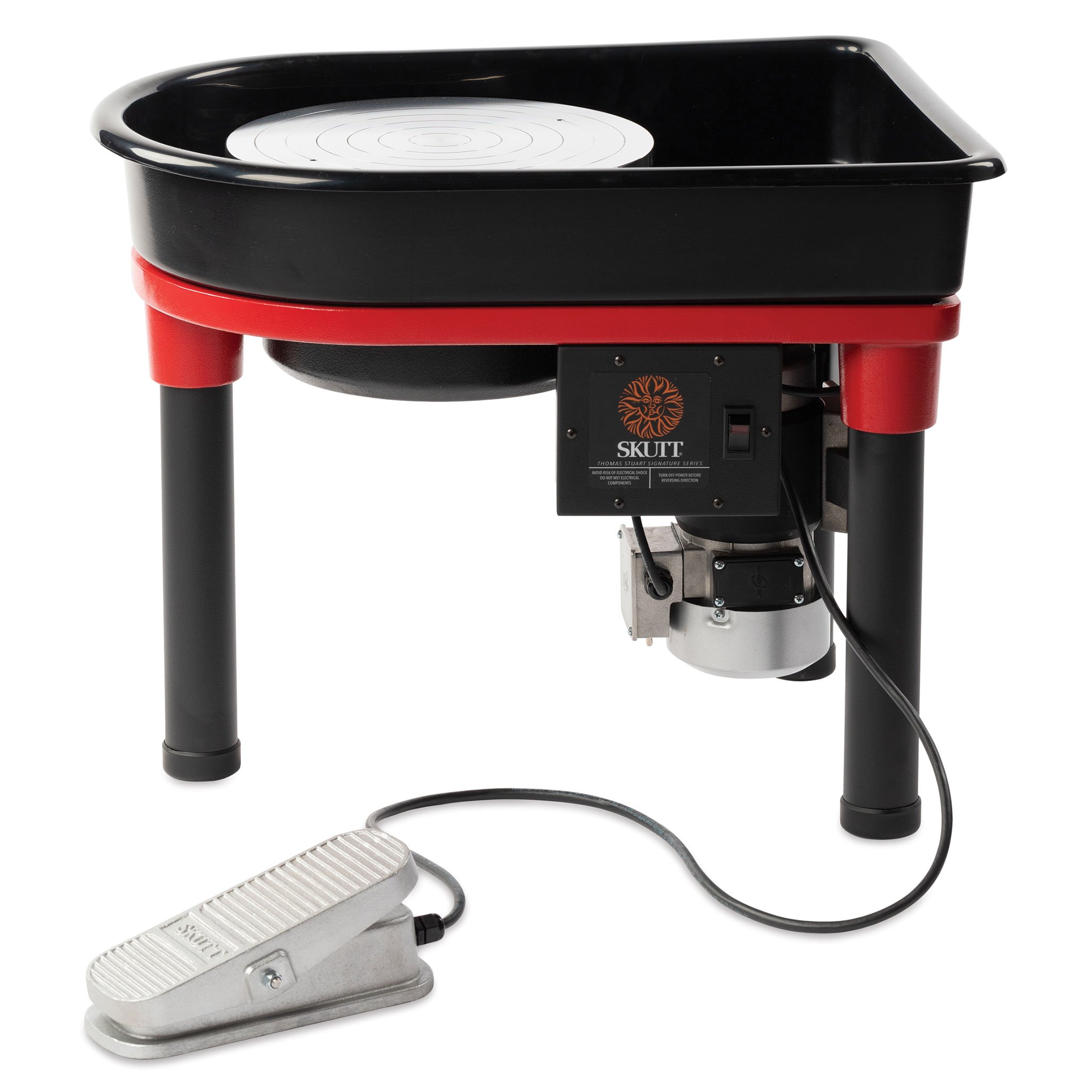
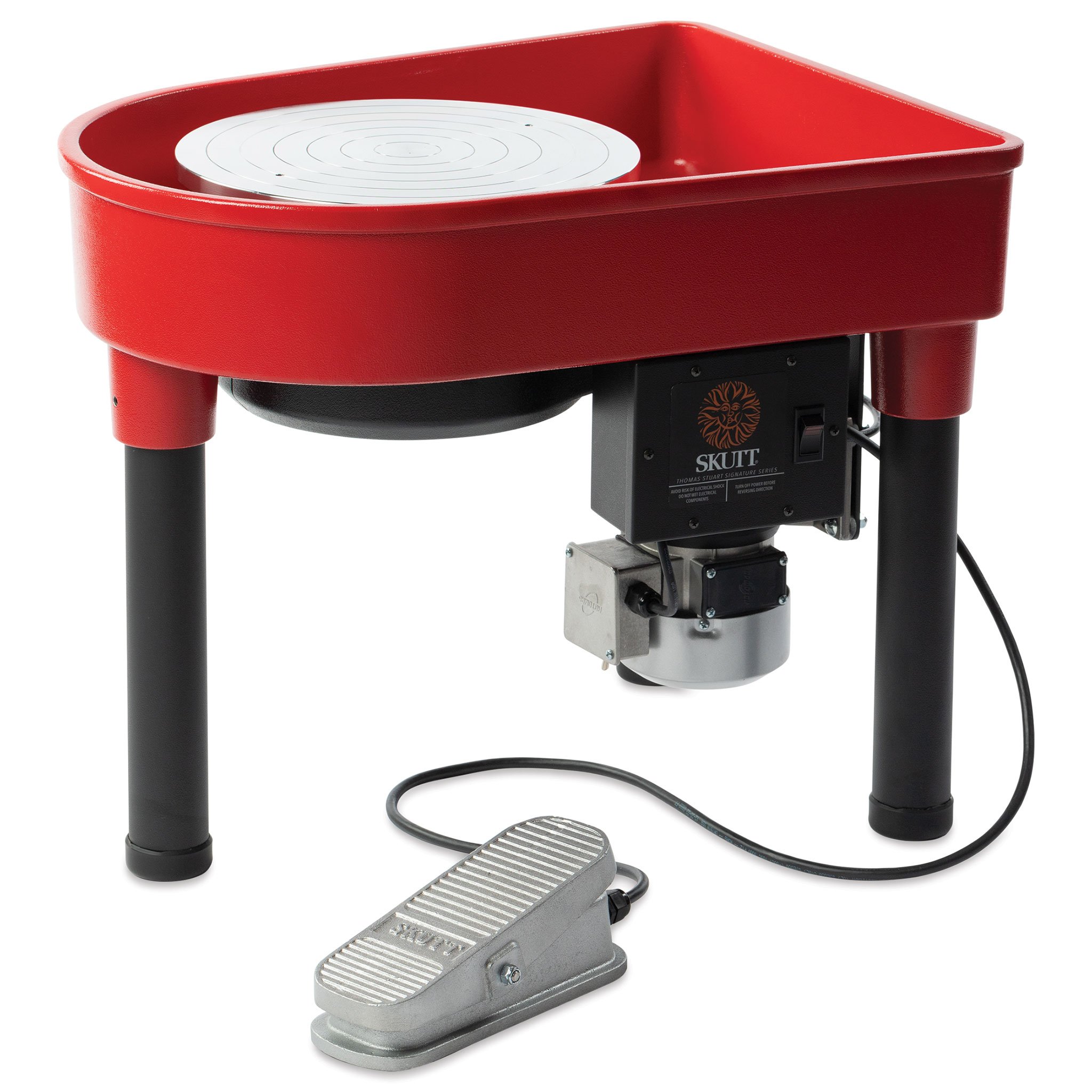
Skutt Classic Pottery wheel with a red splash and black legs.

The Skutt Classic pottery wheel features a cast aluminum splash pan.


In addition to reviews and recommendations of top wheels, this guide will cover:

  • What to look for when buying a wheel

  • Tips on where and how to buy

  • Provide a side-by-side comparison chart of just about every wheel on the market so that you can make the most informed decision.


Changes in the last few years

  1. Brent Wheels have a more streamlined approach. The B model now has a 14” wheel head (up from a 12”) so the main difference between the B, C and CXC models now is the motor strength.

  2. Skutt Wheels have also streamlined their product line. As opposed to multiple options of motor strengths in the Legend and Classic model, now just a 1/3 HP model of each are listed.

  3. Soldner Wheels are still not available at most retailers, but they can be ordered directly from the manufacturer, Bluebird Clay. The models and features have changed with new ownership.

  4. Price increases: Prices continue to go up across all manufacturers. For example, the Speedball Clay Boss and Nidec Shimpo VL-Lite used to be available for around $700-$750 in 2020, and now cost around $1,100. Outside of entry-level models, there have been more aggressive price increases. In 2020, The Shimpo VL-Whisper was around $1,450. That climbed to around $1,550 in 2023 and to $1,650 in late 2024 and now is over $1,800. The Brent C used to be around $1,500 in 2020 as well, then climbed to around $1,950 in 2023. It is now listed at $2,700 but is typically available for around $2,100, or about a 40% increase over the typical 2015 price.

  5. Budget / Entry Level wheels: A few ceramic retailers are carrying Bth wheels, a new entry in the budget line of wheels and a possible competitor for the Shimpo VL-Lite and Speedball Clay Boss.


Note on “Under $200” wheels:
This guide covers wheels from manufacturers including Bailey, Brent, Lockerbie, Pacifica, Shimpo, Skutt, Soldner, and Speedball. These are designed for professional, heavy-duty use. Wether you spend $1,100 or $1,850 or more, you will get a wheel that could last a lifetime.

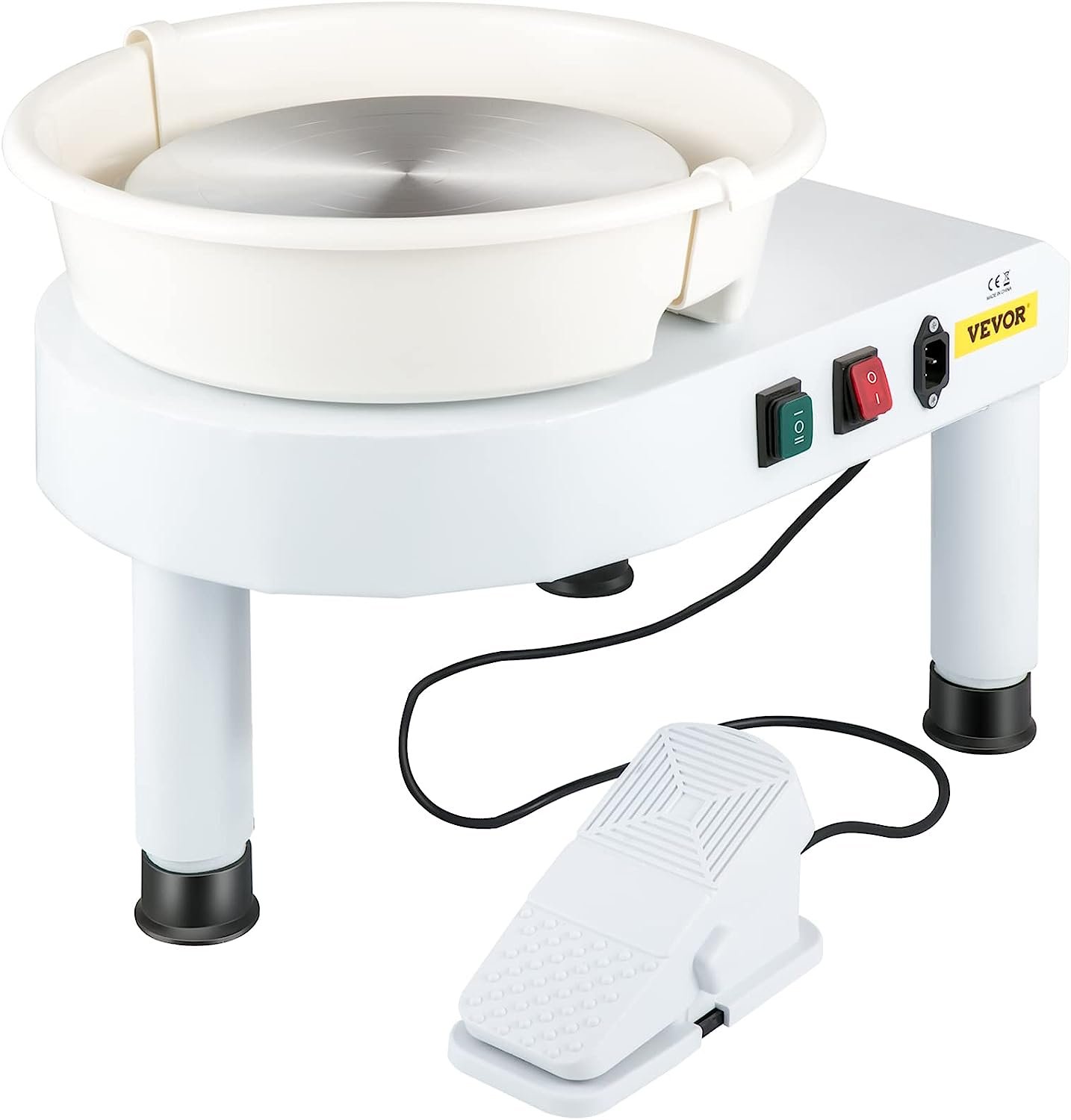
The small Vevor wheel is available for just $130.

But what if you are just starting out and want to try wheelthrowing for less? It is probably best to try the wheel in a pottery class, but if you really want something at home, there are numerous wheels that are available online for such as a Vevor for $142 or even just $120. These wheels are small, have weak motors that max out with about 5 pounds of clay, no holes for bat pins, and may not hold up under regular use. You can make them work, but that $100 to 200 would be better put towards any wheel listed in this article, which will last 10 to 20 years or when used properly, a lifetime.

Another option is to check out our guide to table top and portable wheels, which start around $600.

For a complete review and guide to full-size wheels, keep scrolling.


How This Guide Was Created

This guide draws on almost 25 years of experience working in ceramic studios, including using almost every single model of wheel listed in this guide. While for the most part, if the wheel spins, it will do what you need to do, each manufacturer brings something different to the table and this guide will help you narrow down the right model for you. The technical and pricing info was drawn from visiting numerous websites to compile technical and price information, and is updated as of August 2026.


Table of Contents

  1. Top Pick: Shimpo VL-Whisper

  2. Budget Picks: Shimpo VL-Lite or Speedball Clay Boss

  3. Pro Pick: Brent Wheels, Soldner, or Skutt Wheels

  4. Other Great Wheels

  5. Understanding Pottery Wheels

  6. How To Shop For A Wheel

  7. Pottery Wheel Comparison Charts


Top Pick: Shimpo VL-Whisper

The Nidec-Shimpo VL-Whisper pottery wheel, our top pick for a wheel. It has a super-quiet motor, adjustable legs, and a lot of thoughtful features.

The Nidec-Shimpo VL-Whisper pottery wheel, our top pick for a wheel. It has a super-quiet motor, adjustable legs, and a lot of thoughtful features.

Our top pick for all types of studios and skill levels is the Nidec Shimpo VL-Whisper pottery wheel. Introduced almost 20 years ago, this has become one of the top-selling wheels mainly due to its innovative 1/2 horse power, direct-drive DC motor that uses magnets to drive the wheel. This system makes the VL-Whisper truly the most quiet wheel on the market. Almost every other wheel uses a belt-drive system that makes more noise and has more moving parts that can break down over time.

The Shimpo VL-Whisper with the legs removed, for use as a table top wheel if you prefer to stand while throwing.

The Shimpo VL-Whisper with the legs removed, for use as a table top wheel if you prefer to stand while throwing.

Along with being super quiet, the VL-Whisper magnetic drive has instant torque and is powerful enough for most potters. The rest of the wheel is well designed with a three legs, sturdy plastic top, 2-part splash pan that surrounds a 14” wheelhead, a moveable floor pedal, and a switch to run the wheel clockwise or counterclockwise. The 1/2 horsepower 400 watt motor is rated to a centering capacity of 100 lbs and the wheel comes with a 5 year warranty.

The VL-Whisper has other thoughtful engineering touches, including adjustable, removable legs that allow for tabletop use or a variety of heights on the floor. The wheelhead also turns freely at 0 rpm, allowing for use as a banding wheel (although it is more that it spins freely rather than working as a true banding wheel.) The VL-Whisper weighs around 120 lbs and measures 23 1/8” x 27 1/2” and can range from 11” to 21” in height.

The drawbacks to this wheel would be that the splash pan is not the sturdiest. If you are careful and just using it yourself, it will be fine, but I have noticed that it is more prone to cracking in heavy-use communal studios than the Brent splash pan. The foot pedal cord is also prone to twisting. But these are relatively minor issues.

Some pro potters may want a more powerful motor, and some beginners may find the price tag prohibitive (typically $1,850), but I can really say without a doubt that this is the best overall wheel on the market. What really sets it apart is the quiet motor, adjustable legs, 0 rpm banding wheel option, and how it is just a thoughtfully designed, sturdy machine. The Nidec Shimpo company has also done a good job keeping the price down. Brent B wheels, for example, used to priced about the same as the VL-Whisper, but now the entry-level Brent is typically $200 to $300 more than the VL-Whisper.

This wheel is available at just about every ceramic supplier worldwide. The wheel is readily available at Blick art stores in North America or can sometimes be found at Amazon as well.

Shimpo VL-Whisper
14 inch wheel head, reversible, 1/2 horsepower
List price: $2,152
Typical Price: $1,830


Budget Picks: Shimpo VL-Lite or Speedball Clay Boss

The VL-Lite from Shimpo is a great, budget-friendly wheel.

The Shimpo VL-Lite and Speedball Clay Boss are the best budget wheels on the market, and the VL-Lite is usually priced around the same as the Clay Boss.

The VL-Lite has 1/2 horsepower motor, 12 inch wheel had, sturdy plastic table top with metal legs, and is reversible via a switch.

The drawback to this wheel would be it’s somewhat limited, 25-pound centering capacity. But for many, that would be an extremely large amount of clay! So you have to think about what you typically throw and consider if this is the right wheel for you.

Shimpo VL-Lite
12 inch wheel head, reversible, 1/2 horsepower
List Price: $1,060
Typical Price: $901


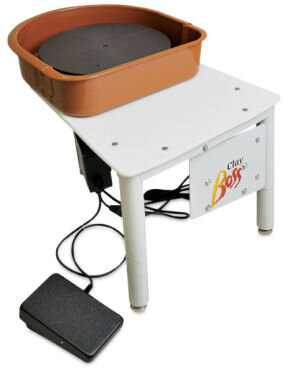
The Speedball Clay Boss, our top pick for a budget wheel. It’s got a 1/2 horse power motor and lighter body construction that many prefer.

The Speedball Clay Boss, has a 1/2 horse power motor and a lighter body construction that many prefer for ease of moving the wheel around.

The Speedball Clay Boss has a 1/2 horse power motor, a belt-driven, 14” wheelhead, and a standard triangular design that weighs around 83 pounds, making it one of the lightest full-size wheels on the market. (The VL-Lite weighs 85)

The Clay Boss has a detached foot pedal, and is reversible by switching the direction of the plug, so it will work for throwing clockwise or counter clockwise. Speedball rates it at a 100 pound throwing capacity.

There aren’t any big downsides to this wheel, but there are trade offs. It doesn’t have the most robust build on the foot pedal. And it’s belt-driven, so it will be noisier than our top pick, the Shimpo VL-Whisper. But it’s still a great wheel that will get the job done.

Speedball Clay Boss
14 inch wheel head, reversible with plug, 1/2 horsepower
List Price: $1,299
Typical Price: $1,040


Pro Pick: Soldner Wheels or Skutt Wheels

The Soldner P-450, a 3/4 horse power pottery wheel. Soldner wheels are known for their ultra-responsive foot pedal and are now ultra-customizable with a variety of table top and color options.

For potters looking for an upgraded experience, the best option are Soldner or Skutt wheels. These wheels feature large, oversized motors and extra-responsive, upgraded foot pedals, combined with sturdy legs and tops. Do you need a wheel like this? If you are serious potter, spending a few hours a day on the wheel or more, the larger motors will really deliver for you and not overheat (The Shimpo VL-Whisper is great in this regard too). But with these models, the big upgrade will be the super-sensitive foot pedals.

Soldner Wheels and manufacturer Bluebird Clay were purchased by a new owner in 2022 or 2023 and are still the same great quality with some changes. You can now choose a standard pedal or the upgraded Soldner pedal, along with choosing a plastic table top or the classic Soldner plywood top. (Speaking as an owner of an older Soldner wheel before these changes were offered, go with the upgrades if you can afford it.) There have been some other changes as well, such as colors and a few options on the motor, but all with the eye to building upon the Soldner Wheel history while updating the product line. The Soldner wheels are known for their smooth, strong motors with a top-of-the-line foot pedal that will adjust to every touch you give. These wheels are a pleasure to use. Any of the six wheels in the line up are great.

There is no doubt that these are expensive wheels, but they are made in Colorado to your specifications and in the scheme of things, a wheel that will easily last you 30 years or more is probably worth the extra hundreds of dollars you will spend. Visit bluebirdclay.com to learn more and shop for Soldner Wheels.


The Skutt Classic wheel with a built-in, aluminum splash pan.

The Skutt Pottery Wheel line features three wheels, including their entry-level model, the Prodigy, which has a circular splash pan on a table much like other wheels.

Pros will want to look at the two higher-end models which feature large and deep splash pans.

The Legend wheels have a removable wheel head and splash pan for easy cleanup, and is available 1/3 hp options. Skutt previously offered a 1/2 and 1 HP option, but those aren’t listed online any more.

The Classic wheel has a built in, super sturdy aluminum splash pan and also has the a 1/3 HP motor (the 1/2 and 1 HP options also appears to be gone.

The Skutt wheels also have an optional “SSX” foot pedal upgrade, which gives you an ultra-responsive, smooth response that puts these in the same range as the Soldner wheels. As of 2023, Skutt wheels also feature a new color scheme of red and black.

Skutt Classic
14” wheel head, reversible
Built in splash pan
List Price: $2,700
Typical price: $2,160

Skutt Legend
14” wheel head, reversible
Removable splash pan
List Price: $2,800
Typical Price: $2,240


Other Great Wheels: Brent Wheels and Others

The Brent B, a 1/2 horse power pottery wheel that is one of the most popular wheels on the market.

The Brent B, a 1/2 horse power pottery wheel that is one of the most popular wheels on the market.

In addition to the options above, there are other pottery wheel options to consider, particularly wheels from Brent, Bailey, and Pacifica.

For many potters, their favorite wheels are made by Brent. Known for their distinctive yellow ochre plastic tops and splash pans, you have probably seen or used a Brent as they are arguably the best-selling wheels in North America. (This data isn’t public but Brent and Shimpo seem to be the two most common wheels).

As a point of comparison, the Brent B is closest to the other wheels we have recommended above. It has a 1/2 horsepower motor, can go forward and reverse, and now has a 14 inch wheel head. When new, these wheels are very quiet even though they utilize a belt-driven system, and with a 10-year warranty, you can be assured that Brent wheels will last for decades.

While the Brent wheels are incredibly popular, they are not our top pick for two reasons: The Shimpo VL-Whisper is much quieter. And the Soldner and Skutt wheels come with added features, such as better foot pedals and oversized motors. Brent doesn’t have these upgrades, but if they had a more responsive foot pedal option, they would be strong contenders along with Soldner and Skutt wheels

At some point in 2024 or early 2025, Brent streamlined it’s offering by switching the B model to a 14” wheel head. The only difference now is the strength of the motor, so choose accordingly between the B, C, or CXC model. They also now offer each of their wheels in an all-black option, in addition to the classic yellow ochre.

For a complete guide to Brent wheels, click here.

Brent B
14” wheel head, reversible
1/2 HP motor
List Price: $2,700
Typical Price: $2,000-$2,100

Brent C
14” wheel head, reversible
3/4 HP motor
List Price: $2,800
Typical Price: $2,100-$2,200


Understanding Pottery Wheels, a Pottery Wheel Buying Guide

In this section, we’ll go through each part and feature to help you understand wheels and how to choose the best one for you. Unfortunately, there’s usually not a store or supplier where you can go and sit down and try every wheel, so going through each part of the wheel will help you understand the different features offered by each manufacturer.

Motor

The biggest difference between wheels, even within a manufacturer’s product line, is usually the motor. With wheels on the market ranging from 1/4 horsepower to 1 horsepower, most potters will find that a 1/2 HP motor is the sweet spot of plenty of power without paying extra. If you are able to test wheels in person, you will see the difference in size of motors too. Not all motors are created equally, even if they are rated to the same HP. You may want to also compare the wattage of the motor, to see which motors may have a higher capacity and will hopefully better withstand overheating under heavy use.

With that in mind, if you can afford it, go for the biggest motor that fits your budget to give yourself more longevity.

Centering Capacity

A similar consideration to the motor power, centering capacity is often mentioned with wheels. It’s a somewhat useful metric that is basically a stand-in for horsepower. Skutt, however, refuses to provide this centering capacity number, arguing that it is a useless metric. But since most manufacturers use it, we’ve kept it in our chart below. Centering capacity is related to both the power of the motor, the torque it gives at start up, and the sensitivity of the foot pedal. If it matters to you, and you have the money, you won’t be disappointed with a bigger motor with more centering capacity. Realistically, most potters aren’t centering more than 10 or 20 lbs so wheels advertising 200 or 300 lb centering capacities are really indicating that they have an overbuilt motor that will be able to take a lot of use.

Table Top, Legs, Frame

The next biggest difference is the material and design of the table and legs. Most wheels have a sturdy plastic top, and metal legs. Some have beefier legs, metal tops, or in the case of Soldner wheels, a marine-grade plywood top option. Manufacturers typically have one or maybe two table styles, and will build different features on top of these frames. These frame constructions will determine the dimensions and some of the weight of the wheel. When choosing a wheel, consider the size, weight, and type of frame and table top that will work for your studio. If you are moving wheels around, say in a classroom, then a lighter wheel may be better.

Splash Pan

Another point of comparison is the splash pan. Typically a two-part plastic pan that clips around the wheelhead, splash pans are useful for collecting throwing water or trimming scraps. Some wheels, such as Baileys and Skutts, have large one-piece splash pans that cover the whole top of the frame. Some of these one-piece splash pans are removable, and others are built in and can be cleaned and emptied via a drain plug. As cleanup is a big part of throwing, choosing a splash pan that suits you can be important.

Weight / Dimensions

Most wheels are about the same size and shape, with some variation with half moon shapes with Soldner and Lockerbie wheels. The weight is determined by the size of the motor and the frame construction. A lighter wheel, such as a Speedball, is easier to move while pro-type wheels, such as Skutt, have marketing pictures of potters standing on top of the wheel. How you are going to use a wheel and your studio space will really determine if you need a lightweight or heavyweight wheel. Some manufacturers have add-on shelves that attach to the wheel for more working space, but you can also set your wheel up next to a low table to have more shelf space within reach.

Wheel head

Most wheels have a 12”, 13” or 14” wheelhead with bat pins spaced 10” a part. Some smaller wheels or table top wheels will have different styles. Measure a wheel head that you like using to determine the size you like, although most wheels now have a 14” wheel head.

Another point of consideration is if the wheel head can be removed or replaced. Typically, this is only built in for everyday cleaning in a few models from Skutt and Bailey. For ongoing maintenance, most wheel head ball bearing assemblies are completely sealed and not designed to be oiled or repacked with grease. If your wheel head develops a grinding sound, you may have to replace it.


Foot Pedal

A foot pedal may seem just like a simple speed control, but the pro-level Skutt and Soldner wheels use their ultra-responsive (and more expensive) pedals as a selling point. In addition to the upgraded pedal options, also consider if the foot pedal and on-board electronics are providing some kind of computer-controlled speed modulation to keep things even (such as Pacifica wheels), or just letting you control the speed with the pedal (such as Brent, Shimpo, Soldner, and Skutt wheels.) The more experienced you are, the less you’ll want the wheel making decisions for you.

One other point of consideration with foot pedals is whether it is fixed or not. Every model listed below has a moveable foot pedal except the Shimpo RK-Whisper, which has an attached pedal on the right side. A moveable foot pedal lets you to choose which side to place it, and allows you to raise the pedal on bricks if needed.

Speed

Many manufacturers provide a rotations per minute (RPM) figure in relation to motors, which we’ve included below. Once again, these give you a rough approximation of motor power and torque, but they are all within a range that is about the same, ranging from 0 to 240-260 rpm max. The Lockerbie motor has a much lower max rpm but it’s a super beefy 1/3 HP motor that trades a high speed for great torque.

Reversability

Most good wheels these days come with a convenient switch where you can reverse the direction of the motor, allowing you to throw clockwise or counter clockwise. Some lower-priced wheels have a reversible plug, where you have to manually switch the direction of the cord to have the wheel go clockwise or counter-clockwise. Some wheels are not reversible at all.

Adjustable Legs and Leg extenders

Some wheels, such as Soldners, come with adjustable legs so that you can set the wheel height exactly how you want it. Almost any other wheel will have to be adjusted with shims or bricks, if you want to move it up a few inches.

A few manufacturers make leg extenders, so that a wheel can be converted to a standing wheel. This style of throwing can be more comfortable for your lower back. Definitely consider this when choosing a wheel, or look at the models such as the Shimpo Whisper, which has removable legs and a flat bottom so that it can be easily placed on a table.

Shipping and Assembly

Some wheels arrive completely assembled, others need some light assembly such as attaching legs. They also vary on whether they ship via FedEx / UPS or by freight. Expect to pay extra for shipping and delivery, unless you are picking a wheel up in person. Also consider how you will get the wheel into your studio, as they can be heavy. Some vendors will include free shipping so definitely compare prices with shipping included to find the best deal.

Warranty

Warranties on wheels range from 2 to 10 years. But every wheel listed below is a top-quality product that should last for decades. If you are careful and respectful, you shouldn’t worry too much about a shorter warranty. But if you are buying for an educational or communal studio where wheels can really be abused, you might want to consider wheels with longer warranties.

In our experience, the main upkeep on wheels is keeping them clean and trying to occasionally add some oil to moving parts. Foot pedals can be adjusted, electronics such as switches can be replaced. The biggest concern would be a wheel head bearing assembly getting repeatedly swamped with too much water in the splashpan. But if you are careful, a wheel may never need any major repairs.

The “under $200” wheels don’t seem to come with any warranty at all.

Price

All the factors above contribute to the price. The lowest price possible is often the driving force of any purchase, and if that is you, we recommend the Shimpo VL-Lite wheel, which typically cost around $900. For this lower price you are getting a lighter, less beefy frame and most likely a noisier motor but one that will still get the job done for you. Professional-grade wheels typically cost $1,800 to $2,000 or more, depending on the options you select. If you are on the fence when choosing upgrades such as a bigger motor or a better foot pedal, consider how you will feel in 5 to 10 or 20 years. You probably won’t think about the extra few hundred dollars you spent initially, instead you will be happy that you got the upgrades to make your wheel last a lifetime.


Where to Shop and Buy Pottery Wheels

Before buying a wheel, think about what you have used and what features you need. If you currently have a favorite style or brand of wheel, you’ll probably be happy sticking with that style. For research, the best place to start is your local ceramic shop where you can hopefully “test drive” different models to see what feels good to you. Consider asking if they have floor models or special deals on wheels already in stock. Unfortunately, most ceramic suppliers do not have every model of wheel available in the store to try out, so you will almost always be choosing based on limited in-person experience.

If you are shopping online, we have provided links to some wheels at Blick (North America) and Amazon. Some ceramic stores advertise a price that includes shipping, while others add it on in your cart. So definitely shop around and see where you can find the best deals. If you order from online vendors, the wheel is most likely going to be shipped directly from the manufacturer anyway, so you should try to find the best deal.

To reiterate: definitely shop around and calculate the total cost of the wheel plus shipping if you are getting a wheel delivered.

Wheel Repair and Warranty

After buying a wheel, you will be dealing with the manufacturer if you need any repairs, although a relationship with a local ceramic shop is a great resource if you need help with repairs or adjustments. Manufacturers such as Skutt and Bailey are known for their great online and phone customer service. Other manufacturers, such as Brent, provide lots of support both in person and with repair videos on YouTube.

Most likely, nothing will go wrong with your wheel in the short term but you should expect to make adjustments to foot pedals. And if you are messy, or have an academic studio, expect students to jam clay into any open spot on the wheel, potentially damaging parts such as on/off switches or swamping the wheel head with water and getting water into the bearing assembly. For most quality wheels, repair parts are readily available from ceramic suppliers or the manufacturer. The good news is that manufacturers are increasingly using sealed switches and other waterproof parts.


Pottery Wheel Comparison Chart

The following section goes through every wheel on the market, and is listed in alphabetical order by manufacturer, including Bailey, Brent, Bth, Lockerbie, Pacifica, Shimpo, Skutt, Soldner, and Speedball.

These are all trustworthy brands and any of the wheels listed below will last a long time. We have done our best to compile a typical range of prices found online and in store, along with each wheel’s features. There is also a description of what to expect from each manufacturer’s wheels.

The Bailey Pro-XL Pottery Wheel is our pick for the best Bailey wheel. It has a 1-piece splash pan and a 1/2 HP motor.

The Bailey Pro-XL Pottery Wheel is our pick for the best Bailey wheel. It has a 1-piece splash pan and a 1/2 HP motor.

Bailey Pottery Wheels

Bailey Wheels are manufactured by the Bailey Pottery Corporation of Kingston, New York. Known for innovative and high quality slab rollers, kilns, extruders, and other equipment for ceramic studios, the Bailey wheels are characterized by a large, table-sized splash pan. There are two main models, the ST and the PRO model, which each come in three different options. The ST models have a 2-piece, removable splash pan while the PRO models have a 1-piece, counter-sized fixed splash plan with a plug and a drain tube.

Bailey sells optional leg extenders that work with all the models, which can extend the height from 29 to 37 inches.

All the models utilize a standard belt drive system, and have detached foot pedals.

The prices on Bailey wheels have not changed since our last guide in fall of 2023. I’m not sure if they are sitting on a large inventory of unsold stock, or they can absorb the rising costs of manufacturing, but it’s nice to see someone hold the line on pricing and it makes the wheels increasingly competitive while still being a somewhat niche brand in comparison to Brent, Shimpo, and Speedball.

For the best option, go with the ST-XL or PRO-XL, which both feature a 1/2 HP motor, 13” wheelhead, and a reversing switch.

Bailey Pottery Wheels

Available at baileypottery.com
Model List Price Typical Price Motor (HP) Wheelhead
Diameter
Bat Pin
Diameter
Reversible Dimensions Weight Speed (RPM) Warranty Capacity
ST $1,687 $1,351 1/4 HP 12" 10" Yes, plug 22.5 x 25.5 x 21" 93 lbs 0-200 5/10 years 50 lbs
ST-X $2,055 $1,541 1/4 HP 13" 10" Yes, switch 24.5 x 29 x 20.25" 103 lbs 0-200 10 years 50 lbs
ST-XL $2,154 $1,702 1/2 HP 13" 10" Yes, switch 24.5 x 29 x 20.25" 123 lbs 0-200 10 years 100 lbs
PRO-50R $1,874 $1,499 1/4 HP 12" 10" Yes, plug 24.25 x 29 x 20.25" 92 lbs 0-200 10 years 50 lbs
PRO-X $2,109 $1,581 1/4 HP 13" 10" Yes, switch 24.5 x 29 x 20.25" 102 lbs 0-200 10 years 50 lbs
PRO-XL $2,141 $1,692 1/2 HP 13" 10" Yes, switch 24.5 x 29 x 20.25" 116 lbs 0-200 10 years 100 lbs


Brent Pottery Wheels

The Brent B Pottery Wheel, a full-sized wheel with a 1/2 HP motor.

The Brent B Pottery Wheel, a full-sized wheel with a 1/2 HP motor.

Brent wheels are the workhorses of the ceramics world. These are some of the most popular wheels and you will see these yellow ochre machines just about everywhere. Founded in 1967 by Robert Brent, the wheels have been manufactured by the American Art Clay Company (AMACO) since 1978. The wheels are sturdy, dependable, and easy to adjust and repair. Expect these machines to easily last 15 to 20 years or more even under the heaviest of uses.

The product line is straightforward with one style of frame available in yellow ochre or all black. The difference in the models is simply a larger motor.

The Brent B has a 1/2 hp motor, the C has a 3/4 hp motor, and the CXC has a 1 hp motor. (As of 2023, Brent no longer listed the 1 1/2 hp CXC model.)

One note is the Brent centering capacity, as listed below. These are some really big numbers — Brent claims a 150 lb centering capacity for the Model B with a 1/2 HP motor. Most other manufacturers claim 50 lbs for a 1/2 HP motor. So these numbers may be a bit inflated but we’ve included Brent’s numbers below.

Brent wheels are available at ceramic suppliers or click the links in the chart to shop at Dick Blick. For a complete overview of the product line, click click here.

Brent Pottery Wheels

Click links in the chart to shop at Blick or Amazon.
Model List Price Typical Price Shopping Link Motor (HP) Wheelhead
Diameter
Bat Pin
Diameter
Reversible Dimensions Weight Speed (RPM) Warranty Capacity
B $2,700 $2,000-$2,100 Blick
Amazon
1/2 HP 14" 10" Yes, switch 21 x 28 x 21.5" 119 lbs 0-240 10 years 150 lbs
B Black $2,650 $2,100 1/2 HP 14" 10" Yes, switch 21 x 28 x 21.5" 119 lbs 0-240 10 years 150 lbs
C $2,800 $$2,100-$2,200 Blick 3/4 HP 14" 10" Yes, switch 21 x 28 x 21.5" 121 lbs 0-240 10 years 225 lbs
C Black $2,850 $2,150-$2,250 Blick 3/4 HP 14" 10" Yes, switch 21 x 28 x 21.5" 121 lbs 0-240 10 years 225 lbs
CXC $2,975 $2,200-$2,300 Blick 1 HP 14" 10" Yes, switch 21 x 28 x 21.5" H 129 lbs 0-240 10 years 300 lbs
CXC Black $2,975 $2,250-$2,350 Blick 1 HP 14" 10" Yes, switch 21 x 28 x 21.5" H 129 lbs 0-240 10 years 300 lbs
Model 16 $4,975 $4,199 Blick 1/2 HP 12" 10" Yes, switch 36 x 36 x 21-35" H 287 lbs 0-240 2 years 150 lbs

Bth Pottery Wheels

Bth Sirius pottery wheel with white splash pan and white table top and black legs

The Bth Sirius wheel has a 12” wheelhead

A newer entry to the North American market, Bth Pottery Wheels are available at just a few ceramic suppliers. The two models are competitively priced entry-level wheels.

Reviews in online forums report decent quality on the wheels with some questions about the design of the splash pan, which attaches with magnets. Overall, users seem really happy with what they get for what is now, an extremely low entry-level price compared to other wheel manufacturers.

Bth Pottery Wheels

Available at The Ceramic Shop and other suppliers.
Model List Price Typical Price Motor (HP) Wheelhead Diameter Bat Pin Diameter Reversible Dimensions Weight Speed (RPM) Warranty Capacity
B2 $1,058 $849 500 watt 12" 10" Yes, switch 31 x 26 x 23" 51 lbs 0-300 rpm 5 years 88 lbs
D3 Andromeda $1,680 $1,344 400 watt 14" 10" Yes, with switch 28 x 25 x 16.5-20.5" 89 lbs 0-300 rpm 5 years 130 lbs

Lockerbie Pottery Wheels

The Lockerbie Motorized Kick Wheel, a true workhorse of a wheel with possibly the biggest motor on the market.

The Lockerbie Motorized Kick Wheel, a true workhorse of a wheel with possibly the biggest motor on the market.

Lockerbie Wheels are an interesting option manufactured by Laguna Clay in California. There are three models: a kickwheel (K), a motorized kickwheel (EK), and a reversible motorized kickwheel (EK-R). These are big, heavy wheels but if you want to switch between a kickwheel and a motor, this is the best option on the market. All models feature an adjustable wooden seat, a metal splash pan, and an all-metal frame with a concrete flywheel.

The flywheel results in a steady, even spin when used as a kickwheel. While centering and throwing on a non-motorized wheel can take a lot of work, trimming on a kickwheel is an absolute pleasure. The upgraded model with a motor is where this wheel really shines. It’s got a large, powerful motor that while only rated to 1/3 HP and a max of 157 rpm, has a lot of torque and can definitely handle more than the rated 50 lbs centering capacity. When you press the pedal, the motor engages the flywheel through a rubber wheel, or what Laguna calls “rubber friction drive.” This rubber wheel does wear out over time but is easily replaced. When you release the pedal, the kickwheel will continue to spin, until you stop it with a foot or let the flywheel come to a stop.

Lockerbie wheels have been around since the 1960s and in 2007, the company merged with Laguna Clay. The wheel style and design has been virtually unchanged for decades but it is a tough, well-designed beast of a wheel. It’s a great option for educational studios or if you want to have a kickwheel option. The simple, no frills design results in a relatively low price but you will need to pay for freight shipping. Between the fall 2023 guide and early 2025 writing of this guide, each model increased in price by about 10%, or between $150 and $200.

Lockerbie Pottery Wheels

Available at axner.com and other ceramic suppliers.
Model Typical Price Motor (HP) Wheelhead Diameter Bat Pin Diameter Reversible Dimensions Weight Speed (RPM) Warranty Capacity
Kickwheel $1,735 N/A 13" 10" N/A 42 x 36 x 30" 325 lbs N/A 5 years N/A
Electric $2,070 1/3 HP 13" 10" No 42 x 36 x 30" 365 lbs 0-157 5 years 50 lbs
Electric-Reversible $2,230 1/3 HP 13" 10" Yes 42 x 36 x 30" 365 lbs 0-157 5 years 50 lbs

Pacifica Pottery Wheels

The Pacifica GT400, one of two wheels from Pacifica with 1/4 HP motor and a 13” wheelhead.

The Pacifica GT400, one of two wheels from Pacifica with 1/4 HP motor and a 13” wheelhead.

Pacifica has been making wheels since 1972 and was purchased by Laguna Clay in 1992. There are currently two wheels in the product line, the GT400 and GT800. Both wheels are have belt driven, 13” wheelheads, optional leg extensions, and a water-resistant foot pedal. The difference is in the size of the motor, 1/4 HP for the GT400 and 1/2 HP for the GT800.

Pacifica differs from other manufacturers in claiming that, through it’s belt and electronic system, it’s 1/4 HP motor has an effective 1/2 HP, and the 1/2 HP motor has an effective 1 HP. Should these claims be believed? It’s hard to know. What can be said is that these wheels have on-board systems that attempt to modulate the wheel speed and torque to provide even power. In my opinion, the more experienced you are the less you will want these electronic modifications deciding wheel speed for you.

Pacifica wheels do have some of the highest RPMs on the market, topping out at 260 rpms, which is slightly higher than most wheels. Expect these wheels to have a lot of torque. In addition, these wheels are affordable and are a great option for students, educational studios, or serious hobbyists.

Pacifica Wheels are available at ceramic suppliers or click the links in the chart to shop at Blick. Prices of Pacifica wheels have gone up about 10 percent since 2023.

Pacifica Pottery Wheels

Click the links to shop at Blick.
Model List Price Typical Price Motor (HP) Wheelhead
Diameter
Bat Pin
Diameter
Reversible Dimensions Weight Speed (RPM) Warranty Capacity
GT400 $1,752 $1,523 1/4 HP 13" 10" Yes 31 x 27 x 20" 92 lbs 0-260 5 years 80 lbs
GT800 $2,068 $2,068 1/2 HP 13" 10" Yes 31 x 27 x 20" 105 lbs 0-260 5 years 100 lbs

Nidec-Shimpo Wheels

The Shimpo VL-Whisper, a 1/2 HP wheel with the quietist motor on the market and a 14” wheelhead.

The Shimpo VL-Whisper, a 1/2 HP wheel with the quietist motor on the market and a 14” wheelhead.

Shimpo has a straightforward line of three different full-sized wheels and a table top wheel. Founded in Tokyo, Japan in 1952, Shimpo wheels are distributed world wide. North American operations opened in Chicago, Illinois in 1974 as the Nidec-Shimpo Corporation.

Shimpo’s top-of-the-line VL-Whisper (VL stands for Velocity) is our favorite pottery wheel due to its innovative and quiet magnetic direct drive 1/2 HP 400 watt motor. The wheel is reversible, has a 14” wheelhead, and a detached foot pedal. The wheelhead on the VL-Whisper and RK-Whisper models also turns freely at 0 rpm, for use as a banding wheel.

The classic Shimpo RK-Whisper has been updated to feature the same super-quiet magnetic motor as the VL-Whisper, but with a 12” wheelhead and fixed foot pedal.

The classic Shimpo RK-Whisper has been updated to feature the same super-quiet magnetic motor as the VL-Whisper, but with a 12” wheelhead and fixed foot pedal.

The classic Shimpo RK model now has this same super quiet 1/2 HP 400 watt magnetic Whisper motor, but with a 12” wheel head. Most importantly, this model has a fixed foot pedal on the right side and hand lever. Many love this fixed foot pedal but definitely try this out before buying.

Rounding out the Shimpo product line, the VL-Lite model is a strong competitor for Speedball and other budget models. It features a 1/2 HP 100 watt belt-driven motor, 14” wheelhead and detached foot pedal.

Note that the info below includes both the horse power and wattage for the motor. Not every manufacturer provides the wattage info, but in this case it helps distinguish between the two motors with the VL-Lite having a lower wattage and less powerful motor.

Shimpo Wheels are available at ceramic suppliers, Amazon, or click the links in the chart to check prices at Blick.

Nidec Shimpo Pottery Wheels

Click the links below to shop at Blick or Amazon.
Model List Price Typical Price Shopping Link Motor (HP) Wheelhead
Diameter
Bat Pin
Diameter
Reversible Dimensions Weight Speed (RPM) Warranty Capacity
Aspire table top $807 $700 Blick 1/3 HP 100w 7" 6" No 14.5 x 20 x 9" 25 lbs 0-230 hand, 0-250 foot 5 years 20 lbs
VL-Lite $1,225 $1,077 Blick 1/2 HP 100w 12" 10" Yes, switch 22 x 28 x 21" 85 lbs 0-250 5 years 25 lbs
RK-Whisper $1,974 $1,650 Blick 1/2 HP, 400w 12" 10" Yes, switch 20 x 21 x 20" 118 lbs 0-250 5 years 100 lbs
VL-Whisper $2,152 $1,830 Blick
Amazon
1/2 HP, 400w 14" 10" Yes, switch 23.2 x 27.5 x 22.75" 122 lbs 0-250 5 years 100 lbs

Skutt Wheels

The Prodigy Wheel, the entry-level model from Skutt.

Skutt is well known as a manufacturer of electric kilns, and they have been manufacturing wheels since 2008 when they acquired Thomas Stuart Wheels in 2008.

The Skutt line of wheels has been trimmed to just 3 wheels. Previously, there were 3 options of motors each in the Legend and Classic models, but each just has a 1/3 HP option.

The wheels are:

  • The entry-level Prodigy wheel

  • The Legend wheels with a removable, one-piece, plastic splash pan

  • The Classic wheels with a built-in, aluminum splash pan that has a plug and drain tube for cleaning

The Skutt Legend Wheel, which has a removable wheelhead and splash pan.

All the wheels are also available with an optional “SSX” pedal upgrade, which promises a more even and controlled throwing experience, especially at low speeds. In our opinion, if you are getting a Legend or Classic, you should get the SSX upgrade.

If you read through Skutt’s information, they claim to have the thickest wheelheads, beefiest frames, and oversized motors that can go all day without overheating. Skutt also doesn’t make claims on the centering capacity of their models, arguing that this commonly-used metric is almost meaningless. We agree that it’s just a stand-in for horsepower, so you can judge accordingly by reviewing the chart below.

The Skutt Classic wheel with a built-in, cast aluminum splash pan.

Finally there are also optional leg extensions that allow these wheels to be converted to standing options. These are awesome wheels that would work for just about everyone. They do come at a premium price, but the features and quality deliver and Skutt is well known for its customer service and commitment to its products.

The red and black color scheme was new for these wheels in 2023.

Skutt Wheels are available at ceramic suppliers or click the links in the chart for models available at Blick.

Skutt Pottery Wheels

Click the links in the chart to shop at Blick.
*Note that Skutt does not provide RPMs or Centering Capacity.
Model List Price Typical Price Shopping Link Motor (HP) Wheelhead
Diameter
Bat Pin
Diameter
Reversible Dimensions Weight Speed (RPM) Warranty Capacity
Prodigy $1,950 $1,560 Blick 1/3 HP 12" 10" No 24 x 30 x 24" 94 lbs - 10 years -
Removable splash pan:
Legend $2,800 $2,240 Blick 1/3 HP 14" 10" Yes, switch 24 x 30 x 24" 117 lbs - 10 years -
Built-In Splash Pans:
Classic $2,700 $2,160 Blick 1/3 HP 14" 10" Yes, switch 24 x 30 x 24" 127 lbs - 10 years -

Soldner Wheels

The Soldner P series features a half-moon shaped table.

Paul Soldner was one of the original innovators of motorized pottery wheels and founded Soldner Wheels in 1955. For decades, they have been manufactured by Bluebird Manufacturing of Fort Collins, Colorado. In 2023, that company changed hands and is now know as Bluebird Clay. There have been a number of changes to the product line, but the basics are the same: the Studio or S series with a smaller table, and the P or Professional series with a half-moon shaped table. Both styles come with a variety of options now, including choices of motor, pedal, and table top material. If you are going to spend the money on a Soldner, our recommendation is to get the upgraded Soldner pedal and go for the classic plywood table top.

The Soldner wheels are known for their ability to handle large amounts of clay, ultra-smooth, proprietary foot pedal.

The Soldner S series has a studio-sized wheel head in 1/6 HP or 1/4 HP motor options.

The Soldner S series has a studio-sized wheel head. Pictured is an older model from pre-2023.

The wheels come with optional splash pans, or the two-piece Brent splash pans will fit every model. The wheels also feature adjustable legs, which can accommodate a variety of heights for seated pottery. Both the S and P series now ranged from 21.5” to 26” high (The older models were listed as ranging from 19” to 28”.)

Soldner wheels are less common but they have a devoted fan base. They are an absolute pleasure to use, with the foot pedal delivering even, steady power. And the plywood table top is distinctive and very pleasant in the studio environment, as well as being super-tough.

Recently, Bluebird upgraded the motors in these wheels to brushless motors, and improved the foot pedal to make it more waterproof for classroom use.

Soldner Wheels are mostly available directly from Bluebird Clay in Fort Collins, Colorado and shipping is available.

Soldner Pottery Wheels

Available at Bluebird Clay.
Model List Price Motor (HP) Wheelhead
Diameter
Bat Pin
Diameter
Reversible Dimensions Weight Speed (RPM) Warranty Capacity
S100 $3,450 1/4 HP 14" 10" Yes, switch ? x ? x 21.5-26" ? lbs ? ? ?
S150 $2,350 1/2 HP 14" 10" Yes, switch ? x ? x 21.5-26" ? ? ? ?
P200 $3,750 1/2 HP 14" 10" Yes, switch 38 x 28 x 21.5-26" ? ? ? ?
P250 $2,650 1/2 HP 14" 10" Yes, switch 38 x 28 x 21.5-26" ? ? ? ?
P400 $3,995 3/4 HP 14" 10" Yes, switch 38 x 28 x 21.5-26" ? ? ? ?
P450 $2,750 3/4 HP 14" 10" Yes, switch 38 x 28 x 21.5-26" ? ? ? ?

Speedball Pottery Wheels

The Speedball Clay Boss, a 1/2 HP pottery wheel with a 14” wheelhead. Our top pick for a budget wheel.

The Speedball Clay Boss, a 1/2 HP pottery wheel with a 14” wheelhead. Our top pick for a budget wheel.

Speedball Pottery Wheels are known for being lighter-weight wheels that still deliver a professional quality motor. Speedball started making wheels in 2009 when they acquired Creative Industries of Cajon, California, which began making wheels in 1971. Many of those Creative Industries wheels are going strong today, although Speedball has changed the table shape and upgraded the line with newer features.

There are three regular-sized wheels in the Speedball product line:

The Clay Boss is an affordable, entry-level wheel. It features a 1/2 HP belt-drive motor, a 14” wheel head, reversible motor by switching the direction of the plug, and can handle 100 lbs of clay. Building on the Clay Boss, the Big Boss and Boss Elite have virtually similar frames and options, but with bigger motors and larger centering capacity.

The Speedball wheels are a great option if price and weight are concerns. There is a trade off with a lighter-weight frame but that also allows you to easily move the wheels around as needed.

Speedball Wheels are available at ceramic suppliers or click the links in the chart to shop at Blick.

Speedball Pottery Wheels

Click the model name to shop at Blick or Amazon.
Model List Price Typical Price Shopping Link Motor (HP) Wheelhead
Diameter
Bat Pin
Diameter
Reversible Dimensions Weight Speed (RPM) Warranty Capacity
Artista table top $749 $600 Blick
Amazon
1/3 HP 11" 10" No 24 x 18 x 9" 26 lbs 0-220 2 years 25 lbs
Clay Boss $1,399 $1,050 Blick 1/2 HP 14" 10" Yes, plug 21 x 26 x 19.5" 83 lbs 0-240 10 years 100 lbs
Big Boss $1,749 $1,400 Blick 1 HP 14" 10" Yes, plug 21 x 26 x 19.5" 89 lbs 0-250 10 years 150 lbs
Boss Elite SQ $1,999 $1,600 Blick 1 HP 14" 10" Yes, plug 21 x 26 x 19.5" 96 lbs 0-240 5 years 175 lbs

Conclusion

Thank you for reading our guide to pottery wheels. It is comprehensive overview of every professional grade wheel we could find on the market, comparing all the features and options of each wheel. Let us know if you have any questions in the comments.

You might also enjoy:

Pottery Wheel Comparison Chart

Table Top Wheel Buyers Guide

Best Loop Tools For Trimming Pottery

Gift Guide for Potters and Ceramic Artists

The Best Banding Wheels

Best Pottery Wheel Stools


The Best Tools for Getting Started in a Pottery or Ceramics Studio

Originally posted 2019, updated July 2026

There’s a huge variety of tools for working with clay, but you don’t need everything out there, especially if you are just starting out. There are a few basics that will do 95% or more of studio tasks, and these are the same tools that you’ll use over and over again as you continue to work with clay.

In general, it’s best to pay a bit more for quality, well-built tools that will stand the test of time. But lower-cost options can be fine too, especially if you are just trying pottery for the first time or are on a budget.

This post will cover a tool kit, 3 additional tools, one apron, and one tool bin recommended for beginners. Here’s a quick overview of the recommendations:


Table of Contents

  • Basic Pottery Tool Kit

  • Fettling Knives

  • Clay Shredders / Rasps

  • Scoring tools

  • Aprons

  • Tool Boxes and Bags


Kemper Pottery Tool Kit

kemper.jpg

The Kemper "Original" 8-piece Pottery Tool Kit includes the most-used tools for wheel throwing and hand building. All these tools are must haves.

The kit includes:

  • Wooden Rib

  • Sponge

  • Loop tool

  • Ribbon tool

  • Needle tool

  • Wooden knife or modeling tool

  • Metal Rib

  • Wire tool

At $21, that’s a great deal! This Kemper Original Tool Kit does cost a bit more than other kits, but that’s because it is made out of higher quality wood and metal. That means the loop tools will stay sharper longer, the wooden knife won’t warp, and the wooden rib will hold up for years of use. It’s worth the extra few bucks. Look for the dark brown wood aka hardwood, and you’ll know that you will soon be working with quality Kemper tools.

Kemper Pottery Tool Kit
$16–21 (often cheaper at Blick)


Budget Tool Kits

economy 8 piece pottery tool kit

Economy 8 piece tool kit

If you are just starting out, there are options to get a tool kit for less than $10. The metal in the loop tools is thinner and the wood is “soft” on these kits, so it just doesn’t hold up under the wet, heavy use on a pottery wheel. These tools won’t last as long as the Kemper kit, but they’ll definitely last long enough to get you started. And then as they wear out, you can replace them with higher quality tools if you want to get serious.

Budget tool kit
$8 and up


Sharpening Tools etc

A final note on all tool kits: Students often ask me about sharpening the loop tools. Yes, you can sharpen these tools with a whetstone or bench grinder. But the metal, even on the Kemper kits, is not designed for sharpening over and over. Expect to be able to sharpen a loop tool 2 or maybe 3 times before the metal gets so thin that it’s unusable. At that point, it’s time to buy a new loop tool. A sharp, relatively new loop tool will result in faster and more even trimming. There are also thicker options that may be of more interest.

Check out our complete guide to loop tools here.


Fettling Knife

Kemper Fettling Knife

Kemper Fettling Knife

A fettling knife is a basic steel knife that is not too sharp, but not exactly dull either. The name comes from the word fettle, which means to clean up rough ends of cast metal or clay.

A fettling knife can be used to cut clay evenly and cleanly, and is a superior option to other knives when working with clay. Some use box knives or X-acto knives, but those dull quickly and are prone to rusting.

Like the tool kit, it pays to get a higher quality knife. The Kemper knives recommended here have better quality steel that isn’t likely to warp or bend under normal use, a better handle, and most importantly, better glue that will keep these two pieces attached. The cheaper knives tend to fall apart unless you are very careful with them.

The Kemper F97 “hard” fettling knife has a 4.5” steel blade, a 3.5” handle and harder steel that is less likely to bend. The Kemper F96 “soft” fettling knife has the same size and shape as the F97, but is more likely to bend under normal use.

An interesting option is the Xiem Tools Pottery Knife. A bit smaller than a fettling knife, the Xiem knife is 6” long and has the feel of a small kitchen paring knife and usually costs around $9.

Kemper F97 Hard Fettling Knife
$7–$16 (usually much cheaper at Blick)


Clay Shredder or Rasp

The Mudtools Clay Shredder

The Mudtools Clay Shredder

A clay shredder or rasp is an awesome tool. Once you have one, you’ll find a bunch of uses for it, including trimming, evening out slab work, cleaning up edges, or adding a bevel. I remember one of my early instructor’s calling these tools “the sculptor’s friend.” They work great on pots too.

There are a variety of options, but our favorite is the Mudtools Shredder. It’s got a comfortable, curved handle that doesn’t take up a lot of room in your toolbox, and the shredder blade is easily removed when you need to replace it. It’s also the easiest style of shaver to clean. If it’s easy to clean, you’ll reach for it first.

Mudtool Shredder
Various colors
$12.50–$16 (usually a bit cheaper at Blick)


Creative Hobbies Shredder with curved metal rasp attached to a yellow plastic handle

The Creative Hobbies Shredder

For a few bucks less, you can get a similar shredder from Creative Hobbies. The only drawback is that it has a larger handle and the blade is a bit enclosed, making it harder to clean. Otherwise, it’s a great option.

Creative Hobbies also has a longer handle version and a flat version, which are all under $10 and can be found at the shopping link.

Creative Hobbies Shredder
$9


Scoring Tool

metal serrated rib for scoring clay and pottery

A serrated rib is one of the most useful tools in a ceramics studio.

These tools go by a variety of names including serrated rib or scraper, and scoring tool. If you want to go budget, find an old metal fork and it will do the job in a rough kind of way. But it can be nice to have a dedicated tool for this job and I use the serrated ribs over and over until they are dull, and then I buy a new one.

The best option is the Kemper serrated rib, which is available for about $3 at Blick and other sites. It has a small, compact seration that works great for joining clay with the score and slip method. The curve edges allow you to maneuver the tool any way you want to go, allowing you to quickly and effectively add scoring marks to your projects.

Kemper Serrated Rib
$3-$9 (usually much cheaper at Blick)

The Ateco Decorating Comb. Good for frosting and ceramics.

The Ateco Decorating Comb. Good for frosting and ceramics.

Another great option is the Ateco triangular decorating comb. It has bigger grooves, which can be great for adding design texture, or scoring the back of tiles.

Ateco Decorating Comb
$6


Apron

Under NY Sky split leg pottery apron in tan on two models

Split-leg cotton apron from Black Stallion

The Under NY Sky Pottery Apron is a great option for working with clay whether it is handbuilding or on the pottery wheel. It’s 43 inches long, has overlapping fabric at the legs, and an adjustable neck strap. It is made from an 82% cotton / 18” poly blend and is machine washable.

Under NY Sky Pottery Apron
Available in eight colors
$35

For more, visit our full review of pottery and ceramic aprons.


Tool Box

artbinsmall.jpg

Once you have a variety of tools, a box or bin will help keep things organized. A large yogurt container or small bag with air and drainage holes can work, but my favorite option is a 10.5” Translucent Art Bin.

This bin is big enough to hold a basic kit of tools, but not so big that it’s hard to store. When closed it can be stored horizontally or vertically and if it gets dirty, the whole thing can be cleaned and rinsed. There’s also a variety of sizes, so you can pick the one that works best for you. If you’d like, you can also easily drill holes in this plastic for a bit of air circulation if you have to put your tools away wet.

ArtBin
Note: usually cheaper at Blick
10.5” $5.50–$11
12” $10.50–$16
14” $16.25–$27
16” $27


Nylon artist tote bag with 16 pockets and handles

The JJring Artist Tote Bag


If you prefer an upright canvas tote, the JJring Nylon Artist Tote bag is a great option that comes in numerous different colors. For $20, it’s got a lot of features including 16 external pockets for small tools and a larger inner chamber.

Whichever box or bag option you decide on, keep in mind that open storage will allow your tools to dry and stay rust free whereas tools stored in boxes need to be dried first.

JJRing Artist Tote
Numerous color options
$20


This post has covered a number of basic tools that are essential for getting started in a pottery or ceramic studio.

What tools are your absolute essentials in the studio? Let us know in the comments.


Recent posts:

Best Wet Polisher / Grinder for Ceramics and Sculpture

Updated July 2026

A wet grinder is a great tool for a ceramics or sculpture studio. A wet grinder is basically an angle grinder with a water feed, and they can quickly grind down glaze drips, polish the bottom of a sculpture, sand or polish concrete, marble, stone or ceramic, or a variety of other tasks. The water traps all the dust and prevents the pad from overheating, making it a safer option than a dry grinder. But they are a bit messy: plan for water to spin out in every direction, so safety is of utmost importance and try to use them in a large sink, plastic trough, or in an area that is easy to clean.

Since first writing this guide in 2021, the market has changed. What you will find are a variety of generics for under $200, or more expensive branded models that are $400 and up. Some models are single speed, but the most functional model will be variable speed, allowing you more control for different tasks. This guide will focus on the variable speed models.

A complete review and guide to wet polishers is below.

TOP PICK: Vevor 10 amp variable speed 4 inch grinder

The Vevor 4 inch wet grinder is variable speed, features an ergonomic grip, and comes with a full kit of grinding tools.

The top pick is the Vevor 800 watt Variable Speed Wet Polisher / Grinder.

Coming in at a budget-friendly $152, the Vevor 10 amp, 800 watt, 4 inch wet grinder has a variable speed from 700 to 3000 rpm, comes with a variety of grinding pads, and has an ergonomic grip for your rear hand and a large handle at the front. It’s a simple, basic machine that will get the job done. One drawback is it is listed at a heavy 9.2 lbs.

Available at Amazon, Lowes and Home Depot, this kit retails for $152.

SAFETY NOTE

Wet polishers / grinders have electrical motors and a water feed. Use proper safety equipment including eye protection, rubber gloves, and possibly a rubber apron. These machines will cast water in many directions, so create a protected area and endeavor to keep water away from the motor and electrical cords. If you feel a “tingle” of electricity, cease use and assess what is causing the problem. All of these tools come with a built-in Ground Fault Circuit Interrupter (GFCI) and if possible, you should plug them into an outlet that also has a GFCI. If the on-unit GFCI is not working, do not use the tool.


Table of Contents

  1. Top Pick: Vevor 10 amp Variable Speed Wet Grinder

  2. Makita PW5001C Variable Speed Stone Polisher

  3. Stadea SWP 101K Wet Polisher

  4. Other options

  5. Comparison Chart / Buyer’s Guide

  6. How To Use A Wet Polisher

  7. Summary


Other Wet Polisher / Grinders:

Makita PW5001C 4” Wet Polisher / Grinder

The Makita PW5001C Wet Polisher

The Makita PW5001C Wet Polisher

The Makita PW5001C Wet Polisher is one of the most popular wet grinders on the market and you will find extensive reviews and feedback, which speaks to its overall quality and professional-grade durability. It has a 7.9 amp motor with speeds ranging from 2000 to 4000 RPM, and can accommodate up to a 4” pad.

This model was the first to feature a water feed on the bottom of the machine, which was an innovation soon copied by Flex and Metabo. It has a 1 year warranty. It also has a traditional side grip front handle, similar to what you see on angle grinders.

This grinder is getting harder to find and is available at prices ranging from $400 to over $600. It’s unclear, but possibly this limited availability is due to this model no longer being produced? Previously, we also recommended premium wet grinder models from German brands Flex and Metabo, but those models are almost non-existent in the market and barely listed on the manufacturer’s websites.


Stadea Wet Polisher

Stadea also sells packages, such as this kit with a 4 inch pad, 7 diamond grinding discs, and a buffing pad.

Stadea also sells packages, such as this kit with a 4 inch pad, 7 diamond grinding discs, and a buffing pad.

Stadea grinder has a variable speed motor with a range of 700 to 3000 RPM, a splash guard, and can accommodate up to a 5 inch pad. It also comes in at arounbd 9 lbs and is available as a tool only for around $200 or a kit with pads for $270. The tool has a bottom water feed and comes with a 6 month warranty.

Stadea pads are a great option for diamond polishing pads so the upgrade package might be an attractive purchase.

Stadea wet polisher / grinder
5”
7.27amps, 800 watt
$200 to $280 depending on the pad options


The Hardin WV 4” Wet Polisher Kit

The Hardin WV 4” Wet Polisher Kit

Hardin WV 4” Polisher

The Hardin WV Polisher features an 8 amp motor with speeds ranging from 1000 to 4000 RPM and comes in a kit with a 4 inch backer and set of diamond polishing pads. It has a top water feed with a shutoff valve by the front handle, and comes with a hose and garden-hose attachment.

It has a 90 day warranty and extremely mixed reviews, including a few that mentioned the onboard GFCI didn’t trip even when exposed to water. Yikes! It’s available for the ultra-budget price of $105.


The Kawaii WEP 250 Wet Polisher

The Kawaii WEP 250 Wet Polisher

Kawaii WEP 250

The Kawaii WEP 250 Wet Polisher has variable speeds ranging from 900 to 2800, can accommodate up to 5 inch pads, and has a 90 day warranty. This is a model that is carried at Home Depot so you might be able to see it in person in store. It weighs 6 lbs and has many similar parts to other models here, including the water valve switch and garden hose connector. It doesn’t have a lot of reviews online so it’s hard to get much info, but it seems like a pretty straightforward option. One reviewer compared it to the Metabo and described this as a great budget option but did report feeling a few tingles while using, and that the hose connector had to be taped to reduce leakage. It retails for around $175

Other models:

Previously, this review include premium picks from Flex and Metabo, along with a variety of other generic models. As many of those no longer seem to be available for sale, they have been removed from this guide. If there is a model you enjoy using that is not listed here, let us know so this guide can be expanded. In my own studio, I use a Flex variable speed model that is around 15 years old and going strong.


Wet Polisher / Grinder Comparison Chart

Note: All models have built in GFCI and 5/8" arbor for backer pad attachments. Some manufacturers list motor by amp, watts, or both and every effort has been made to locate that info.

Top Picks Typical Price Motor Max Pad RPM Range Weight Water Feed Warranty
Vevor 10amp $152 10 amp, 800 watt 4" 700-3000 9.2 lbs Bottom 1 year
Makita PW5001C $400-$600 7.9 amp 4" 2000-4000 5.1 lbs Bottom 1 Year
Stadea Wet Grinder $200–$270 800 watt 5" 700-3000 9 lbs Bottom 6 months
Kawaii WEP 250 $175 7 amp, 900 watt 5" 900-2800 6 lbs Bottom 90 days
Hardin WV $108 800 watt 4" 1000-4000 8.8 lbs Top 90 days

How to Use a Wet Grinder and a Few Tips

Wet Polisher / Grinders are a specialized tool that can really make short work of your polishing jobs. But with that speed comes potential mess if you don’t have the proper set up. A few tips:

  • Use in a large slop sink or something with walls if possible. This will keep water splashing down.

  • Be aware of where the polisher might spray water, keep electrical outlets protected

  • Wear rubber gloves and rubber apron

  • Use the least amount of water you need.

  • Clean your tool after use, the sprayed water will contain a lot of grit which can cause problems with switches, dials and other moving parts of your tool.

  • For ceramic glaze or kiln shelf clean up, I use 50 grit pads first, then 100, 200 and 400. I don’t usually go higher than 400. Rather than get the traditional 50-3000 grit pad set, you may just need 4 pads. I use Stadea pads. Click here to purchase individual pads.

  • If needed, get multiple backer pads so you can use different size pads. My favorite size is 4” but I do have 5” too.

For a really cool use of this tool, check out what the artist Brad Miller does with his wet polisher. He makes textured forms and then layers multiple colors of pigmented slip and glaze. After the final glaze fire, he will polish back through, revealing the stratified layers.


Summary

Wet Polishers are great tools if you are looking for a dust-free way to grind ceramic, glaze, stone, concrete or other hard surfaces. They will quickly dispense with the biggest glaze drips, getting your piece ready for display. They are also great for cleaning up kiln shelves. The market seems to be coalescing around affordable generic models for this style of tool, so please let us know your experience in the comments and what you prefer to use.


Gift Guide For Potters and Ceramic Artists

New and updated for 2026!

Throwback 1980s style Keith Brymer Jones tribute t shirt from the great pottery throwdown

This throwback, 1980s-style Keith Brymer-Jones tribute t-shirt is available at print on demand site Redbubble.

Looking for a gift for a potter? Or maybe you want to treat yourself to something? This post includes a bunch of gift ideas for someone who works with clay, starting with our top picks and then has sections for gifts under $30, under $50, under $100, and concludes with gift ideas over $100. We have more than 30 gift ideas for the potter, hand builder, sculptor, or ceramic artist in your life.

When shopping, keep in mind that most potters probably already have a basic tool kit and a few others tools. In a separate post, we’ve also got a handy guide to the best tools for pottery beginners, and there are many other posts on this site with reviews of tools we love.

Note: This site uses affiliate links for sites such as Amazon and Blick. If you click the links and complete a purchase, we may receive a percentage at no extra cost to you.


Top Picks: Gifts for Potter and Ceramic Artist


Pottery Apron

Claypron split leg pottery apron

The Claypron is available in a few different colors

Everyone who works with clay can use an apron. The Claypron is our top pick and costs around $43. Designed for working at the potter’s wheel, the 100% cotton apron features a split, overlapping leg with ties at the neck and waist. Available in a variety of colors, it is made with high-quality, machine-washable cotton.

Hand builders may find the Claypron to be a bit long. If you are looking for a different style of apron, check out our complete guide to pottery aprons or keep scrolling to see another apron recommendation.

Recommended for: everyone but especially potters
Cost: $43


Soolla Studio Bag

Soolla Bag in 80s Windbreker pattern.

The Soolla Studio Bag is a canvas art tote that comes in a wide variety of solid colors and a patterns, and is washable. A well thought out bag, it has 30+ pockets for small tools and a large central opening, along with padded handles. This is an awesome bag from a small company that would make a great gift for any potter. The bag typically retails for around $65 depending on the pattern and style.

Recommended for: everyone
Cost: $65


Gifts Under $30

Kemper Clay Drill

The Kemper Clay Drill

The Kemper Clay Drill

This single tool is a workhorse and replaces an entire set of hollow hole punches, many of which are more difficult to use and clean. The Kemper Clay Drill is easy to use, a breeze to clean, and is the best way to make holes in greenware for teapots, flower pots, lamp cords, or wherever you need a hole. This quality steel tool can drill a hole as small as 1/16” of an inch or as big as 3/4”. Simple insert and twist, and keep drilling to your desired diameter. The beveled edge results in a clean, even hole.

Recommended for: potters
Cost: $7.99 (usually best price on this is at Blick)


Xiem Studio Tools BatMate

The Xiem Studio Tools Bat Mate

The Xiem Studio Tools Bat Mate

The BatMate from Xiem Studio Tools is a 12-inch diameter piece of synthetic fabric that can be placed in between a bat and wheel head to virtually eliminate any wobble, improving the accuracy of throwing and trimming. Many potters, however, wet the fabric and place it directly on a wheel head to use when trimming pots. Pots will stay put just by tension, without adding little balls of clay wadding. This saves time and works just as well. At around $14, this is a tool that gets used all the time once it’s in a potter’s kit.

Recommended for: potters
Cost: $14


Hand Cream

Weleda Skin Food

Weleda Skin Food

There are lots of great everyday creams, such as O’Keeffe’s Working Hands Cream (shop at Amazon), but a real upgrade is Weleda Skin Food. It’s a rich, luxurious cream that will help protect hands during a long studio session or at home. This extra thick cream smells great, melds into your skin quickly, and the squeeze tube makes it easy to use at home or studio. The “original” comes in a 2.5 ounce squeeze tube and Skin Food Body Butter is available in a 5 ounce glass jar.

Recommended for: all ceramic artists
Cost: $15


Multi-Function Titanium-Fused PRO Trimming Tool by Xiem Tools

xiem tools multifunction pottery trimming tool set close up view of trimming blade

The small, medium, and large multifunction trimming tools from Xiem Tools.

Xiem makes a lot of great tools, but their Multi-Function Pro Trimming Tools are really wonderful, with a long-lasting titanium-fused metal blade, comfortable wooden handle, and most of all, a distinctive and functional shape. In a test of loop tools, these were some of our favorites and they continue to impress in the studio. These are available individually or set of three. If getting just one, choose the middle size, #05.

Recommended for: intermediate to advanced
Cost: $17-19 each


Mini Ribbon Tool Set

Mini Ribbon Tool Set

Mini Ribbon Tool Set

This set of 6 tools is great for detail work, decorating, and finishing a piece of pottery or a sculpture. At 5 1/2” each, the metal tools don’t take up much room but they can do a lot, especially for detail work or scraffito.

Generic option of this tool set range from $8 to $13, and the Kemper brand set is around $20.

Recommended for: all ceramic artists, especially those who focus on decoration and detail
Cost: $8 to $20


Xiem Studio Tools Precision Applicator

The 3 oz Precision Applicator from Xiem Studio Tools.

The 3 oz Precision Applicator from Xiem Studio Tools.

Another awesome tool from Xiem is the precision applicator, available in 1 and 3 oz sizes. The applicators have a soft, flexible rubber bulb with a variety of screw-on metal tips. Mostly used for slip trailing and slip decoration techniques, these bulbs can be used to apply just about any type of thicker, viscous liquid. The larger 3 oz size will be the best option for most. There are cheaper slip-trailing options that are a plastic bottle with similar metal tips, but the rubber bulb in the Xiem applicator provides steady, even pressure that is just easier to use.

Recommended for: all ceramic artists and those interested in slip trailing and slip decoration
Cost: $22–$27


Under NY Sky Pottery Apron

Two peopole modeling a split leg pottery apron in tan

The Under NY Sky Pottery Apron

The Under NY Sky Pottery Apron is a newer option that is a strong competitor to the Claypron. It’s 43 inches long, has overlapping fabric at the legs, an adjustable neck strap and is a bit cheaper than The Claypron. The main difference is that it is made from an 82% cotton / 18” poly blend while The Claypron is 100% cotton.

Under NY Sky Pottery Apron
Available in eight colors
$35


Neiko Diamond-Coated Drill Bits

5 piece diamond coated drill bit set from Neiko.

5 piece diamond coated drill bit set from Neiko.

Diamond-coated drill bits are the best way to drill holes in bisque or glaze-fired ceramics. (Do this with plenty of water and eye protection, and you’ll also need a cordless drill) While there are numerous name-brand and generic drill bits for cutting accurate holes, this set from Neiko is a great way to get started with diamond bits. Ranging from 5/32” to 1/2”, the Neiko bits are a good size for tasks such as drilling cord holes in ceramic lamps or adding drainage holes for planters.

Recommended for: all ceramic artists
Cost: $18


Fun T-Shirts at Redbubble and Threadless

The print on demand websites Redbubble and Threadless hava a lot of fun and interesting t-shirts and other merchandise with pottery and kiln themes. If you see a pattern or design you like, make sure to click around — designs are usually available on multiple products.

Pictured here a few shirt ideas, or check out our post about pottery shirts for more ideas.

Recommended for: all ceramic artists
Cost: $23 and up

Retro 70s Pottery T Shirt

Retro 70s Pottery T Shirt (Shop at Redbubble)


Mastering Ceramics series

Mastering the Potter's Wheel cover image by Ben Carter

This approachable series of books is great for beginners and intermediate pottery students. The thorough, straightforward advice covers a variety of techniques and styles, and they are a great all-around reference in the studio.

Mastering the Potter’s Wheel, by Ben Carter, 208 pages, 2016, $30


Mastering Hand Building, by Sunshine Cobb, 208 pages, 2018, $32


Mastering Kilns & Firing, by Lindsay Oesterritter, 192 pages, 2019, $35.


Double Ended Clay Modeling Tool

The line of Colour Shaper double-ended modeling tools from Royal Sovereign.

The Colour Shaper line of tools from Royal Sovereign is a great addition to anyone’s tool kit. Each tool features a high-quality rubber modeling tool, with a corresponding metal loop tool on the other side. Available in a variety of sizes and with a pointed or chisel rubber tip, these are especially useful for sculptors and hand builders but have their place in a potter’s tool kit as well. If getting just one, check out the size 6 tool with a chisel tip, which usually retails for $12-13.

Recommended for: Everyone
Cost: $10–$17


JJRing Craft and Art Organizer Tote Bag

JJ Ring nylon craft tote bag

The JJRing craft tote bag has a bunch of pockets.

The JJRing Craft and Art Organizer Tote Bag comes in a variety of colors and has numerous pockets to keep everything in its place. Made of nylon with cardboard supports, this bag is available in a variety of colors and is long lasting despite being very affordable.

Recommended for: Everyone
Cost: $15.99


Gifts $30 – $50

Zebrawood Carving Tool

The P1 Zebrawood Carver from Diamond Core Tools.

The P1 Zebrawood Carver from Diamond Core Tools.

The Zebrawood Carvers from Diamond Core Tools are functional, long-lasting (replaceable blades!), and beautiful. At 5.5 inches long, they feel like a pencil and can be used for sharp, even cutting tasks such as scraffitto and other forms of decoration. Diamond Core makes these with a wide variety of cutting blades—the P1 is a great carver to start with but there are many options. At $39 each, these are on the expensive side for a ceramic tool but the adjustable (and replaceble!) blade and beautiful wood handle makes this a great gift for any potter.

Recommended for: Everyone
Cost: $39


Folding Hand Truck

The Magna Cart.

Folding Hand Truck

If you work with clay, you need to move stuff all the time. Whether it is boxes of clay, packaged ware for shipping, or large sculptures, a folding hand truck is an invaluable tool that folds up for efficient storage when not in use. Store it in a closet or the trunk of a car, it’s a handy tool that will get used all the time.

Recommended for: Everyone
Cost: $41 and up


Diamond Hand Pads

Stadea semi-hard foam-backed diamond hand pads.

Stadea semi-hard foam-backed diamond hand pads.

A sanding block with a set of interchangeable diamond pads in different grits.

Diamond hand pads are the perfect way to sand away burrs, small glaze drips, and rough patches on pots, sculptures, or kiln shelves and posts. Made of industrial-grade diamonds embedded in plastic, these are available from a variety of manufacturers as either soft, flexible pads or semi-hard foam-backed pads. The foam backed are my favorite because they provide structure and support your hand, but the flexible pads are useful for sanding more complicated shapes. Available as sets or individual pads, my recommendation is to get up to four individual pads in the range of 50 grit, 100 grit, 200 grit, and maybe 400 grit.

There are also sets where you can change out velcro-backed pads on one sanding block, but the drawback is you may wear out certain pads much faster than others, and replacement pads are only sold in complete sets.

Recommended for: Everyone
Cost: $16 and up for individual hand pads
$37 for the diamond pad set


Gifts $50 – $100

Banding Wheels

Shimpo Banding Wheels are heavy duty and come in five different sizes.

Nidec-Shimpo Banding Wheels are heavy duty and come in five different sizes.

Banding wheels are very useful for coil building, sculpting, and decorating. Nidec-Shimpo Banding Wheels are the best on the market, made of cast iron with sealed bearings. They are on the heavy side, but this added weight gives the wheels a smooth, even spin. Shimpo banding wheels come in five different sizes ranging from $61 to about $130. The 8 3/4” wide x 2 1/2” tall model ($73) is an all-purpose size that should work for most studios. For more info, read our complete review of banding wheels.

Recommended for: intermediate / advanced
Cost: $82 to $162


Handheld Extruder

The Nidec Shimpo Handheld Extruder

The Nidec Shimpo Handheld Extruder

A handheld extruder is one of the best ways to make handles or other shapes in a quick, efficient way. Basically a specialized version of a caulking gun, most handheld extruders have a 2” wide barrel and a set of dies.

There are a variety of handheld extruders, which are all about the same, but the Nidec Shimpo Handheld Extruder is compact and well built. The key is getting dies that work for. In addition to the basic dies, my favorite add on is the Scott Creek Handle Die kit, which should match up with any small handheld extruder.

Recommended for: everyone
Cost: $70 for handheld extruder
$50 for die kits


MudTools Essentials Kit

The MudTools 9-piece Essentials Starter Kit

The MudTools 9-piece Essentials Starter Kit

MudTools makes innovative tools such as their beloved flexible plastic ribs, and this Essential Starter Kit includes nine of their most popular tools in one. A great gift for pottery beginners, experienced potters will also appreciate this set. Included are three flexible polymer ribs, the Mudshark cutting tool, a cut-off wire with polymer handles, a long plastic scraper/rib, a sponge, the MudTools all-in-one trimming tool, and the MudTools shredder. For more info, read our guide here on beginner pottery tools here.

Note: Some marketing describes this as a 10-piece kit, but I would classify the plastic holder as a “tool.”

Recommended for: everyone
Cost: $99

Xiem Tools also makes tool kits.

xiem tools 10 piece beginner's pottery kit

The Xiem Tools Beginner’s Pottery Kit

The Xiem Beginner’s kit contains 9 tools (unless you count the tube it comes in as a tool) including a Foot Shaper, Needle Tool, Heavy Duty Clay Sponge, 11" Pro Wire Clay Cutter, 2 Titanium Fused Trimming Tools, Soft Silicone Clay Rib, Rigid Plastic Clay Rib, and Flexible Stainless Steel Rib. It retails for $61.

Recommended for: beginners
Cost: $61

The Xiem Tools Essentials Kit.

The 14 piece Essentials Kit (13 tools plus the tube) has the same tools as the Beginners set with the addition of an extra rib, another loop tool, a metal clay knife, and the extendable Xiem pottery sponge.

Recommended for: Intermediate / advanced
Cost: $110


Wagner HVLP Spray Gun

wagner hvlp spray gun in yellow and black plastic

The Wagner Spray Gun

A High Velocity Low Pressure (HVLP) spray gun just needs a power outlet to instantly get any potter spraying glaze. With a built-in fan, nozzle, and cup for glazes, it’s a quick and affordable way to spray glaze. Wagner makes a straightforward, dependable HVLP that worked great in our test of spray guns. The best part is the smaller, cheaper models seem to be best suited for spraying glaze.

Safety Note: Spraying glaze should only down with proper respirator masks and excellent ventilation, or outside.

Recommended for: Advanced
Cost: $70 for basic model, $95 for slightly bigger spray gun


Underglaze Sampler Packs

Speedball sampler pack of underglazes in 12 colors and 2 ounce bottles

The Speedball Sampler Pack of underglazes.

Underglazes are studio favorites and are great way to get vibrant, saturated colors on ceramics. They can be applied by brush, sponge, or spraying. Sample packs are a great way to find the underglaze colors that work best, and are available from a variety of manufacturers.

The Speedball sampler pack includes 12 colors in 2 oz bottles, $65.


Mayco has a 10 pack underglaze sampler for around $50.

Sax True Flow Underglaze has a 12 pack sampler set for around $43.


Gifts Over $100


Nidec-Shimpo Potter’s Stool

Shimpo adjustable pottery stool with a blue padded seat and painted white metal legs

Another great gift idea from Nidec-Shimpo is the Shimpo Potter’s Stool. It’s the most versatile, comfortable, and functional pottery stool on the market. It has four adjustable legs with nine slots on each leg with a range of 19 to 26 inches high. The legs can be adjusted independently, allowing for the stool to be set at an angle if desired. It also has a comfortable, padded seat. It’s a great upgrade for any potter.

Recommended for: Potters
Cost: $120


Milwaukee M12 Cordless Drill

Milwaukee M12 cordless drill kit with battery and case

The Milwaukee M12 Drill set.

The Milwaukee M12 compact cordless drill is a studio favorite. It’s strong enough for most jobs, but small and light so that it’s comfortable for just about any user. Paired with the right mixer blade, this is an ideal drill for mixing glazes, plaster, or other tasks in a ceramics studio. Milwaukee also makes a wide variety of tools that fit the M12 battery. Click here to read a full guide to cordless drills.

Recommended for: Potters with their own studios
Cost: $115 – $140 depending on the set

Recommended drill accessories for ceramics:

Jiffy LM Laboratory mixer for mixing small small glaze cups, $25. (shop at Amazon)

Plastic helix mixer for mixing 1-2 gallon glaze buckets, $6. (shop at Amazon)

Jiffy ES Mixer for mixing 2 to 5 gallon bucket, $49. (shop at Amazon)

Dewalt 14 piece bit set for drilling holes and the Dewalt 45 piece screwdriver set.


My Weigh iBalance 5500 Scale

myweigh i5500 digital scale

The My Weigh i5500 digital scale.

The MyWeigh iBalance 5500 is a precision scale that is accurate to 0.1 grams while maintaining a large capacity of 5500 grams or about 12 pounds. It has a stainless steel top, optional AC power adapter, simple and intuitive buttons, and a 3 year warranty. The four feet can be independently leveled too. It’s one of the best options on the market and is a great gift for the potter who also mixes their own glaze.

Recommended for: Anyone who mixes glazes
Cost: $125


Giffin Grip Trimming Tool

The Giffin Grip Trimming Tool attaches to your pottery wheel head and has arms to hold pieces in place.

The Giffin Grip is a trimming tool that attaches to any pottery wheelhead, and various arms allow you to easily hold vases and pots in place for trimming. It sure beats trying to attach pots using small bits of a clay. It’s not cheap—typically around $270 but sometimes available for less—but it lasts for ever and once a potter has one, they’ll use it all the time.

There are also generic options that are now being sold on Amazon that are available for around $$80–100, but the quality may vary.

Recommended for: intermediate / advanced
Cost: $270


Speedball Artista Tabletop Wheel

speedball artista tabletop pottery wheel

The Speedball Artista pottery wheel.

The Speedball Artista is a great tabletop wheel that is strong enough for most potters but is also portable and can be stored with ease. It’s the perfect option for an at-home practice wheel or for someone looking to try out pottery with a professional machine. It has an 11” wheelhead, a 1/3 horsepower motor, is compatible with standard 10” bats, and weighs just 26 pounds, so it can easily be put away when not in use. You can also add an optional foot pedal or legs. For a complete overview, check out our guide to tabletop wheels.

Recommended for: everyone
Cost: $621–$700


North Star Portaroller

North Star Portaroller portable slab roller

The North Star Portaroller can make slabs up to 16 inches wide.

The North Star Portaroller is a great tool that can instantly upgrade any studio. Designed for artists who are on the go, it’s also ideal for small or home studios because it quickly breaks down into three pieces that can be stored when not in use. The Portaroller has two metal rollers, a crank, and two tabletop pieces that fit on either side of the roller. The top roller can be adjusted for slab thicknesses up to 2.5 inches and it can make slabs that are 16 inches wide. It’s a well thought out piece of equipment that is backed by North Star’s impeccable record of quality.

The North Star Polaris roller is the same but a bit larger, and can make slabs up to 22 inches wide.

For a complete guide to portable rollers, click here.

North Star Portaroller, 16” wide slabs, $950
North Star Polaris, 22” wide slabs, $1,140


Full Size Pottery Wheels

A professionally quality pottery wheel starts around $800 and ranges up to around $1,500 to $2,000. Most potters use a wheel in the $800 to $1,500 range from quality brands such as Nidec-Shimpo, Brent, or Speedball. We’ve got a complete pottery wheel buyer’s guide here, but just know that as the price goes up you are paying for a stronger motor, a sturdier tabletop and legs, and a few other features.

Here’s a quick overview of a few wheels that would be great gifts.

Nidec-Shimpo Wheels

Nidec makes three full size wheels:

The VL-Lite is the entry-level wheel from Nidec-Shimpo.

VL-Lite is a motor-driven model that retails for $1,060

RK-Whisper has the classic Shimpo metal body and fixed foot pedal, 12” wheelhead, and the ultra-quiet magnet driven wheelhead. It retails for around $1,400

VL-Whisper is many potter’s favorite with a 14” wheelhead, the same ultra-quiet magnet drive as the RK, and a moveable foot pedal. It retails for around $1,800


Brent Pottery Wheels

Brent B yellow and black pottery wheel

The Brent B Pottery Wheel.

Brent wheels are workhorses and come in a few models where everything is the same, except the motor. Some models are also available in black in addition to the distinctive “Brent yellow.” The most popular Brent models are the Brent B with a 1/3 horsepower motor, or the Brent C, with a 1/2 horsepower motor.

Brent Model B, 1/2 HP motor, $1,999
Brent Model C, 3/4 HP motor, $2,100


Speedball Wheels

Speedball Clay Boss

The Speedball Clay Boss pottery wheel.

In addition to the tabletop model mentioned above, Speedball makes two full sized wheels. The Clay Boss has a 1/2 HP motor with a 14” wheelhead. It’s reversible, but only via a plug and not a switch. The Big Boss has similar features except it comes with a 1 HP motor.

Speedball Clay Boss 1/2 HP wheel, $1,100
Speedball Big Boss 1 HP wheel, $1,300


Other Gift Ideas

Kilns: Read our guide to Skutt kilns here.

Tools: We’ve got a lot more ideas in our tool guides such as:

Scales for glaze mixing

Accessories for glaze mixing

Tools that can be used in the kitchen or the studio.

Classes: A set of classes at your local ceramics studio can be a great gift. If you can’t find a studio, ask a local clay supplier if they can recommend local studios.

Magazine Subscriptions: Magazines are great sources of ideas and inspiration. Check out The Studio Potter, Pottery Making Illustrated, or Ceramics Monthly.

Tours, Trips, or Conferences: Look for pottery-specific travel tours, retreats, or conferences.

What ideas do you have for pottery gifts? Let us know in the comments.


Skutt Kiln Buyers Guide for Potters and Ceramic Artists

The Skutt 1027 Kiln, our top pick for an electric top loader Skutt kiln.

The Skutt 1027 Kiln, our top pick for an electric top loader Skutt kiln.

Originally published 2021, latest update July 2026

Skutt Kilns are some of the most popular and dependable top-loading electric kilns on the market. Manufactured by Skutt in Portland, Oregon, the company has a variety of kilns to suit just about any size studio and budget. The following guide will cover all the features of current Skutt kilns, along with tips and suggestions on how to buy a kiln.

Top Pick: Skutt 1027-3 with KMT Touchscreen Controller

The Skutt 1027-3 is the top pick for a Skutt electric kiln. Featuring upgraded, 3-inch-thick bricks, it’s an efficient workhorse of a kiln that is also Skutt’s most popular model. It’s a great size for any studio, with an interior chamber measuring 22.5 inches in diameter by 27 inches tall, for a total of 6.4 cubic feet of loading area.

The kiln is small enough that an individual potter can fill it with some frequency, while it also has enough capacity for an academic or shared studio. It can easily fire to cone 10, along with mid range or low fire temperatures. And the KMT Touchscreen Controller makes for an easy and efficient user interface.

It’s a great kiln package that has a retail price of around $5,400, but can usually be found for around $4,800 – $4,900.

There are a lot more sizes of Skutt kilns. Keep reading for a complete buyer’s guide to Skutt kilns.

If you are looking for a small test kiln on a regular household current and plug, check out our guide to test kilns here.


Table of Contents

  1. Top Pick: Skutt 1027

  2. Choosing a Top Loader Electric Kiln

  3. Skutt Controllers

  4. Skutt Product Number Explainer

  5. Electrical Requirements

  6. Lid Lifters

  7. Venting Options

  8. Kiln Furniture

  9. Sectional Design

  10. What To Expect with Ordering and Delivery

  11. Skutt Kiln Models

  12. Summary


Choosing a Top Loading Electric Kiln

Skutt makes a wide variety of kilns.

Skutt makes a wide variety of kilns.

Choosing an electric kiln is a big decision. You’ll want to consider power availability, the size of your studio, the size of the work that you make, and your budget. It can be a commitment but with care and proper maintenance, an electric kiln can easily last 30 years or more. But where to start? There’s a lot of options, sizes, and a confusing array of product numbers. This guide will help you understand the models in the Skutt product line.

Front Loader vs Top Loader
Electric kilns can be broken down into two main categories, front loaders and top loaders. While Skutt has occasionally made a front loader, at the time of this writing, the entire Skutt product line was top loading kilns.

Top loaders are usually smaller, have thinner walls, and generally are made in sections that allow for easier transport. Some very tall models of top loaders can be harder to load (such as the Skutt 1231), although they are available in a variety of heights. Top loaders are usually the kiln of choice for home studio and for individual studios due to their smaller size and weight.

Front loaders are heavier and not made in sections, as the entire kiln frame needs to support the weight of the door. There are some small front loaders, but generally you will find front loaders in production studios or larger spaces. Front loaders can often accommodate taller firing chambers so this may be the route to go if you are a sculptor or make tall pieces.

Electric vs Gas
Skutt only makes electric kilns, so this post won’t cover any gas kilns. But in general, think of an electric kiln as a big, insulated incandescent bulb. The inside walls of an electric kiln are lined with “elements” made from nichrome wire, i.e. nickel-chrome wire. Electricity is run through these elements at a rate determined by the controller, and over time, heat builds up inside the kiln. When properly installed, electric kilns are safe and easy to operate, and typically there is little to no odor or anything noxious coming out of the kiln.


The Skutt KilnMaster Touchscreen Controller

The Skutt KilnMaster Touchscreen Controller

Skutt Controllers

Skutt makes kilns with two types of controllers, which are both dependable and allow you to program and run the the kiln by itself. (It is always recommended that you be present when the kiln finishes firing to check that the program runs correctly.)

The KilnMaster Touchscreen Controller is the latest and greatest controller technology, featuring built-in WiFi and a free app, so that you can connect your device to the kiln and monitor the firing. The Touchscreen Controller features the same ramp and firing modes found on previous Skutt kilns, but with added features including a program library, help screens, diagnostic tools, and much more. It costs more, but this is a recommended upgrade. For an added fee, you can upgrade to a premium account with more features including text or email alerts, multiple users on one account, and more. Expect to pay $300 to $400 more for models with the touchscreen controller but the added benefits are probably worth it.

The KilnMaster Controller.

The KilnMaster Controller.

The KilnMaster Controller is the standard controller on Skutt kilns with a button pad and small, one-color display. This controller has the same ramp and on-board programming capabilities as the touchscreen model, but with fewer bells and whistles. It’s a sturdy, dependable controller that itself was an upgrade from the older kiln sitter models. If you currently have an older kiln sitter kiln, check and see if you can upgrade it to a computerized model.


Skutt Product Numbers

Skutt kilns are numbered based on this system, and we’ll use a KMT-1027-3-PK as our example.

  • Controller type (KM = KilnMaster, KMT = KilnMaster Touchscreen)

  • Sides of the kiln are indicated in the first one or two numbers (the 1027 is a ten-sided kiln)

  • Depth of firing chamber is indicated by the final two numbers (the 1027 is 27 inches deep)

  • Any kiln with a “3” after the kiln number is a model with the 3 inch brick upgrade as opposed to the standard 2.5 inch bricks

  • PK stands for Production Series Kilns, an upgrade in wiring gauge and other features found in four kilns models that are appropriate for extremely busy studios.

  • LF is only found on one large oval kiln, and it stands for a Low Fire only rating.


Electrical Requirements

Electric Kilns need to be properly installed and it’s best to check your power situation with an electrician before ordering a kiln so that you know exactly what type of power you have and how large of an amperage draw and breaker box you can install.

Types of Power: 208 or 240 and single phase or three phase
Generally, residential power in the United States is 240 volt and commercial and school buildings have 208 volt, and these can be available in either single phase or three phase. You’ll need to pick a kiln model that matches the power you have available as the elements and other features are fitted to match your power. Once again, you will probably need to consult an electrician to confirm the power supply you have BEFORE ordering a kiln.

Amperage
Amperage measures the draw of electricity, and Skutt kilns range from 20 amps to 79. It’s recommended to have a breaker box with a fuse that is about 25 percent higher than that. Having an electrician check what you have available will help narrow down your choices, especially if you are considering a larger kiln. Larger kilns have bigger amperage draws that may require running new wires or installing breaker boxes.

NEMA outlet guide.

NEMA outlet guide.

Plug or Direct Wire
Smaller kilns will plug in and Skutt ships them with the most appropriate plug. Your electrician may need to install or change the outlet to match this plug. Larger kilns need to be “hard wired” or have wires directly connected to the power cutoff box.


Lid Lifter

Skutt 10- and 12-side kilns now come standard with a spring-loaded lid lifter.

Skutt 10- and 12-side kilns now come standard with a spring-loaded lid lifter.

All the 10- and 12-sided Skutt kilns now come standard with spring-loaded lid lifters. It makes the kilns easy to lift with two fingers and reduces the chance of slamming a lid down, which can damage the bricks. The Skutt lid lifter attaches just to the top ring, making it simple to take your kiln apart if necessary. It’s a great upgrade and if you have an older kiln, you might want to look into a lid-lifter upgrade.


Venting Options

The Skutt EnviroVent 2 consists of a spring-loaded pressure attachment at the base of the kiln, metal hose, and squirrel cage type blower.

The Skutt EnviroVent 2 consists of a spring-loaded pressure attachment at the base of the kiln, metal hose, and squirrel cage type blower.

An optional kiln vent helps remove gases while the kiln is firing and will help even out the firing temperature inside the kiln. In top loading kilns, a small hole about the diameter of a pencil is drilled in the floor of the kiln and the vent hose is mounted below this hole with a simple spring mechanism. At the end of the hose, a blower is connected to move the air towards an outlet vent. Skutt’s current vent model is the EnviroVent2. Another optional upgrade to this system is the Envirolink, which connects to the kiln controller and can be programmed to shut off when the kiln cools to a certain temperature, such as 200 degrees F.

A vent is definitely needed if your kiln is located in your house or in an enclosed studio space. If your kiln is in a semi-open space, such as a garage with the door open, you may not need a vent. Consider your space and how much airflow there is to determine if you need a vent.

Finally, some spaces may choose to install an exhaust hood above the kiln. This can really help remove excess heat from your kiln room.


Kiln Furniture

Select a furniture kit that matches the size of your kiln.

Select a furniture kit that matches the size of your kiln.

Kiln Furniture refers to the kiln shelves and posts that you will put inside your kiln. Unless you have these, you should plan to order the basic kit that comes with your kiln. Some retailers sell a kiln and furniture kit as a package, but if you are buying this separately expect to add $300 to $1,500 or more getting all the shelves and posts that you need. Think about what you fire: if you mostly make tall pots or big sculptures, you won’t need a lot of shelves. If you make shorter pieces, you’ll need more shelves to make use of the firing chamber.

Shelf size by Kiln Model

Skutt 614 9.25” x 5” half shelves, or 9.25” x 10” full shelves
Skutt 714 13” x 6.5” half round, or 13” full round
Skutt 818 15” x 8” half shelves, or 15 x 16” full
Skutt 818-3 15” x 8” half shelves, or 15” full round
Skutt 1027 22” x 10 5/8” half shelves, or 19.5” full round
Skutt 1027-3 20” x 9 7/8” half shelves, or 19.5” full round
Skutt 1227 26” x 13” half shelves
Skutt 1231 26” x 13” half shelves
Skut 1427 22” x 13” half shelves for ends, 21” x 17.75” center
Skutt 1627 26” x 13” half shelves for ends, 26” x 13” shelves for center


Sectional Design

The Skutt 1222 picture here consists of a top lid, two rings, and a floor that all latch together. The floor sits on a metal stand to elevate the kiln.

The Skutt 1222 picture here consists of a top lid, two rings, and a floor that all latch together. The floor sits on a metal stand to elevate the kiln.

Most top loading kilns are designed to be taken apart in “rings” or sections that clamp together. This allows you to get the kiln pieces through doors and into spaces where a large front loader can’t go. When you receive your kiln, there will be instructions on how to take apart the kiln. Generally, this includes removing screws and undoing some of the wires inside the control panel. Smaller kilns may just come apart into the body and lid, while the largest kilns have separate lids, bottoms, and up to 3 middle rings.


What to Expect With Ordering and Delivery

Skutt Kilns can be ordered via an online retailer or through your local ceramic supplier. In general, the kilns will ship directly from Skutt but your local retailer may have a few models in stock. Depending on the model, production times might be as long as four to six months but usually it’s just a few months wait. It can be a long wait but it’s worth it!

As the kilns are all basically coming straight from Skutt, it pays to shop around and find the best deal. To compare, calculate the cost of the kiln, furniture package, and cost of delivery. If you are in a building with a loading dock, any truck can deliver to you. But for a residential building, you will need a delivery truck with a lift gate, and this service may cost extra.

When the kiln is delivered, the delivery driver will take it as far as the curb, or possibly up to your garage or studio building. It will be up to you to then get it inside. Be ready with help, and/or screwdrivers, electrical pliers, and other tools to take your kiln apart if needed. Then it’s simply a matter of getting your kiln plugged in or hard wired to begin firing.


Skutt Ceramic Kiln Models

This guide will cover Skutt ceramic kilns starting with the smallest sizes first. The kilns are all made with the same controllers, bricks, metal, and other high-quality parts. The difference is mostly in the size of the kiln and firing chamber. In addition to the size and model of kiln, with Skutt there is often an option for an upgraded 3 inch thick bricks in the wall. Also make sure to select the correct phase (single or three phase) and voltage (208 or 240) for your studio.


Skutt 614-3

The Skutt 614-3 pictured here with a touchscreen controller.

The Skutt 614-3 pictured here with a touchscreen controller.

The Skutt 614-3 can be fired on a standard household current but it will need a modified outlet for a NEMA 5-20 plug. This is a great kiln for porcelain jewelry, doll heads, or glaze tests. It’s small, but has all the same features as larger Skutt kilns including 3 inch thick bricks. It’s available with the KilnMaster (KM) or Touchscreen (KMT) controller.

Skutt 614-3
Phase: 1
Volt: 115
Amperage: 20
Recommended Breaker: 30 amp
Max Cone: 6
Chamber: 11” diameter by 13.5” deep (0.8 cubic feet)
NEMA Plug: 5-20
Outside dimensions: 17” wide plus control panel on one side
Shipping dimension: 29” x 28” x 28”
Weight: 88lbs
List price: $2,350–$2,740
Typical Price: KM-614 $1,997, KMT-614 $2,406


Skutt 714

The Skutt 714 kiln, with a 1.4 cubic foot firing chamber.

The Skutt 714 kiln, with a 1.4 cubic foot firing chamber.

The 714 model is almost the same as the 614-3, except that it has a wider diameter, seven sides as opposed to six, and only comes with the 2.5 inch thick brick. It has a larger 1.4 cubic foot firing chamber, but the same depth as the 614. Think of this as a jewelry or test kiln but on the big side.

Skutt 714
Phase: 1
Volt: 208/240
Amperage: 20
Recommended Breaker: 30 amp
Max Cone: 8
Chamber: 14.3” diameter by 13.5” deep (1.4 cubic feet)
NEMA Plug: 14-30
Outside dimensions: 20” wide with control panel on one side
Shipping dimension: 29” x 28” x 28”
Weight: 95lbs
List price: $2,495–$2,885
Typical Price: KM-714 $2,120 KMT-714 $2,120


Skutt 818

The Skutt 818 is a small studio kiln. It’s available with the standard 2.5 inch thick bricks, or an upgraded 3 inch thick brick. The 818-3 with the thicker walls has a slightly smaller firing chamber. The kiln chamber is around 17 inches wide by 18 inches deep.

The Skutt 818 is a small studio kiln.

The Skutt 818 is a small studio kiln.

Skutt 818
Phase: 1
Volt: 208/240
Amperage: 26.7
Recommended Breaker: 40 amp
Max Cone: 10
Chamber: 17.5” diameter by 18” deep (2.6 cubic feet)
818-3: 16.5” diameter by 18” deep (2.3 cubic feet)
NEMA Plug: 6-50
Outside dimensions: 22.5” wide plus control panel on one side
Shipping dimension: 32” x 32” x 32”
Weight: 145 lbs (818-3 weighs 160 lbs)
List price: $2,940–$3,475
Typical Price:
KM-818 $2,499
KMT-818 $2,499
KM-818-3 $2,622
KMT-818-3 $3,052


Skutt 822

The Skutt 822 pictured here with the KMT Touchscreen controller.

The Skutt 822 pictured here with the KMT Touchscreen controller.

The Skutt 822 is another small, eight-sided studio kiln. It’s available with the standard 2.5 inch thick bricks, or an upgraded 3 inch thick brick. The diameter is the same as the 818, but this kiln has a firing chamber that is 4.5 inches taller, at 22.5 inches deep.

Skutt 822
Phase: 1
Volt: 208/240
Amperage: 33.4-38.5
Recommended Breaker: 50 amp
Max Cone: 10
Chamber: 17.5” diameter by 22.5” deep (3.2 cubic feet)
822-3: 16.5” diameter by 22.5” deep (2.9 cubic feet)
NEMA Plug: 6-50
Outside dimensions: 22.5” wide plus control panel on one side
Shipping dimension: 32” x 32” x 37”
Weight: 170 lbs (822-3 weighs 180 lbs)
List price: $3,215–$3,605
Typical Price:
KM-822 $2,732
KMT-822 $3,166


Skutt 1018

The Skutt 1018 is a ten side kiln that has a firing chamber around 23 inches wide by 18 inches deep.

The Skutt 1018 is a ten side kiln that has a firing chamber around 23 inches wide by 18 inches deep.

The Skutt 1018 is wide but short kiln that is easy to load. It features a 23 inch wide firing chamber that is 18 inches deep. It’s also available with the 3 inch brick upgrade, which results in a slightly narrower firing chamber.

Skutt 1018
Phase: 1
Volt: 208/240
Amperage: 39.4-40
Recommended Breaker: 50 amp
Max Cone: 10
Chamber: 23.4” diameter by 18” deep (4.6 cubic feet)
1018-3: 22.5” diameter by 18” deep (4.2 cubic feet)
NEMA Plug: 6-50
Outside dimensions 28.5” wide with control panel on one side
Shipping dimension: 37” x 40” x 35” high
Weight: 250 lbs (1018-3 weighs 275 lbs)
List price: $4,175–$4,720
Typical Price:
KM-1018 $3,548
KMT-1018 $3,354
KM-1018-3 $3,680
KMT-1018-3 $4,145


Skutt 1022

The Skutt 1022 has a 23 inch wide chamber with a depth of 22.5 inches.

The Skutt 1022 has a 23 inch wide chamber with a depth of 22.5 inches.

The Skutt 1022 is exactly the same as the 1018, but it’s 4.5 inches taller with a 22.5 inch deep firing chamber. This brings the volume to 5.7 cubic feet on the 1022, or 5.25 cubic feet on the 1022-3 model. If you love the taller 1027 but find it hard to load, the 1022 might be the best kiln for your studio. The 1022 is also the smallest Skutt kiln that is available with three phase wiring.

Skutt 1022
Phase: 1 and 3
Volt: 208/240
Amperage: 34.6-48
Recommended Breaker: 50 to 60 amp, depending on the model
Max Cone: 10
Chamber: 23.4” diameter by 22.5” deep (5.7 cubic feet)
1022-3: 22.5” diameter by 22.5” deep (5.25 cubic feet)
NEMA Plug: 6-50 for single phase, 15-50 for three phase
Outside dimensions: 28.5” wide plus control panel on one side
Shipping dimension: 37” x 40” x 41” high
Weight: 270 lbs (1022-3 weighs 298 lbs)
List price: $4,635–$5,120
Typical Price: *add $150–$200 for 3 inch brick option
KM-1022 1 Phase $3,939
KM-1022 3 Phase $4,352
KMT-1022 1 Phase $4,413
KMT-1022 3 Phase $4,510


Skutt 1027

The Skutt 1027 is the company’s most popular model because of it’s ideal combination of width, height, and price.

The Skutt 1027 is the company’s most popular model because of it’s ideal combination of width, height, and price.

The Skutt 1027 is the company’s most popular model and also the top recommendation if you were to choose just one kiln. The kiln chamber is about 23 inches wide by 27 inch, for a total of 7 cubic feet of firing space (or 6.4 cubic feet for the 3 inch brick model.) This depth and width is big enough for most pots and sculptures, but not so huge that it is impossible to fill. Many busy studios rely on 1027s too, as they are quick to fire and affordable, with a few models coming in right around $4,300.

Skutt 1027
Phase: 1 and 3
Volt: 208/240
Amperage: 29.3-48
Recommended Breaker: 50 to 60 amp, depending on the model
Max Cone: 10 (note: the 208V 1 phase model can only go to cone 6)
Chamber: 23.4” diameter by 27” deep (7 cubic feet)
1027-3: 22.5” diameter by 27” deep (6.4 cubic feet)
NEMA Plug: 6-50 for single phase, 15-50 for three phase
Outside dimensions: 28.5” wide plus control panel on one side
Shipping dimension: 37” x 40” x 44” high
Weight: 290 lbs (1027-3 weighs 320 lbs)
List price: $5,060–$5,640
Typical Price: *add $100 to $150 for 3 inch brick upgrade
KM-1027 1 Phase $4,300
KM-1027 3 Phase $4,743
KM-1027-3 3 Phase $4,918
KMT-1027 1 Phase $4,787
KMT-1027 3 Phase $4,884
KMT-1027-3 3 Phase $4,953


Skutt 1218

The Skutt 1218-3 is a wide and low kiln with 3 inch thick walls.

The Skutt 1218-3 is a wide and low kiln with 3 inch thick walls.

Skutt makes four options for the wider 12-sided kilns, ranging from an 18 inch firing chamber depth to 31 inches. The shortest, the 1218, has a 28 inch opening and an 18 inch depth for a total of 6.6 cubic feet of firing space. This is almost as much as the 1027, but it will only accommodate shorter pieces. But if that works for your studio, this is much easier to load.

The 1218 and all the larger Skutt kilns are only available with 3 inch bricks in the walls.

Skutt 1218
Phase: 1 and 3
Volt: 208/240
Amperage: 29.3-48
Recommended Breaker: 40 to 60 amp, depending on the model
Max Cone: 10 (note: the 208V 1 phase model can only go to cone 8)
Chamber: 28” diameter by 18” deep (6.6 cubic feet)
NEMA Plug: 6-50 for single phase, 15-50 for three phase
Outside dimensions: 34” wide plus control panel on one side
Shipping dimension: 42” x 45” x 35” high
Weight: 330 lbs
List price: $5,175–$5,660
Typical Price:
KM-1218 $4,849
KM-1218-3 $4,398
KMT-1218 $4,985
KMT-1218-3 $4,888


Skutt 1222

The Skutt 1222-3 is a wide, medium height kiln with a firing chamber that is 28 inches wide and 22.5 inches deep.

The Skutt 1222-3 is a wide, medium height kiln with a firing chamber that is 28 inches wide and 22.5 inches deep.

The Skutt 1222-3 is the same width as the 1218 but with a depth of 22.5 inches, for a total firing chamber of 8.1 cubic feet. Like other larger Skutt kilns, it’s only available with the thicker 3 inch thick bricks. The kiln will fire to cone 10, except for the the 208V 1 phase model, which tops out at cone 8.

Skutt 1222-3
Phase: 1 and 3
Volt: 208/240
Amperage: 34.6-48
Recommended Breaker: 50 to 60 amp, depending on the model
Max Cone: 10 (note: the 208V 1 phase model can only go to cone 8)
Chamber: 28” diameter by 22.5” deep (8.1 cubic feet)
NEMA Plug: 6-50 for single phase, 15-50 for three phase
Outside dimensions: 34” wide with control panel on one side
Shipping dimension: 42” x 45” x 41” high
Weight: 330 lbs
List price: $5,575–$6,060
Typical Price:
KM-1222-3 1 Phase $4,738
KM-1222-3 3 Phase $5,217
KMT-1222-3 1 Phase $5,239
KMT-1222-3 3 Phase $5,338


Skutt 1227

The Skutt 1227 is a large barrel kiln with a 28 inch wide firing chamber that is 27 inches deep.

The Skutt 1227 is a large barrel kiln with a 28 inch wide firing chamber that is 27 inches deep.

The Skutt 1227 is a big barrel kiln that is often found in academic studios or is favored by production potters and sculptors. It’s 28 inches wide and 27 inches deep, for a total firing chamber that is 9.9 cubic feet. Like the other large Skutt kilns, it’s only available with 3 inch thick brick in the walls. There’s also an upgraded “PK” model, which stands for production kiln. These kilns have heavier gauge wires, more robust relays, and a slightly different wiring configuration. The PK models cost about $500 more, which is probably worth it if you are planning to fire the kiln more than a few times a month.

The standard 1227-3 models can be plugged in, while the PK models require a direct wire into the cutoff box. For max temperatures, these kilns have a range: the PK models can all achieve cone 10 while the regular 1227-3 are cone 8, except the 208V 1 Phase, which has a maximum temperature of cone 5.

Skutt 1227-3
Phase: 1 and 3
Volt: 208/240
Amperage: 29.3–69 (PK models have a higher amp draw)
Recommended Breaker: 40 to 90 amp, depending on the model
Max Cone: 1227-3-PK models: 10
1227-3: Cone 8, except 208V 1 phase model can only go to cone 5
Chamber: 28” diameter by 27” deep (9.9 cubic feet)
NEMA Plug: 6-50 for single phase, 15-50 for three phase, direct wire for PK models
Outside dimensions: 34” wide with control panel on one side
Shipping dimension: 42” x 45” x 44” high
Weight: 400 lbs
List price: $6,100–$7,496
Typical Price:
KM-1227 1 Phase $5,700
KM-1227 3 Phase $5,185
KM-1227 PK models $5,861
KMT-1227 1 Phase $5,700
KMT-1227 3 Phase $5,800
KMT-1227 PK models $6,400


Skutt 1231

The Skutt 1231 is the tallest kiln in Skutt’s lineup, with a 31 inch tall firing chamber that is 28 inches wide.

The Skutt 1231 is the tallest kiln in Skutt’s lineup, with a 31 inch tall firing chamber that is 28 inches wide.

The Skutt 1231-3 is the tallest kiln in Skutt’s product line. It’s 28 inches wide with a depth of 31 inches, for an 11.6 cubic foot firing chamber. This added height is great, especially if you make sculptures or taller pots, but it can be very hard to load. Even the tallest people with longer arms may want a small step stool on the side to make it easier to load.

The 1231 comes standard with the 3 inch bricks and the “PK” production kiln upgrade of thicker gauge wires and improved relays. This kiln is most commonly found in academic and community studios, or production studios. But based on the difficulty in loading this kiln (unless you well over 6 feet tall), I would advise getting a 1227 barrel, a 1427 or 1627 oval, or look into front-loading options for taller kilns.

Skutt 1231-3-PK
Phase: 1 and 3
Volt: 208/240
Amperage: 46–69
Recommended Breaker: 60 to 90 amp, depending on the model
Max Cone: 10
Chamber: 28” diameter by 31” deep (11.6 cubic feet)
Connection: must be direct wired
Outside dimensions: 34” wide with control panel on one side
Shipping dimension: 42” x 45” x 49” high
Weight: 450 lbs
List price: $7,390–$7,780
Typical Price:
KM-1231-3 $6,096
KMT-1231-3 $6,096


Skutt 1427

Skutt 1427 oval kiln with lid open on a rolling cart

The Skutt 1427 electric kiln is the newest model in Skutt’s product line. The oval shape accommodates wider pieces.

The 1427 is Skutt’s newest kiln model. It’s a smaller oval. If the larger 1627 is the oval version of the 1227, think of this as the oval version of the 1027. The kiln can fit two 22” x 13” half round shelves on either end and a center shelf that is 21” x 17.75”. The main advantage of oval kilns is a larger capacity along with the potential to load wider pieces.

Skutt 1427-3-PK
Phase: 1 and 3
Volt: 208/240
Amperage: 53-80
Recommended Breaker: 70 to 100 amp, depending on the model
Max Cone: 10
Chamber: 40” length x 23” wide by 27” deep (12.75 cubic feet)
Connection: must be direct wired
Outside dimensions: 46” deep by 29” wide, plus control panel on one side
Shipping dimension: 49” x 55” x 45” high
Weight: 500 lbs
List price: $8,635–$9,025
Typical Price:
KM-1427 $7,123
KMT-1427 $7,123


Skutt 1627

The oval shaped Skutt 1627 is the largest kiln in Skutt’s product line.

The oval shaped Skutt 1627 is the largest kiln in Skutt’s product line.

The 1627 is Skutt’s largest kiln with 18.5 cubic feet in the oval firing chamber. Inside, the chamber is 31 inches wide, 46 inches long, and 27 inches deep. This is a big top loader! It’s a great option for academic or production studios, or an individual sculptor or potter with a high rate of production. It comes standard with the 3 inch bricks in the wall and the PK production kiln upgrades of heavier wires and more robust relays. The standard model is only available in 3 phase power and can fire to cone 10, while the 1627-3-PK-LF “low fire” model is available in single or three phase, but can only fire to cone 1.

The lid is lighter than you think but it still takes some strength to get it up. While lid lifters come standard on the new 10 and 12-sided kilns, in the case of the 1627 the lid lifter upgrade is only available in combination with the integrated rolling stand.

Skutt 1627-3-PK
Phase: 3 (1627-3-PK-LF is available in 1 and 3)
Volt: 208/240
Amperage: 46–69
Recommended Breaker: 60 to 90 amp, depending on the model
Max Cone: 10 (Cone 1 for LF models)
Chamber: 46” length x 31” wide by 27” deep (18.5 cubic feet)
Connection: must be direct wired
Outside dimensions: 36” deep by 52” wide, plus control panel on one side
Shipping dimension: 58” x 50” x 54” high
Weight: 535 lbs
List price: $12,920
Typical Price:
KMT-1627 $10,305


Summary

This post has covered all the models, features, and accessories for Skutt ceramic kilns. These are America’s most popular kiln for a reason: they are dependable, well made, and available to fit almost any sized studio and budget. And with upgraded features like the standard lid lifter on 10 and 12-sided kilns, options such as the touchscreen controller, and Skutt’s stellar reputation for quality and customer service, you can’t go wrong with a Skutt kiln.

Any thoughts on this buyer’s guide or Skutt kilns? Let us know in the comments.


The Best Glaze Mixing Accessories For Ceramic Studios

Originally published June 2020. Most recent update: September 2025.

Mixing your own glazes from scratch is cost-effective and allows you to customize glazes to suit your studio. Whether you are mixing a powdered glaze with water, or weighing each ingredient and starting from scratch, having the ability to mix glazes opens up possibilities in your studio. You don’t need a huge set up to get started, a few simple tools and buckets are all you need. Below are reviews of our favorite glaze-mixing accessosories.

This list includes:

  • Drills

  • Immersion Blenders

  • Sieves and Strainers

  • Dust Protection

  • Mixer Blades

  • Scales


Drills

A drill is one of the most important glaze-mixing tools. Sure, you could get a big whisk or paddle and mix your glaze by hand, but….a drill is just easier and faster.

For a drill, my favorite is the Milwaukee M12 3/8” Drill. It’s compact, well built, and affordable. And it has enough power to mix a 5 gallon bucket and just enough power to mix 10 gallons of glaze. It’s also cordless, which I find easier to use in the studio but you do sacrifice some power and you have to recharge the battery and possibly, spend a bit extra on a second battery.

There are a lot of drill options out there, with all sorts of options, battery and cord styles. For more info, check out the Studio Manager Cordless Drill Review and our Corded Drill Review

Milwaukee M12 3/8” Drill Driver Kit with Charger and 1 Battery
$129 at Home Depot and Amazon

The Milwaukee M12 3/8” Drill.

The Milwaukee M12 3/8” Drill.


Immersion Blender

For small batches of glaze, especially test batches, an immersion blender is a great tool. They won’t mix more than a quart or 2 of glaze, but they really shine for mixing small amounts of glaze.

A great option for studio use is the Mueller 8 Speed Immersion Blender. It doesn’t have the most robust build quality, but at around $35, this is one of the more affordable immersion blenders on the market. If you think you’ll be using an immersion blender all the time, you might upgrade to something with a better build quality, or just consider using a regular drill.

Mueller 8 Speed Immersion Blender
$35


Sieves and Strainers

A sieve is an important part of mixing glazes. A sieve insures that particles are broken up and that the ingredients are evenly distributed in the glaze. Proper mixing and straining also reduces glazes flaws, generally resulting in a more even glaze. If you are mixing glazes from dry powder or from scratch, you must run them through a sieve. Generally, I have a variety of sieves in the studio including a simple kitchen sieve, a smaller tea strainer, and specialized tools such as the Talisman Rotary Sieve.

The Talisman Rotary Sieve.

The Talisman Rotary Sieve.

Talisman Rotary Sieve

The best tool for sieving glazes is the Talisman Rotary Sieve. This is a large, hand-cranked sieve that will fit over a 5 or 10 gallon bucket. It has three brushes which can be removed for cleaning (or replaced if worn out) and removable screens. This allows you to choose which size of mesh to screen your glaze. Typically, this is done somewhere between 80 to 120 mesh. The Talisman Rotary Sieve is expensive, usually $170-250, but it makes short work of the sieving process and the brush system helps break up smaller particles, resulting in a uniform glaze batch. It’s an incredibly well-built tool and if handled with respect, it will hold up for decades of use. Talisman Rotary Sieves are typically only available from speciality clay supply stores, so shop clay stores online or contact your local clay supplier.


Talisman Test Sieve

Talisman Test Sieve

Test Sieves

Another option, especially for glaze test batches, is a cup sieve such as the Talisman Test Sieve. These small sieves are stackable, come in a variety of mesh sizes from 5 to 250, and are really well built. Typically, screening your glaze at 40 mesh first and 80 mesh second will get the job done. Talisman sieves are 4 1/2 inches wide at the top and 3 1/4 inches wide on the bottom level.

If Talisman sieves aren’t available, the Labalpha 4 inch wide metal test sieves are great too.

labalpha 4 inch wide metal test sieve 80 mesh

Labalpha 4 inch wide metal test sieve.

Labalpha Metal Test Sieves or Talisman Test Sieves
$24 each at Amazon


Cuisinart Fine Mesh Steel Strainer

Cuisinart Fine Mesh Steel Strainer

Fine Mesh Steel Strainers

Another useful tool is a kitchen steel mesh strainer. These are not fine enough for a final glaze strain, but the wider mesh is still useful for quickly breaking up chunks of material. They are also great for quickly processing glaze in order to remove any bisque chunks.

When mixing glaze, materials such as Wollastonite, Soda Ash, Borax, Zinc Oxide, and most oxides used for colorants and others must be run through glaze sieve (usually 80 mesh), but if you start with a kitchen sieve, you’ll get the big chunks out quickly and can have an easier time with the glaze sieve. Smaller strainers such as a tea strainer are also useful for quickly running an underglaze or small batch through mesh. Sometimes, a simple mix and strain can bring a thickened glaze, underglaze, or slip back to being easy to use.

A great option for a kitchen steel mesh strainer is the Cuisinart 3 pack of Fine Mesh Metal Strainers. The all-metal design makes it easy to clean and maintain, and the variety of sizes will help with most small to medium glaze batches, or if you need to quickly strain a chunky material before running it through a finer mesh. There is also a link to a similar product by ExcelSteel at Home Depot.

Cuisinart Fine Mesh Metal Strainer 3 pack
$16 at Amazon

Excelsteel Strainer 3 Pack
$17.50 at Home Depot


Recommended Sieve Sizes

Here’s a useful chart of recommended sieve mesh sizes to use when mixing glaze, slip, and casting slip.

Suggested Sieve Size.jpg

Face Masks and Dust Protection

Dust protection and personal protection equipment is vital when mixing glazes. The main worry is any sort of airborne particles, particularly the finest particles such as silica. Repeated exposure to these particles, found in all dry glaze and clay materials, can lead to respiratory problems. Some also choose to wear plastic gloves when mixing and using glazes. The best thing when thinking about gloves is to assess your own risk and work to understand what is in glazes and what may be dangerous.

Respirator

The 3M Respirator

The 3M Half Facepiece Respirator with P100 cartridge style filters.

The best dust protection is a respirator. These devices are reusable, fit on your face more tightly than a dust mask, and the filters can be replaced as needed. Although moisture can build up, I find them to be more comfortable than a paper or surgical type mask, and they definitely provide a tighter fit. One drawback though, is you can’t really talk to anyone while they are on.

For a respirator, a great option is a 3M half facepiece respirator with P100 filters. They are usually widely available, so it’s easy to find replacement filters in stores or online.

If you don’t want to get a respirator, at the very least get a N95 or KN95 mask and wear it whenever you are working with dry glaze or clay materials. Also be aware, fine particles can remain in the air for a while, use caution when mixing and try to keep dust out of the air.

For more, see our complete article on dust masks for studios.

3M Half Facepiece Respirator with P100 Dust Filters
$28 at Amazon or $29 at Lowes

3M Half Facepiece Respirator with P100 VOC Cartridges
$39 at Home Depot


Mixing Blades and Paddles

The right mixer blade will make your glaze and slip mixing quick and efficient. It’s best to stock different size mixers for mixing different amounts of glaze. These are the mixing blades I stock in my own studio.

The small Jiffy LM10 Mixer Blade

The small Jiffy LM10 Mixer Blade, also called a laboratory mixer.

Small Mixer Blade

To mix pint jars and small cups, the Jiffy LM10 Mixer Blade is just the right size. It’s 10 1/4” long with a 1 1/4” head.

This Mixer Blade can usually be found for around $20

 
Helix mixer blade for 1 to 2 gallon buckets

Helix mixer blade for 1 to 2 gallon buckets

MEDIUM MIXER BLADE

For one to two gallons, I prefer a helix mixer designed for 1 gallon buckets. It’s cheaper than a metal blade but it can really mix. As long as you don’t grind the plastic blades against buckets, these economical blades should last for years and also work well for jobs such as mixing plaster. They also have blades for 1 quart and 5 gallons, and these plastic blades are generally more economical than metal mixing blades.

Helix 1 Gallon Mixer Blade
$8.25 at Amazon

 
The Jiffy ES Mixer Blade for 2 to 10 gallon buckets of glaze.

The Jiffy ES Mixer Blade for 2 to 10 gallon buckets of glaze.

LARGE MIXER BLADE

For 5 or 10 gallon buckets, the Jiffy ES mixer blade is the way to go. It has a 20 1/2” long, 3/8” shaft and the head is 3 3/4” wide. It’s designed for 2 to 5 gallon buckets but it will mix up to 10 gallons as long as you have a strong enough drill (usually a corded drill or a higher powered cordless drill)

Jiffy ES Mixer Blade
$49 at Amazon


Scales and Accessories

A scale is a must-have for mixing glazes. An accurate, durable scale is a great investment. My favorite is the Oxo 11 Pound Scale. Click here to read a complete guide to scales for ceramic glaze mixing.

The Oxo 11 Pound / 5 KG Scale is great for home or studio use.

The Oxo 11 Pound / 5 KG Scale is great for home or studio use.

The Oxo 11 Pound Scale is designed for kitchen use but it’s a just as useful in the studio. It runs on 4 AAA batteries, and is accurate to 1/8 ounce or 1 gram. A great feature is the pull-out, light up display that allows you to use the scale with larger bowls. The scale has four buttons: a lb/kg toggle, light switch, zero button, and power. The top stainless steel platform can also be removed for cleaning. This scale can accommodate up to 11 pounds or almost 5 kilograms at a time. It’s an incredible amount of features in a scale that typically costs about $45.

Oxo 11 Pound Scale
$45


Metal Scoops

metalscoop.jpg

A quality metal scoop makes working with dry materials so much easier. In a pinch, I’ve repurposed small yogurt containers as scoops, but a durable, long-lasting metal scoop is better. For large storage bins or bags, you might get a scoop for each material. Or if you have a collection of 2 to 4 different sizes, you can get through most glaze batches without contaminating between materials, and then wash the scoops after glazing. For really strong ingredients such as red iron oxide, I leave small scoops in each bin so I don’t have to clean the scoops each time I use them.

Metal Scoops
5 ounce: $9.56
12 ounce: $11.76


Wrap-Up

This post has listed my favorite tools and accessories for use when mixing glaze, including drills, immersion blenders, sieves and strainers, dust protection, mixer blades, and scales. It may seem like a lot of stuff, but each tool has it’s role to play in the glaze-mixing process. If you are new to mixing glaze, start with the basics such as a scale, dust-protection and maybe just a wooden spoon, and go from there. You can always add tools as needed.

What are your favorite tools to use when mixing glaze? Let us know in the comments.

You Might Also Enjoy:

How To Mix a Ceramic Glaze From Scratch

Best HEPA Vacuum for Ceramic Studios

Gift Guide for Potters and Ceramic Artists

View All Glaze Posts


The Best Heavy Duty Bucket Dolly

 
A Chemical Guys Professional bucket dolly after a cleaning. A clean dolly is a beautiful thing!

A older model of the Chemical Guys Professional bucket dolly after a cleaning. A clean dolly is a beautiful thing! Newer models feature a cut out base.


Originally posted January 2020. Latest update: September 2025.

A bucket dolly is a great addition to your studio or workshop. Dollies are great for anything heavy, and also maximize studio space by allowing you to move and reorganize for any task. In my studio, we use them for glazes and clay slop and they really save time, energy and reduce possible back strain.

In this post, I’ll review a different bucket dollies, show how to make your own, and share a few tips and tricks.

Top Pick for a Heavy Duty Bucket Dolly

Red plaster bucket dolly with caster wheels

The newer model of the Chemical Guy Bucket Dolly has a cut-out base and grey locking casters.

The best bucket dolly I’ve found is the Chemical Guys Professional Bucket Dolly. I’ve had a few in use for around 10 years in a busy academic ceramic studio, and these dollies are still going strong. I have also used homemade dollies and other options, but the quality of the casters, ease of clean-up, and large plastic tightening screws make the Chemical Guys Dolly a superior product.

The Chemical Guys Professional Bucket Dolly is made of thick, easy-to-clean plastic, although the newer models have switched to cutouts in the base. If this is an issue, check out the Grit Guard dolly below. The Chemical Guys Dolly has 5 high-quality, full swivel locking casters, and 3 large plastic screws to lock in your bucket. It can accommodate a variety of bucket sizes ranging from 3.5 to 5 gallons.

Chemical Guys Professional Bucket Dolly
$54.99 each at ChemicalGuys.com or Amazon

Note: When this was originally posted in 2019, the Chemical Guys Bucket Dolly was significantly cheaper, around $35 compared to $50 and up for other options. Now, prices are more in line across the board and other options detailed below are just as good. Keep scrolling for the full review with pictures and more info.


Table of Contents

  • Top Pick for Bucket Dollys

  • Other Bucket Dolly Options

  • Other wheeled options for the studio

  • Wrap-Up: The Best Bucket Dolly


Other Bucket Dolly Options


Grit Guard Bucket Dolly

The Grit Guard Bucket Dolly is another option for studio dollys. Available with 2 inch casters for $50 or 3 inch casters for $60, you can also choose between blue, red, balck, silver, and a lime green color. The and the screws are metal with a plastic cap. If you are working with clay, it’s best to avoid metal when possible as the wet clay can lead to rusting and other problems.

The Grit Guard Bucket Dolly has just 2 locking casters out of 5 wheels, but this should work just fine for glazes and slop clay storage.

Grit Guard Bucket Dolly
$49.99 for 2 inch casters
$59.99 for 3 inch casters


SGCB Pro Bucket Dolly

Black plastic bucket dolly with metal locking screws

A generic black plastic bucket dolly, pictured here without locking screws but you will get those with your order.

An Amazon generic brand, the SGCB Pro Bucket Dolly is a more economical option that features a cut out plastic base, a few locking casters, and metal screws to hold your buckets. These metal screws may rust and become hard to use over time if you are in a studio where slop will be spilled outside the bucket, such as a shared academic or teaching studio with beginner students.

SGCB Pro Bucket Dolly
$37.99 at Amazon

Home Depot sells a similar model with plastic screws, listed at $57.99, and Lowe’s has a version listed at $67.99.

Amazon has another version of this bucket, listed at $31.99, under a different name. Hard to tell what is going on with all the Amazon generics but might be the same thing:


SPTA Bucket Dolly

SPTA Bucket Dolly black plastic with red caster wheels

The SPTA Bucket Dolly has a cutout top design, with 5 casters including 2 locking casters.

Another Amazon generic, the SPTA Bucket Dolly has a slightly cut out top design, 5 casters including 2 that lock, and can hold up to 250 lbs.

SPTA Bucket Dolly
$42.45 at Amazon


Datanly Bucket Dolly 2 Pack

Datanly Bucket Dolly 2 pack black plastic with red caster wheels

The Datanly Bucket Dollies come as a 2 pack and need to be assembled by inserting the casters into the base.

A final Amazon generic option, the Datanly Bucket Dollies come as a 2 pack, and you have to assemble the dolly by inserting the caster pins into the holes.

Reviewers report some difficulty with this process, including damaged casters or needing to drill the holes slightly larger. They are a good deal, at around $30 each, but do require effort and users have reported mixed results.

Datanly Bucket Dolly 2 Pack
$59.99 at Amazon


Bucket Wheelies


Bucket Wheelies from Bill van Gilder

Bucket Wheelies from Bill van Gilder

Potter Bill van Gilder used to make and sell these plywood Bucket Wheelies.

No longer available, sharing the image here as a guide if you are handy with cutting plywood and assembling your own DIY dollies. Could be a great budget option!

And here’s a video on making your own bucket dolly:


Other Wheeled Options for the Studio


Moving Dollies

hardwood moving dolly 2 pack

The WEN brand 18x30” moving dollies are high quality and long lasting.

Moving dollies can be a great addition to any studio. Put a piece of plywood on top and you’ve got a perfect way to store up to 800-1000 lbs of clay that can be wheeled around. This can be useful if you need to move clay around, or want to move clay for cleanup.

In my own studio, I have had a great experience with the WEN Brand dollies and have found them to be very durable and long lasting.


18 x 30 inch Moving Dolly 2 pack
$45.89 at Amazon (WEN brand)
$41.15 at Home Depot (The Clean Store brand)

Anvil Moving Dolly
12 x 18 inches
$11.98 at Home Depot

There is also WEN Brand 12 x 18” moving dolly 2 pack at Amazon for $32.98

Milwaukke carpeted wooden moving dolly 15 x 15 inches square

The Milwaukee 15 x 15 inch square, carpeted moving dolly.

Milwaukee Moving Dolly
15 x 15 inches
$29.99 at Home Depot
$38.66 at Amazon


Rubbermaid Ingredient Bin and Dry Storage Bins

Dry Storage Bins, such as this option from Rubbermaid, are a great way to store dry glaze and clay materials.

The wheeled Rubbermaid Commercial Ingredient Bin is a wonderful addition to a studio where you are mixing glazes from scratch. It can hold well over a 50-pound bag of dry materials. It is great for storing dry materials such as plaster, feldspars, sand, silica, etc. They are sturdy, tough, keep things dry, easy to scoop, and access, and best of all, they are on wheels. Wheels just make everything easier in a studio.

There are also generic options of this style of bin available. The main thing to look for is the quality of the casters along with the plastic that is used. Winco is another solid food service brand.

Dry Storage Bin
Rubbermaid: $240.99 at Amazon
Winco: $160 at Amazon


What you can do with a 5 Gallon Bucket Dolly

The Chemical Guys Professional Bucket Dolly after a few months of heavy use for reclaim / slop storage.

The Chemical Guys Professional Bucket Dolly after a few months of heavy use for reclaim / slop storage.

The Bucket dolly after cleaning

A few bucket dollies in use…one was recently cleaned.

Glaze storage

  • Clay reclaim and slop storage

  • Store a mixing drill with a long drill shaft

  • Move for clean-up or glaze pouring

  • Dry material storage

  • Store bricks or kiln posts

  • Anything you would put in a 5 gallon bucket

  • At home, great for garage storage

  • Also useful for cleaning your car or truck


Wrap-Up: The Best Heavy Duty Bucket Dolly

Through years of experience, I have found the Chemical Guys Professional Bucket Dolly to be the best 5 gallon bucket dolly on the market. It’s exactly what we use in our own studio, and what we’ve purchased for studios we have managed or consulted with. It’s durable, functional and at $55, worth every penny. Buy one and you’ve made a lifetime investment.

The Grit Guard Dolly is also a solid option and there are many other wheel options to help you create functional studio space.

What wheeled storage containers to you use? Have you made your own dollies? Leave a comment with your experience below.

You May Also Enjoy:

Best HEPA Vacuums for Ceramic Studios

Pottery Wheel Buyer’s Guide

Gift Guide for Potters

See all tool reviews


Best Wheelthrowing and Pottery Sponges

Tack Sponges are economical, long-lasting synthetic sponges that are great for wheelthrowing and ceramic studios.

Tack Sponges are economical, long-lasting synthetic sponges that are great for wheelthrowing and ceramic studios.

For pottery and wheelthrowing, it is important to have a long-lasting sponge that doesn’t shred and fall apart after a few sessions. There are quite a few high-quality options these days, and also a lot of cheap generics that fall apart almost right away.

My favorite pottery sponge is a basic synthetic round yellow tack sponge. Designed for cleaning horses or polishing leather, these are also great for use in a ceramic studio. Tack sponges are more dense and long-lasting than other synthetic sponges, are comfortable, and get the job done.

There are a variety of tack sponges available for sale online, typically in 12 packs. Look for a a quality brand, such as Decker (and avoid Creative Hobbies “tack” sponges, which I believe are mis-labeled).

Decker Tack Sponges, 12 pack
$13.33

In addition to tack sponges, natural sponges and speciality pottery sponges are good options. You can also cut your own sponges from larger yellow sponges or upholstery foam. Our full review of pottery sponges is below, along with some ideas of the best ways to utilize sponges when throwing.

For a full review of heavy duty, rectangular yellow clean up sponges, click here.


Table of Contents

  1. Best Pottery Sponge: Tack Sponges

  2. MudTools Sponges

  3. Xiem Sponges

  4. Natural Sponges

  5. Other Sponge Options and Sponge Holders

  6. How to Cut Your Own Sponges

  7. Ways to Utilize Sponges in Wheelthrowing

  8. Summary


Best Pottery and Wheelthrowing Sponge: Tack Sponges

Decker Tack Sponges.jpg

Tack sponges are the best option for a pottery and wheelthrowing sponge. Soft but long-lasting, these synthetic sponges are also economical. Designed for cleaning horses, tack sponges have a fine-celled structure that is perfect for wheelthrowing and other uses in a ceramic studio.

To be honest, it can be hard to distinguish between synthetic yellow sponges, especially when shopping online. But through experience, I’ve learned to avoid sponges such as the “Creative Hobbies 25 pack” and other generics. These generics lose their loft and fall apart within a few weeks and while they may be fine for sponge painting or light-duty uses, they are generally not suited for intensive tasks such as wheelthrowing. That’s why it’s best to pay a bit extra and get tack sponges.

On Amazon, Decker is a trusted brand, and if you visit a ceramics store in person, you may find Kemper yellow sponges or other high-quality, round, yellow synthetic sponges.

Decker Tack Sponges
3 inches in diameter by 1 inch high
12 pack: $13.33


MudTools MudSponge

The MudTools blue, orange, and white sponge.

The MudTools blue, orange, and white sponge.

The MudTools sponges are rib-shaped, and measure 2.63 x 3.75 inches.

The MudTools sponges are rib-shaped, and measure 2.63 x 3.75 inches.

MudTools makes three speciality sponges designed for use in ceramics. Shaped like a traditional pottery rib, they are available individually or in a 3 pack. The sponges range from a typical open-cell sponge structure to a fine-pored, denser sponge. MudTools calls these:

  • Workhorse, blue, (corse porosity)

  • Absorbant, orange, (medium porosity

  • Finishing sponge, white (fine porosity)

The blue “workhorse” sponge is the most similar to a typical yellow round tack sponge, so if you want something fine, go with the orange or white. Many prefer the densest white sponge for use as a wheelthrowing sponge, but all three will work on the wheel or for handbuilding.

The MudSponges do cost more, usually around $8 to $12 each, but are long lasting and the range of sponge density does give you options.

MudTools MudSponge
$7.50-$9 each at Blick
$15-$17 each at Amazon, or $40 for a 3 pack at Amazon


Xiem Studio Pro Sponges

Xiem Studio Pro Sponges

Xiem Studio Pro Sponges

Xiem Tools makes three Pro Sponges which are circular and have tapered edges. Available in corse, medium, and fine porosity, these are great sponges to add into the mix with a yellow tack sponge. They are modestly priced, typically around $5 each, are long-lasting, and do the job.

Xiem also makes a general duty clay sponge, which is red. All the Xiem Sponges are 3 inches in diameter and about 1/2 inch thick.

XiemTools Pro Sponges
$5.25 each at Blick
$5.29 each and up at Amazon


Natural Sponges

Natural Sponges are a great option for pottery, and many potters use these exclusively.

Elephant Ear Sponges

Elephant Ear Sponges

Elephant ear sponges are dense, tough, thin, and are great for wheelthrowing. They are long lasting and do hold up to intensive use. While they are a favorite for many potters, I find them a bit too thin to hold comfortably while throwing, but I do use them for finishing and smoothing. It really comes down to how you hold a sponge and what you need them for. The sponges are available in different sizes, look for something around 3” wide or bigger. You can always cut sponges smaller if needed.

Elephant Ear Sponges pricing
Amazon: 3 1/4 inch sponge, $6.29
Blick: 2 inch sponge, $1.89; 3 inch sponge, $3.79, 4 inch spong, $7.29

Value Sponge set wt wool, silk, and yellow sponges.

Value Sponge set wt wool, silk, and yellow sponges.

Other types of natural sponges, such as Wool, Silk, or Yellow sponges are great for decorative effects, such as sponge painting with underglaze, but I find them to be either too open or too prone to falling apart to be used for wheelthrowing. Your experience may differ.

Natural Sponge 4 Pack
$8.79 at Amazon
$5.29 at Blick


Other Sponge Options and Sponge Holders

Creative Hobbies has a 25 pack of 2 1/2” round sponges

Creative Hobbies has a 25 pack of 2 1/2” round sponges

Generic round yellow sponges are available in bulk under a variety of names (sometimes mislabeled as tack sponges) such as Creative Hobbies. These may seem like a great deal, and they are good for sponge painting or other light-duty uses. But these sponges will not stand up to the intense use needed for wheelthrowing. Expect them to lose their loft and fall apart within a few weeks. I’ve order packs from Creative Hobbies a few times, but never again! Learn from my mistakes and stick to tack sponges, as detailed above.

Creative Hobbies Round Sponges
6 pack: $6.99
25 pack: $16.99


Round Sponge Set.jpg

Round Sponges or Stipplers (sometimes labeled “Spouncers”) are one of my favorite sponge tools to use for glazing and other decorative effects, such as adding polka dots with glaze or underglaze. Available in sizes ranges from about 1/4” to 1” in diameter, these are a great addition to your decorative arsenal. There are not really any brand names, so go for a set that looks good to you. I’ve used both the blue foam and yellow foam; my instinct is that the blue foam is a bit finer and more long lasting, but both will work ok. They do break down over time.

Round Sponge Multipack
Pack of 10: $10.14


Sponge Holders are a helpful tool for wheelthrowing and are most handy when you need to get water or slip out of the inside of a vessel. (If you leave water inside a pot you’ve just thrown it can cause cracking, uneven drying, and other problems). There are two main options for this: The Kemper Sponge Holder and the Xiem Tools X-Sponge Telescoping Sponge Holder. Is a tool like this really necessary? It may be, if you throw a lot of jars or vases with a narrow mouth. They can really help collect extra water or be used to smooth the inside of a vessel.

DIY TIP: If you don’t want to buy one of these speciality tools, you can take almost any stick (such as a drumstick) and attach a sponge to the end with a rubber band.

The Kemper Sponge Holder.

The Kemper Sponge Holder.

The Kemper Sponge Holder is a 13 inch long hardwood handle with a screw and small cup washer at one end. It comes with a sponge, and if that wears out, you can easily replace it with another sponge. Simple, effective, and durable, this is a great addition to your tool kit.

Kemper Sponge Holder
$12.93 at Amazon
$9.95 at Blick


Xiem Telescoping sponge.jpg

The Xiem Studio X-Sponge 2 is a telescoping sponge holder that can extend from 8.5 to 26 inches, so it can really be deployed on some large pots if necessary. The sponge is a dense, long lasting, white foam sponge and there are proprietary replacement sponge heads available too. The sponge is very fine porosity, similar to the finest Xiem round sponge or the MudTools white MudSponge. The telescoping sponge holder is a real innovation and like all Xiem Studio Tools, is thoughtfully designed and well made. The dense, rounded sponge does give you more control than the yellow sponge attached to the Kemper stick.

Xiem X-Sponge
$14.52 at Amazon
$14.25 at Blick


How to Cut Your Own Sponges

ProPlus Grouting.jpg

One of the most economical sponge options is to take a large yellow clean-up sponge, and cut it into 8 or 12 pieces. My favorite sponge is the Armaly ProPlus Grouting and Concrete sponge, which is the best heavy duty clean up sponge I’ve found. (See a full review here).

To do this, you can draw lines on the sponge with a sharpie and then using a sharp chef’s knife or scissors, cut into pieces. The best way is to plan for 12 sponges—which is a pretty good value when you start with one large sponge.

It’s also great to cut big yellow sponges into pieces as they start to fall apart. These can be repurposed for clean-up sponges or use a rubber band to attach them to a stick for a DIY sponge holder.

Armaly ProPlus Large Sponge
1 sponge: $7.95 at Amazon
6 pack: $15.29 at Lowes, $32.79 at Amazon


How to Utilize a Sponge for Wheelthrowing

I prefer to throw with one sponge in my right hand. The sponge doesn’t necessarily touch the clay, but it is helpful for organizing my hand in a comfortable way, and as a small water reservoir. But there are as many ways to use a sponge as there are potters.

A few quick tips on sponges and throwing:

> When throwing, try holding no sponge, 1 sponge in your throwing hand, or 2 sponges (one in each hand). You will quickly find the method that works for you. Two sponges may be a great way for beginners to get the feel of clay and help focus the pressure.

> Keep in mind that you should have one point of pressure on the inside, and one on the outside. This could be a fingertip, a knuckle, or use a sponge to make that single point of contact.

> The best sponge is the one that is most comfortable for you. Check out the advice above, and try out a few sponges. Experience is the only way to figure out what works for you.

> Set up a large yellow sponge for easy clean up of your wheelhead or any spills / splashes. They are also great for wiping your hands. I wipe and clean my hands often when throwing, especially if I am going to touch a switch on the wheel, or switch to a shaping tool such as a rib. Large yellow sponges are the best way to quickly clean your hands.


Summary

This post has reviewed small sponges for use while throwing on the wheel, and given advice on other sponge tools along with a few DIY tips and ideas of how to use a sponge. The top recommended sponge is a synthetic round yellow tack sponge, but there are a lot of options.

What sponges do you use? Any tips for sponges and wheel throwing? Let us know in the comments.

You Might Also Enjoy:

Best Heavy Duty Clean Up Sponges

Best Aprons for Pottery and Ceramics

Gift Guide For Potters

See All Tool Review Posts


The Best Heavy Duty Clean Up Sponges

 
A stack of large yellow sponges. Bright yellow are new sponges, the darker sponges are about six months old.

A stack of large yellow sponges. Bright yellow are new sponges, the darker sponges are about six months old.


Every art studio needs cleaning, and large yellow sponges are one of the most effective cleanup tools. They can wipe, mop up liquid, and be used over and over again. If you are working with clay, this is a must have tool in the studio. Small sponges, rags, or towels will simply not compete with the large surface area, long life, flexibility, and reusability of these sponges.

The only problem is that most large yellow sponges for sale online are low-quality generics that can disintegrate and fall apart, sometimes within weeks.

The best large sponge I’ve found is the Armaly ProPlus Heavy Duty Grouting and Concrete Sponge. For the past several years, I’ve been using these sponges in a busy community ceramics studio and the sponges will hold up under heavy use for six months or more. There is simply not a comparable sponge on the market and I believe these sponges are worth the slightly extra price, especially when they are being used day after day and don’t need to be replaced as often.

Shopping tip: Lowes generally has the best prices for these sponges. At the time of this post, Lowes had a 6 pack for $15.49 and the same pack of sponges was $32 at Amazon.

For our guide to wheelthrowing and other small sponges, click here.


Table of Contents

  • Top Pick for Heavy Duty Large Sponges

  • Advantages of Armaly ProPlus Heavy Duty Grout Sponges

  • Other Quality Sponge options

  • What you can do with large yellow sponges

  • Wrap-up: The best Heavy Duty Large Yellow Sponges


Top Pick for Large, Heavy Duty Sponges

Detail of the pore structure on a new Armaly ProPlus Heavy Duty sponge.

Detail of the pore structure on a new Armaly ProPlus Heavy Duty sponge.

The Armaly ProPlus Heavy Duty Grouting and Concrete Sponge is the top pick for the best large yellow sponge. As of this writing, they typically cost around $16–$32 for a 6 pack of sponges, or they can be purchased individually as well. They cost a bit more than other options, but the exceptional life span of these sponges makes them a solid investment for your studio.

The Advantages of Armaly ProPlus Heavy Duty Sponges

These sponges just last and do the job you expect them to do in an art studio, such as clean up, light mopping, or removing glaze. If you were using these sponges for grouting or plaster work, you might think of them as semi-disposable. But in a studio, you want a tool that will last and be useful, and these are a versatile option.

One of the best features of these high-quality polyester sponges is their ability to pick up and then easily squeeze out a large volume of water. These heavy duty sponges hold up for any job and can last six months or longer, even in a shared studio such as a busy ceramics studio. In an individual studio, these sponges might even last a year or two or longer with light usage.

To research large sponges, I’ve bought just about every type of large sponge and put them to use in academic and community studios used by one hundred or more students every week. In this environment, sponges receive almost constant use throughout the day. Some of the supposedly “heavy duty” sponges started to break down in a few weeks—these were typically sponges from generic multipacks. The Armaly ProPlus Sponges are the longest-lasting cleanup sponge that I have used and would recommend for every studio.

Armaly ProPlus Sponges 6 Pack
Lowes: $15.49
Amazon: $32.79


Other Large Sponge Options

QEP Grouting Sponge

stack of 6 large yellow sponges QEP brand

The QEP sponges are a great deal at around $9 for a pack of six.

The QEP Grouting, Cleaning and Washing Sponge is another great option for large sponges, and at $9 for a 6 pack, offers an exceptional value. I’ve used these and they do work, they’re just not as long lasting as the Armaly ProPlus sponges. Amazon reviewers also praise the QEP sponges for toughness but quite a few found it to be too tough and didn’t wring out as well. I’d take a tough but not as absorbent sponge over one that breaks down, so if you are looking to save a few bucks, definitely give the QEP sponges a try.

QEP Sponge 6 Pack
$8.97

Creative Hobbies Large Sponges

Creative Hobbies 4 pack of large yellow sponges

Creative Hobbies 4 Pack of Large Sponges

Another option is the Creative Hobbies Value Pack of 4 Sponges, currently around $12 for a 4 pack on Amazon. These cost a bit more per sponge than the QEP, but also offer an good value.

Creative Hobbies 4 Pack of Large Sponges
$12


Armaly ProPlus Contractor Pack

The Armaly ProPlus Grouting Sponges.

Uses For Large Yellow Sponges


  • Clean up

  • Pottery wheel and throwing clean up

  • Light mopping

  • Glaze clean up on bisqueware

  • Wetting watercolor paper

  • Plaster work

  • Grouting

  • Concrete

  • Tile installation

  • Household cleanup

  • Car and boat washing


Wrap Up: The Best Heavy Duty Large Yellow Sponge

In our research, we’ve found the Armaly ProPlus Heavy Duty Grouting and Concrete Sponge to be the best large yellow sponge on the market. It combines exceptional durability with a relatively soft sponge that will pick up large amounts of water. In short, it will do what you need a big sponge to do and work over and over, lasting six months or more. Sure, it costs a bit more but the long life is worth it.

The QEP Grouting and Creative Hobbies Large Yellow Sponges are also good options that are more affordable. All three work great, we just expect the Armaly ProPlus to have a significantly longer life in the studio.

What sponges do you use in the studio? Let us know in the comments.


The Best HEPA Vacuum for Potters, Sculptors, and Woodworkers

Note: Originally posted 2020, updated and revised August 2025

If you work with anything that creates dust, such as clay, wood, or plaster, you need a high quality HEPA vacuum. Rather than a simple shop vac with a HEPA filter tacked on, you want a completely sealed unit that has both a HEPA filter and is certified to not be putting dust back in the air. (Some of the cheaper shop vacs aren’t completely sealed and can create hazardous air in your workspace.)

Our top pick for personal studios is the Nilfisk Alto Aero 21 HEPA Wet/Dry Vacuum or the Festool CleanTec 15 HEPA Dust Extractor. For medium to larger studios, consider the Oneida Air Systems Dust Cobra or Mini-Gorilla systems, which cost $2,000 or more but are easy to use and maintain.

All of these machines meet or exceed HEPA standards (high-efficiency particulate air) for containing particulates such as silica dust, both from the machine exhaust and other areas on the unit. You’ll pay extra for this full-unit HEPA quality but it is worth it. Inferior vacuums often have a slapped-on HEPA filter but will leak in other parts of the vacuum such as the dust collection bin, potentially creating worse air quality in your workspace. You definitely don’t want to play around with your lung health, so a high-quality vacuum should be one of the tools in your cleaning arsenal.

In addition to the Aero 21 and Cleantec 15, this post will cover a few high-quality vacuums that will work for a variety of studio and workshop situations. Expect to spend $400 to $500 or more to get the right system. This is a big outlay, but your health is worth it. And in the long run, these well-built vacuums will last for decades if treated with care, and your only ongoing cost will be replacement filters and bags. After the vacuum reviews, this post also will cover some relevant safety issue and cleaning suggestions to create the best, cleanest, and healthiest workspace.

Top Picks for Personal Studios:

The Nilfisk Alto Aero 21 Wet/Dry HEPA Vacuum is one of top picks for a personal studio, and currently retails for about $428 (Shop at Amazon)

Nilfisk Alto Aero 21 HEPA Wet / Dry Vacuum
Quick Overview: An upgraded version of a standard plastic shop vac, the HEPA version of this vacuum meets all the OSHA standards for silica dust extraction in a well-engineered vacuum. In addition to the Wet/Dry capabilities, it has a sort of “standing” style long hose. It typically retails for $428. See our complete review below.


Festool CleanTec 15 Hepa Dust Extractor
Quick Overview: The smallest and most affordable Festool Dust Extractor is a compact unit with cord and hose storage, and meets or exceeds all OSHA standards for silica dust extraction. It has a bit smaller capacity than the Nilfisk Aero 21, and is for dry dust collection only. It retails for $444 but is a great option for small studios where space is at a premium. See complete review below.


Festool CT 15 Dust Extractor

The Festool CT 15 is a more compact unit than the Nilfisk Aero 21, but is also a great unit. (Shop at Amazon)


Top Pick for Larger Studios

An industrial vacuum, the Oneida Air Systems Dust Cobra is designed to meet all OSHA HEPA requirements, is self-cleaning, and was designed with ceramic studios, wood shops, and light industrial applications in mind. It’s not cheap, generally around $2,000 or more, but the unit was designed with ease of use and utilizes off-the-shelf HEPA filters, making ongoing costs and maintenance quite affordable. See complete review below.


Table of Contents

  1. Top Pick for Personal Studios: Nilfisk Alto Aero 21 HEPA Wet/ Dry vacuum

  2. Upgrade Pick for Personal Studio: Festool CT 15 E Dust Collector

  3. Top Pick for Larger Studios: Oneida Air Systems Dust Cobra system

  4. Other HEPA Vacuum Recommendations

  5. Classic Pick: Nilfisk GM-80 HEPA Vacuum

  6. Further Info: Safety Considerations and Cleaning Recommendations

  7. Summary


Top Pick for Personal Studios: Nilfisk Alto Aero 21 Wet/Dry HEPA Vacuum

The Nilfisk Aero 21, a small but powerful wet/dry vacuum that can be ordered with a HEPA filter.

The Nilfisk Alto Aero 21, a small but powerful wet/dry vacuum that can be ordered with a HEPA filter.

The Nilfisk Aero 21 HEPA Wet/Dry Vacuum is a turbocharged little shop vac that can do a lot. It’s got great suction wet or dry, and with the HEPA option, this unit will filter 99.97% of dust down to 0.3 microns, It also has a built-in filter cleaning system to extend filter life and prevent loss of suction.

This unit has a 5-gallon (20 liter) plastic drum canister and an 11.5 foot foot hose. The vacuum kit includes an aluminum extension tube, along with floor, crevice, and universal nozzles. The unit is 20 inches tall, 15 inches in diameter, weighs 16.5 lbs and has four wheels including two swiveling front casters.

Built with Nilfisk’s quality German engineering, this is one of the smallest and most affordable vacuums that the company makes. This is not an industrial machine, but for a personal studio or job site this is a great option that usually costs around $430 with the HEPA filter.

Nilfisk makes all sorts of vacuums, ranging from shop vacs to industrial-level systems. There are variations in size, suction, and other features, but the HEPA option on their vacuums maintains the filtration level of 99.97% down to 0.3 microns or higher. When ordering, make sure to select the HEPA option so that you get the proper filters needed for silica and other fine particles. You can also be assured that the machine is engineered so that there are no leaky areas for non-filtered air and dust to escape.

There are a lot of shop vacs on the market, but Nilfisk has done a great job of making a relatively affordable wet/dry vacuum that has an extremely high HEPA filtration rate. If you are working with clay, wood, or plaster, this is probably the smallest and most affordable vacuum that maintains top quality levels of small particle filtration.

The Nilfisk Aero 21 used to be much cheaper compared to the Festool CleanTec 15 (reviewed below) but now they are quite similar in price so it’s a good idea to compare the two models.

If you like the Aero 21 but need a larger vacuum, consider these options from Nilfisk:

Nilfisk Aero 26 HEPA: A larger version of Aero 21 that retails for around $520 | Shop at Amazon

Nilfisk Alto Attix 50 HEPA: Increased power and suction with adjustable suction control, $1,014 | Shop at Amazon

Nilfish Alto Aero 21 HEPA Vacuum
$428


Upgrade Pick for Personal Studios: Festool CT 15 E HEPA Dust Extractor

Festool CleanTec 15 vacuum with hose and tools

The Festool CleanTec 15 E HEPA Dust Extractor. Built with hose and cord storage.

Festool is a German manufacturer of high-quality power tools that is especially popular with woodworkers, and the company’s line of HEPA dust extractors is one of the best designed on the market. These vacuums would be an upgrade pick from the Nilfisk vacuums, based on both price and the standard options such as automatic tool start plugs and adjustable suction.

The Festool CleanTech 15 E HEPA Dust Extractor is the company’s most affordable vacuum with a collection size of 15 liters or just under 4 gallons. The CleanTech line also includes HEPA vacuums in larger sizes of 25, 26, 36 and 48 liter capacities, if you need a larger capacity.

The CT 15 E, like all Festool vacuums, has thoughtful features such as built-in cord and hose storage, and easy to clean filters, all in a small unit with a low center of gravity. It comes with a 5 meter long (16.5 feet) power cord, a 3.5 meter long hose (11.5feet), crevice and upholstery tools, and weighs just under 25 pounds.

The entire line is certified to meet or exceed OSHA standards, meaning that it filters 99.7% of particles down to 0.3 microns. But Festool has taken a further step to get its units independently certified to make sure that there is no leakage anywhere in the unit. This full-unit certification really gives you the peace of mind that you are not creating any hazardous air, and it puts Festool a step above the competition. Many shop vacs and dust extractors are listed as HEPA certified, but only the exhaust air is being filtered. If there is leakage anywhere else in the unit (usually where the motor section is connected to the collection bin) that can defeat the whole purpose of a HEPA vacuum. With Festool, you know the full unit is certified.

These features and certifications do come at a premium: the Festool CT 15 E costs around $450. This vacuum is a step up from the Nilfisk in cost, especially when you compare similar size collection capacities. With the Festool you get the same level of HEPA cleaning but with extra features such as cord storage. For many, Festool is the brand they turn to first and if you want top quality and safety assurance, it’s a great option for personal studios and job sites.

Festool CleanTec 15 E HEPA Dust Extractor
$444


Top Pick for Larger Studios: Oneida Air Systems Dust Cobra

The Oneida Air Systems Dust Cobra.

The Oneida Air Systems Dust Cobra.

The Oneida Air Systems Dust Cobra is one of the best vacuums on the market for larger ceramic studios, wood shops, and other art studios. Designed in conjunction with Clayscapes Pottery of Syracuse, New York, it’s a high quality unit that will work for the avid hobbyist, educational studio, or small production facility. This unit will filter 99.97% of particles down to 0.3 microns.

The Dust Cobra is a lot bigger than your average vacuum or shop vac, but it’s on the smaller side for an industrial-quality vacuum. It would fit happily in the corner of a basement woodshop, or could be deployed at a larger academic studio or production facility. The vacuum sits on an airtight, metal drum that can be lined for easy disposal, and the drum is available in a 14 or 30 gallon capacity. The standard set-up comes with a high-quality dolly, but it can be used as a stationary tool too.

The Dust Cobra uses a rotating gravity funnel that Oneida calls “cyclonic action” to pre-filter the incoming dust and dirt and has a built-in filter cleaning system that can be deployed to prevent clogging and loss of suction. The standard kit comes with a 25-foot flexible hose that is designed to connect to tools such as a chop saw or miter saw, or it can be used as a standard floor vacuum.

Although a fully equipped Dust Cobra with the drum, wheeled dolly, and 25 foot hose starts around $2,100, the ongoing operating costs of this unit is quite affordable. All that is needed is replacement filters and plastic drum liners.

This is a durable, functional, well-thought-out unit with a target market of ceramic studios, shops using small power tools, wood shops, and educational studios. For around the same price, you can also find the newer Oneida Dust Gorilla, which is made mostly from lighter plastic components with the goal of making it easier to move around.

Oneida Dust Cobra System
4” hose
$2,100

Oneida Mini-Gorilla
Accommodates 4” to 6” hoses, but must be bought separately
$1,800 to $2,100

For more info on the Dust Cobra, check out the manufacturer’s page or watch this short promotional video below:


Other Options

In addition to these top picks, there are a number of great HEPA vacuums on the market. For dust collectors, we are not fans of the brands typically found at big box stores, and instead have found speciality vacuum manufactures to offer the best in quality and functionality. With any shop vac advertising itself as a HEPA model, you’ll want to make sure all points on the vacuum are tightly sealed and that the filter is rated to at least 99.9% filtration down to 0.3 micron particle size.

Bosch Portable 9 Gallon HEPA Dust Extractor

Bosch portable 9 gallon HEPA Dust Collector in blue green and black with hose wrapped around the vacuum unit

Bosch 9 Gallon HEPA Dust Extractor

The Bosch 9 Gallon HEPA Dust Extractor meets OSHA requirements for HEPA, and includes power tool activation if you want to pair it with another small tool so that it turns on and off when needed.

When compared by collection capacity, it is about the same price as a larger Festool CleanTec model, but it does cost more than the smallest Festool, which has less than half the capacity of this unit.

When choosing a dust collector for a personal studio, this might be a great option, it just depends on how much capacity you need and the size of the unit. Bosch is known for great quality and this unit has rave reviews from woodworkers.

Bosch 9 Gallon HEPA Dust Extractor
$539


Classic Pick: Nilfisk GM-80 HEPA Vacuum

The Nilfisk GM-80. The hose parts and attachments are interchangeable, depending on your needs.

The Nilfisk GM-80. The hose parts and attachments are interchangeable, depending on your needs.

The Nilfisk GM-80 is a classic canister-style vacuum that is used and loved by many potters, sculptors, and artists. This model has been on the market for decades, and replacement parts are readily available online or at speciality vacuum stores. Within the Nilfisk product line, it’s in between the plastic-body Aero or Attix models and the high end industrial-grade machines. Consider it sort of a light-industrial option.
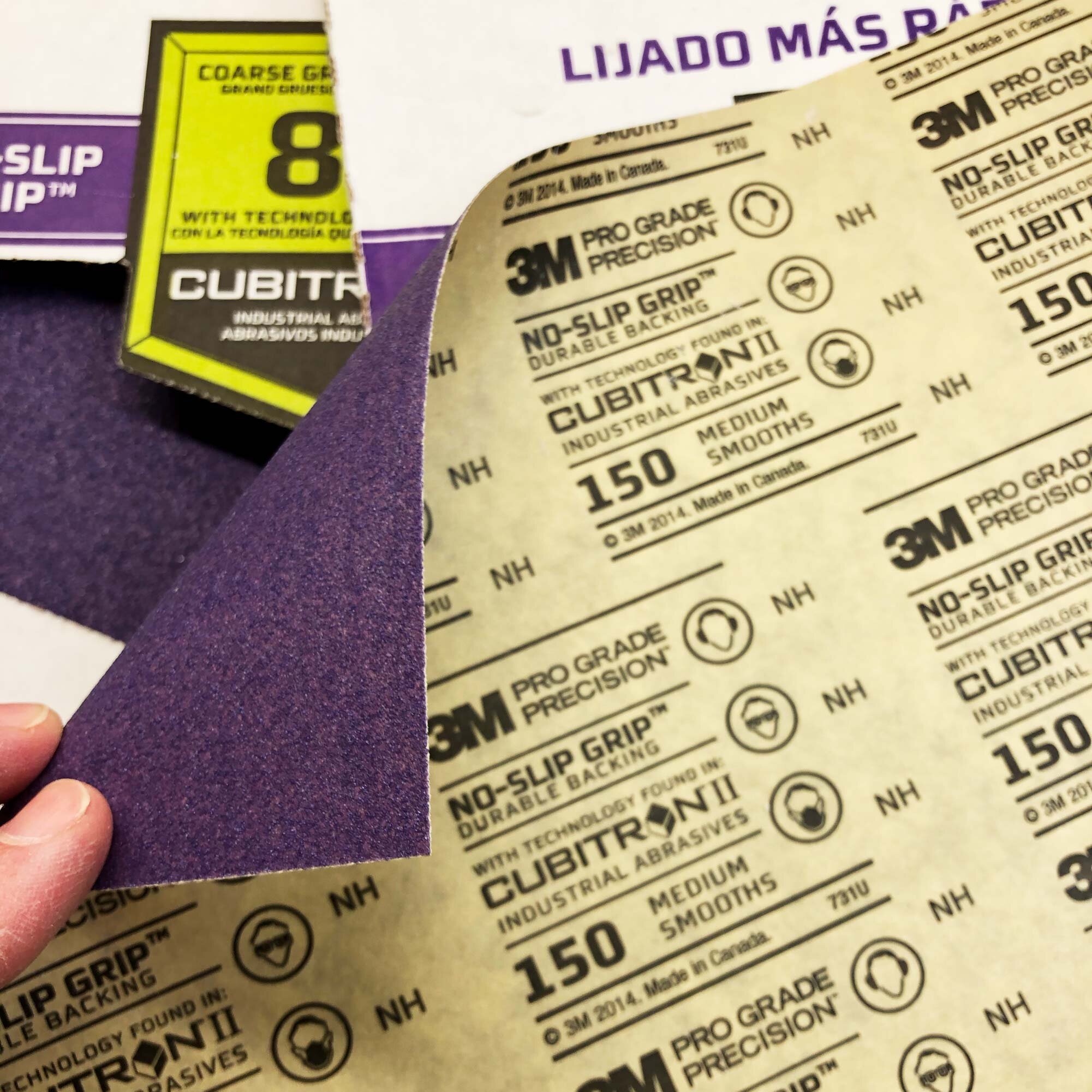
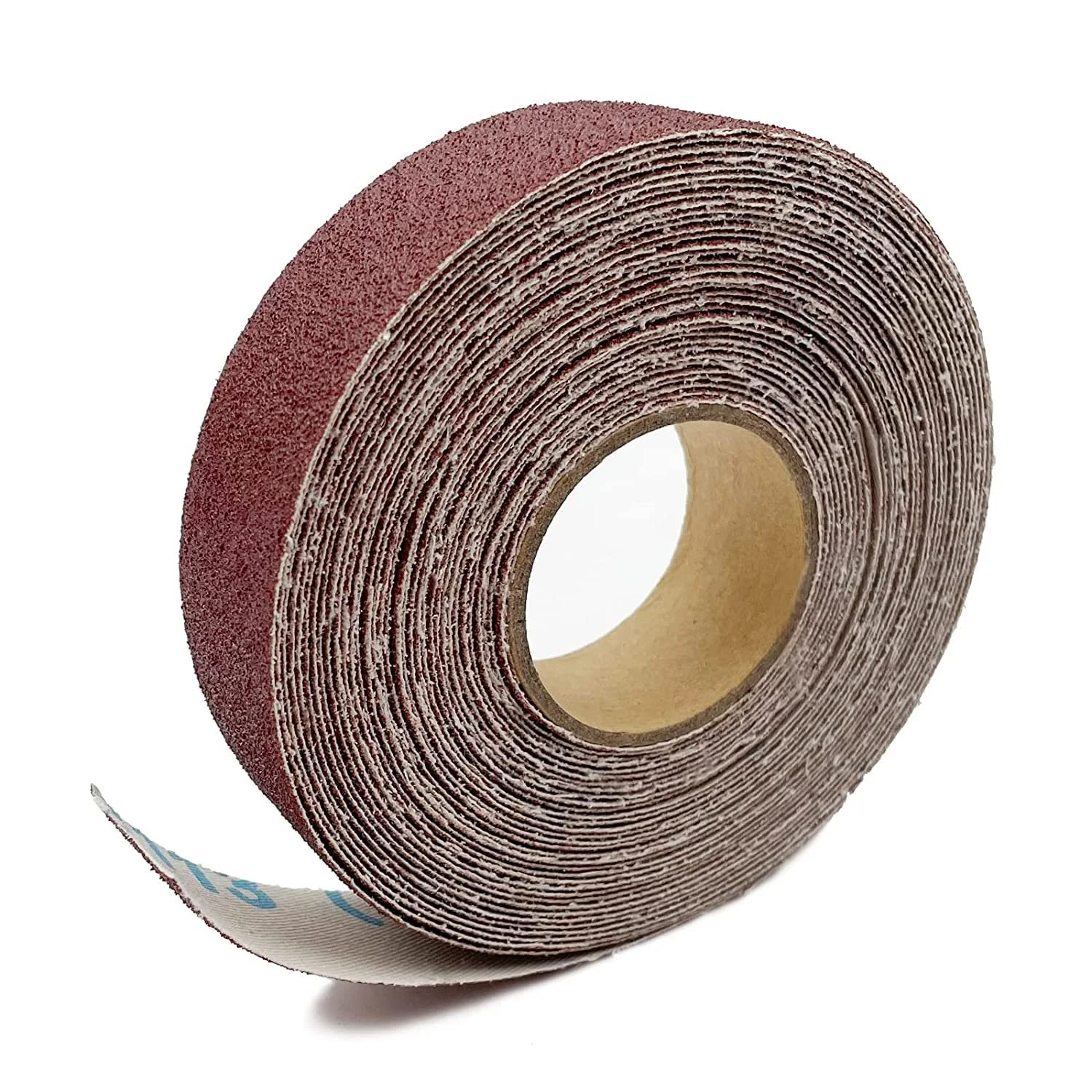
The GM-80 costs around $1,600 or more, and with that you get an all-metal body and a filtration level of 99.97% down to 0.3 microns. For extra filtration, there is a stepped-up Museum version with a variable speed control and the option for an ULPA Filter (Ultra-Low Particulate Air) which filters 99.999% of particles down to 0.12 microns. Either way, any Nilfisk vacuum with a HEPA or ULPA filter will return extremely clean exhaust air to your workspace with no leakage from the unit.

For HEPA filtering, the GM-80 utilizes four levels of proprietary Nilfisk parts: a paper dust bag, a thick cotton main filter, an optional motor dust filter, and a HEPA exhaust filter. These proprietary parts are not cheap to replace. The paper dust bag ($35 for a 10 pack, Shop at Amazon) captures most of the dust, and the cotton main filter ($135, Shop at Amazon) gets just about everything else. Unfortunately, this cotton filter and the GM-80 do not self clean, and the cotton filter is not designed to be washed. You could take it outdoors to tap off some of the accumulated dust, but this is a messy situation where you’ll want to have a dust mask on. The good news is that almost no dust gets to the HEPA filter, which costs $150-$200 to replace (Shop Nilfisk HEPA Filter at Amazon). The HEPA filter is rated for 1000 hours of use. If you are vacuuming in 10 or 15 minute bursts, it will take years before you’ll need a replacement HEPA filter.

There are a few tradeoffs with this device. It is not built with cord or hose storage, so these have to be wrapped around the device. For rolling, only one of the three wheels has a full 360 rotation, so it isn’t the easiest to move. It also uses expensive, proprietary filters.

The GM-80 is a trusted, well-rated vacuum that many have used to safely remove silica dust and other fine particles for years. If you are looking for a small vacuum and want a really high level of dust removal, this is a classic option that has worked for many artists for decades.

If you like this style of floor vacuum but want a cheaper model, check out the Nilfisk GD930 HEPA Canister Vacuum for $517 | Shop at Amazon

Nilfisk GM-80
$1,624


Further info:

OSHA Standards for Silica Dust

In 2016, the Occupational Safety and Health Administration (OSHA) in the United States introduced heightened standards for silica dust, and manufacturers have responded with high-quality vacuums that are HEPA certified and include improvements such as self-cleaning filters. In practice, this means that a HEPA certified vacuum or dust collector must filter at least 99.97% of particulates down to 0.3 microns. Keep in mind though, that while many vacuums will filter the exhaust air through a HEPA filter, not all units are fully sealed and can be truly safe if you are working with fine particulates such as silica dust.

Click here for the OSHA Fact sheet on the 2016 silica dust exposure regulations. There is also a comprehensive OSHA page on silica here.

Silica-safe.org has a lot of info on how to properly work with silica dust.

Click here for Nilfisk’s page (from 2019) on silica dust exposure and OSHA compliance.

How to Clean Your Studio: Never Vacuum?

To clean up, OSHA recommends a HEPA vacuum or wet mopping. But if you look at various forums for pottery and other workshops, most comments will say “never vacuum” and instead suggest wet mopping. Wet mopping is good advice, but a high-quality HEPA vacuum designed to capture silica dust is the other recommendation from OSHA. Not recommended practices include dry sweeping, moving dust with an air hose, or other practices that introduce dust into the air. If you have a personal studio, you should follow this advice too. Therefore, whether you are cleaning the inside of a kiln, using woodworking tools, or creating dust in any way, a high-quality vacuum system should be part of your studio.

Recommended Cleanup Procedures

As mentioned before, wet mopping or using a quality HEPA vacuum are the best ways to remove dangerous particulates such as silica dust from your workspace. As detailed in our post on recommended cleanup tools, here are cleanup suggestions for workspaces:

Tables and countertops Use bench brush and dust pan to carefully clean large chunks. Then wipe clean with water and large yellow sponges.

Floors
Spot-sweep as needed with broom and long-handled dust pan.
Vacuum dust and particles with a high-quality HEPA vacuum.
If sweeping is needed, use sweeping compound to help contain dust and sweep gently. Vigorous sweeping can produce airborne dust, so work slowly and carefully.
After sweeping, then mop floors. If needed, a second mopping should get things spotless.

Kiln room
Kilns are vacuumed as needed with a HEPA vacuum.
Floors are cleaned as described above.
As kiln rooms are sources of a lot of dust from ware storage, kiln wash, kiln shelf maintenance, etc, be extra vigilant about cleaning frequently in kiln rooms.

What to do if you have an old leaky shop vac?

If you are not in a position to upgrade your old vacuum, consider a few alternatives.
1. If you have outdoor space, keep your vacuum outside and run an extra long hose into your workspace for cleanup. Wait for outside air to clear before moving vacuum.
2. Only clean up with sweeping compound, a wet mop, or water and sponge.

Your health and safety is worth it! Be very mindful of all aspects of cleanup, but a high quality HEPA vacuum as reviewed above will significantly help your cleanup routine.


Summary

To conclude, the 2016 OSHA regulations on silica dust have resulted in new and improved options for vacuums and you should consider it an important part of your health, safety, and organizational approach to your studio. An affordable model such as the Nilfisk Aero 21 HEPA Vacuum will get you a full-unit HEPA quality cleaning for not that much more than a standard, leaky shop vac. An upgrade option is the Festool CT 26 E Dust Collector, which is a well-designed workhorse. The Nilfisk GM-80 is a classic canister style unit, while the Oneida Air Systems Dust Cobra is an industrial-quality vacuum at an affordable price for that type of system.

Do you have other suggestions for HEPA vacuums? Let us know in the comments.