Updated July 2026
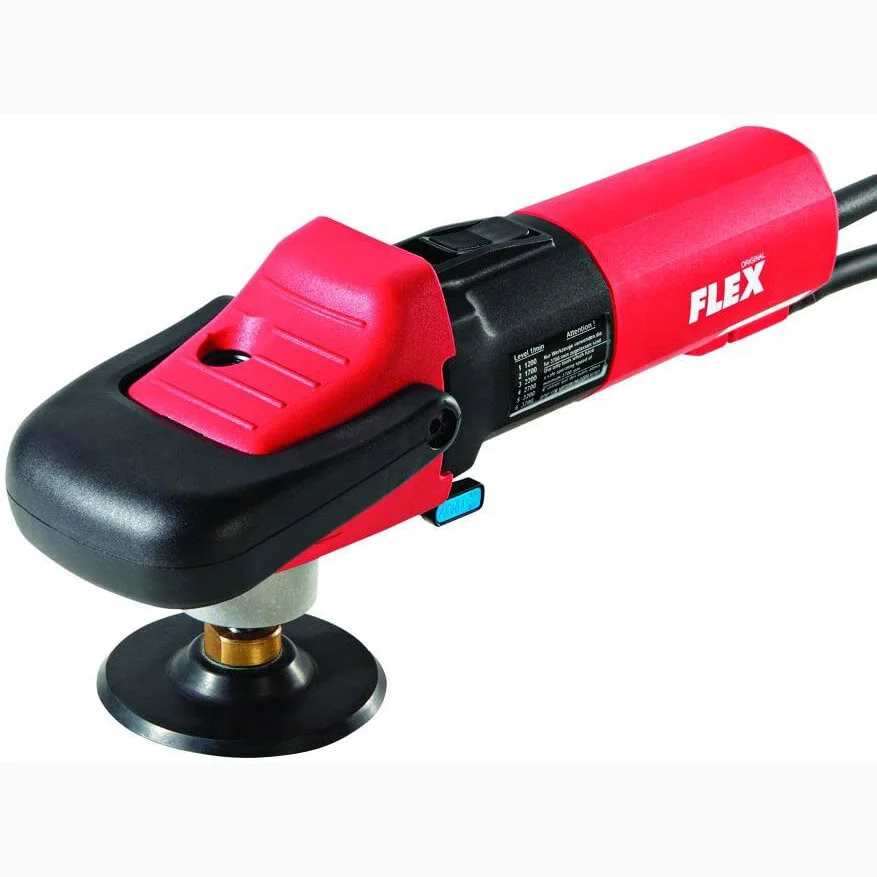
A wet grinder is a great tool for a ceramics or sculpture studio. A wet grinder is basically an angle grinder with a water feed, and they can quickly grind down glaze drips, polish the bottom of a sculpture, sand or polish concrete, marble, stone or ceramic, or a variety of other tasks. The water traps all the dust and prevents the pad from overheating, making it a safer option than a dry grinder. But they are a bit messy: plan for water to spin out in every direction, so safety is of utmost importance and try to use them in a large sink, plastic trough, or in an area that is easy to clean.
Since first writing this guide in 2021, the market has changed. What you will find are a variety of generics for under $200, or more expensive branded models that are $400 and up. Some models are single speed, but the most functional model will be variable speed, allowing you more control for different tasks. This guide will focus on the variable speed models.
A complete review and guide to wet polishers is below.
TOP PICK: Vevor 10 amp variable speed 4 inch grinder
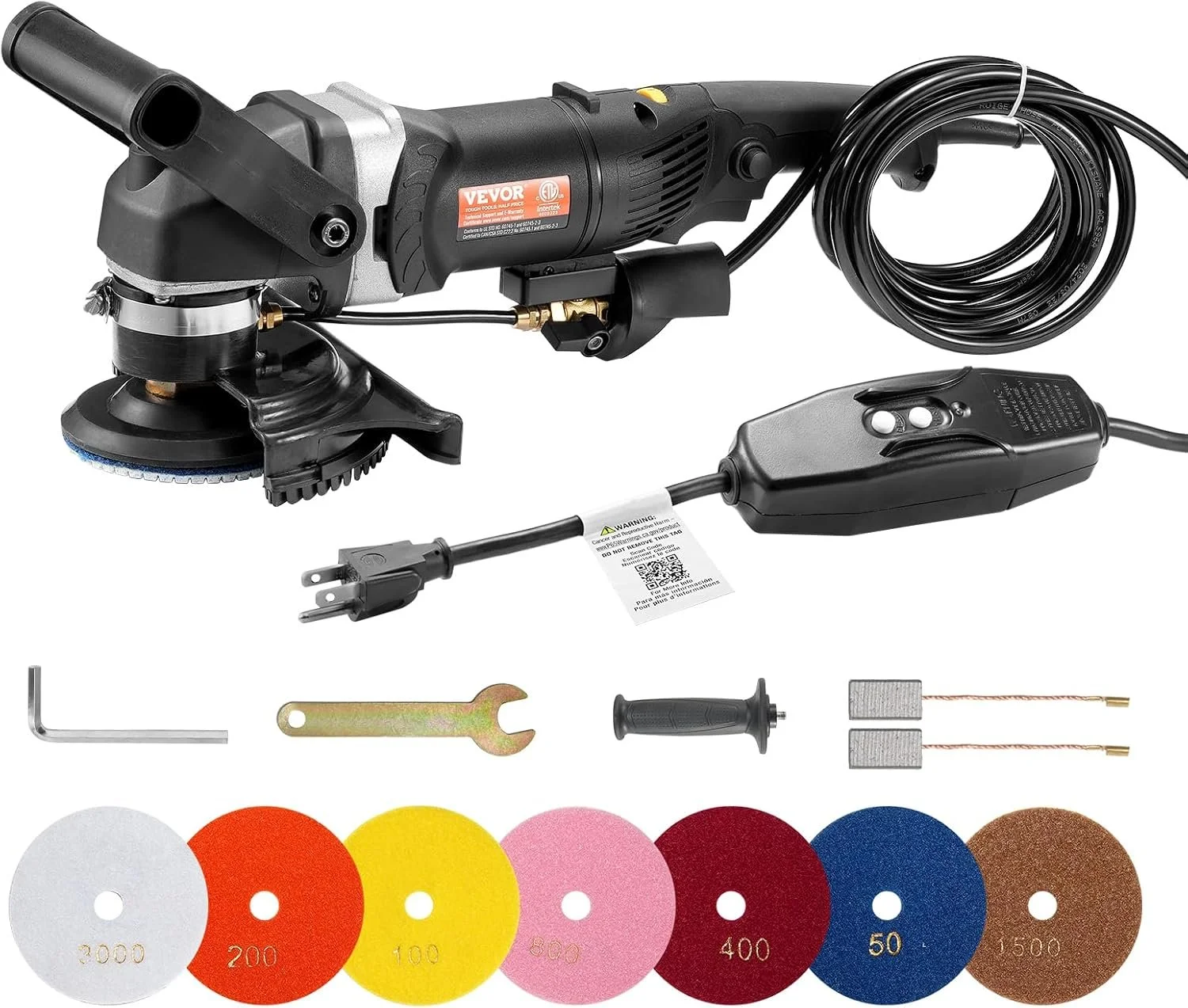
The Vevor 4 inch wet grinder is variable speed, features an ergonomic grip, and comes with a full kit of grinding tools.
The top pick is the Vevor 800 watt Variable Speed Wet Polisher / Grinder.
Coming in at a budget-friendly $152, the Vevor 10 amp, 800 watt, 4 inch wet grinder has a variable speed from 700 to 3000 rpm, comes with a variety of grinding pads, and has an ergonomic grip for your rear hand and a large handle at the front. It’s a simple, basic machine that will get the job done. One drawback is it is listed at a heavy 9.2 lbs.
Available at Amazon, Lowes and Home Depot, this kit retails for $152.
SAFETY NOTE
Wet polishers / grinders have electrical motors and a water feed. Use proper safety equipment including eye protection, rubber gloves, and possibly a rubber apron. These machines will cast water in many directions, so create a protected area and endeavor to keep water away from the motor and electrical cords. If you feel a “tingle” of electricity, cease use and assess what is causing the problem. All of these tools come with a built-in Ground Fault Circuit Interrupter (GFCI) and if possible, you should plug them into an outlet that also has a GFCI. If the on-unit GFCI is not working, do not use the tool.
Table of Contents
Top Pick: Vevor 10 amp Variable Speed Wet Grinder
Makita PW5001C Variable Speed Stone Polisher
Stadea SWP 101K Wet Polisher
Other options
Comparison Chart / Buyer’s Guide
How To Use A Wet Polisher
Summary
Other Wet Polisher / Grinders:
Makita PW5001C 4” Wet Polisher / Grinder

The Makita PW5001C Wet Polisher
The Makita PW5001C Wet Polisher is one of the most popular wet grinders on the market and you will find extensive reviews and feedback, which speaks to its overall quality and professional-grade durability. It has a 7.9 amp motor with speeds ranging from 2000 to 4000 RPM, and can accommodate up to a 4” pad.
This model was the first to feature a water feed on the bottom of the machine, which was an innovation soon copied by Flex and Metabo. It has a 1 year warranty. It also has a traditional side grip front handle, similar to what you see on angle grinders.
This grinder is getting harder to find and is available at prices ranging from $400 to over $600. It’s unclear, but possibly this limited availability is due to this model no longer being produced? Previously, we also recommended premium wet grinder models from German brands Flex and Metabo, but those models are almost non-existent in the market and barely listed on the manufacturer’s websites.
Stadea Wet Polisher

Stadea also sells packages, such as this kit with a 4 inch pad, 7 diamond grinding discs, and a buffing pad.
Stadea grinder has a variable speed motor with a range of 700 to 3000 RPM, a splash guard, and can accommodate up to a 5 inch pad. It also comes in at arounbd 9 lbs and is available as a tool only for around $200 or a kit with pads for $270. The tool has a bottom water feed and comes with a 6 month warranty.
Stadea pads are a great option for diamond polishing pads so the upgrade package might be an attractive purchase.
Stadea wet polisher / grinder
5”
7.27amps, 800 watt
$200 to $280 depending on the pad options

The Hardin WV 4” Wet Polisher Kit
Hardin WV 4” Polisher
The Hardin WV Polisher features an 8 amp motor with speeds ranging from 1000 to 4000 RPM and comes in a kit with a 4 inch backer and set of diamond polishing pads. It has a top water feed with a shutoff valve by the front handle, and comes with a hose and garden-hose attachment.
It has a 90 day warranty and extremely mixed reviews, including a few that mentioned the onboard GFCI didn’t trip even when exposed to water. Yikes! It’s available for the ultra-budget price of $105.

The Kawaii WEP 250 Wet Polisher
Kawaii WEP 250
The Kawaii WEP 250 Wet Polisher has variable speeds ranging from 900 to 2800, can accommodate up to 5 inch pads, and has a 90 day warranty. This is a model that is carried at Home Depot so you might be able to see it in person in store. It weighs 6 lbs and has many similar parts to other models here, including the water valve switch and garden hose connector. It doesn’t have a lot of reviews online so it’s hard to get much info, but it seems like a pretty straightforward option. One reviewer compared it to the Metabo and described this as a great budget option but did report feeling a few tingles while using, and that the hose connector had to be taped to reduce leakage. It retails for around $175
Other models:
Previously, this review include premium picks from Flex and Metabo, along with a variety of other generic models. As many of those no longer seem to be available for sale, they have been removed from this guide. If there is a model you enjoy using that is not listed here, let us know so this guide can be expanded. In my own studio, I use a Flex variable speed model that is around 15 years old and going strong.
Wet Polisher / Grinder Comparison Chart
Note: All models have built in GFCI and 5/8" arbor for backer pad attachments. Some manufacturers list motor by amp, watts, or both and every effort has been made to locate that info.
| Top Picks | Typical Price | Motor | Max Pad | RPM Range | Weight | Water Feed | Warranty |
|---|---|---|---|---|---|---|---|
| Vevor 10amp | $152 | 10 amp, 800 watt | 4" | 700-3000 | 9.2 lbs | Bottom | 1 year |
| Makita PW5001C | $400-$600 | 7.9 amp | 4" | 2000-4000 | 5.1 lbs | Bottom | 1 Year |
| Stadea Wet Grinder | $200–$270 | 800 watt | 5" | 700-3000 | 9 lbs | Bottom | 6 months |
| Kawaii WEP 250 | $175 | 7 amp, 900 watt | 5" | 900-2800 | 6 lbs | Bottom | 90 days |
| Hardin WV | $108 | 800 watt | 4" | 1000-4000 | 8.8 lbs | Top | 90 days |
How to Use a Wet Grinder and a Few Tips
Wet Polisher / Grinders are a specialized tool that can really make short work of your polishing jobs. But with that speed comes potential mess if you don’t have the proper set up. A few tips:
Use in a large slop sink or something with walls if possible. This will keep water splashing down.
Be aware of where the polisher might spray water, keep electrical outlets protected
Wear rubber gloves and rubber apron
Use the least amount of water you need.
Clean your tool after use, the sprayed water will contain a lot of grit which can cause problems with switches, dials and other moving parts of your tool.
For ceramic glaze or kiln shelf clean up, I use 50 grit pads first, then 100, 200 and 400. I don’t usually go higher than 400. Rather than get the traditional 50-3000 grit pad set, you may just need 4 pads. I use Stadea pads. Click here to purchase individual pads.
If needed, get multiple backer pads so you can use different size pads. My favorite size is 4” but I do have 5” too.
For a really cool use of this tool, check out what the artist Brad Miller does with his wet polisher. He makes textured forms and then layers multiple colors of pigmented slip and glaze. After the final glaze fire, he will polish back through, revealing the stratified layers.
Summary
Wet Polishers are great tools if you are looking for a dust-free way to grind ceramic, glaze, stone, concrete or other hard surfaces. They will quickly dispense with the biggest glaze drips, getting your piece ready for display. They are also great for cleaning up kiln shelves. The market seems to be coalescing around affordable generic models for this style of tool, so please let us know your experience in the comments and what you prefer to use.