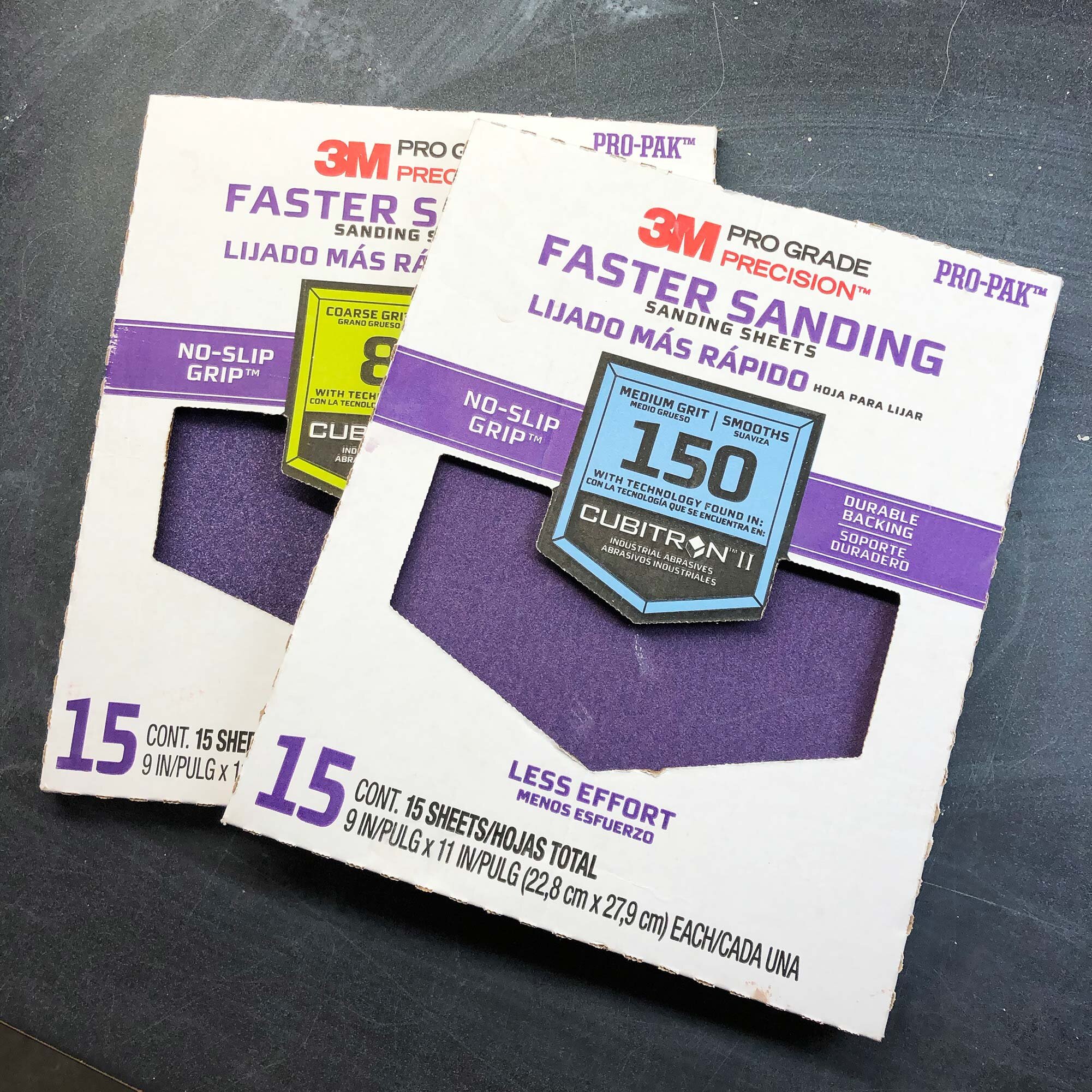
3M Pro Grade Sandpaper is a plastic-backed, long-lasting sandpaper that can be used wet for safe sanding.
Originally posted 2020. Last updated, August 2026
In ceramics, there’s always a need to sand something. Whether it is cleaning the foot of a pot or dealing with a massive glaze run on a kiln shelf, there are a few different tools that will take care of these problems in effective, safe, and economical ways. This post will cover the best abrasives, sandpaper, and grinding blocks, as well as how to use them. You probably won’t need every single one of these tools, but they’re covered here so that you can find what will work best in your studio.
Safety note: Keep in mind that any sort of sanding or grinding can produce dust. Wear a dust mask or respirator, or when possible, sand wet. (For a complete guide to dust masks in the studio, click here.)
Most Used / Top Pick: The thing I reach for the most is the plastic-backed, purple, pro-grade sandpaper made by 3M. (Pictured at top) It is economical, long lasting, and can be used wet. It’s a simple, versatile tool that has a place in any studio.
Table of Contents
Sandpaper
Grinding Blocks and Whetstones
Diamond Hand Pads
Silicon Carbide Stones for Power Tools
Wet Grinders
Sanding Tips and Tricks
Summary
Sandpaper
There are two sandpapers that I use in the studio: 3M Pro Grade Sandpaper and Emory Cloth. Other sandpapers, such as those designed for wood, don’t hold up under the heavy use needed with ceramics and clay. One advantage of sandpaper, as opposed to solid blocks, is that it is flexible and can be bent, creased, or cut into a variety of shapes if you need to sand hard-to-reach spots.
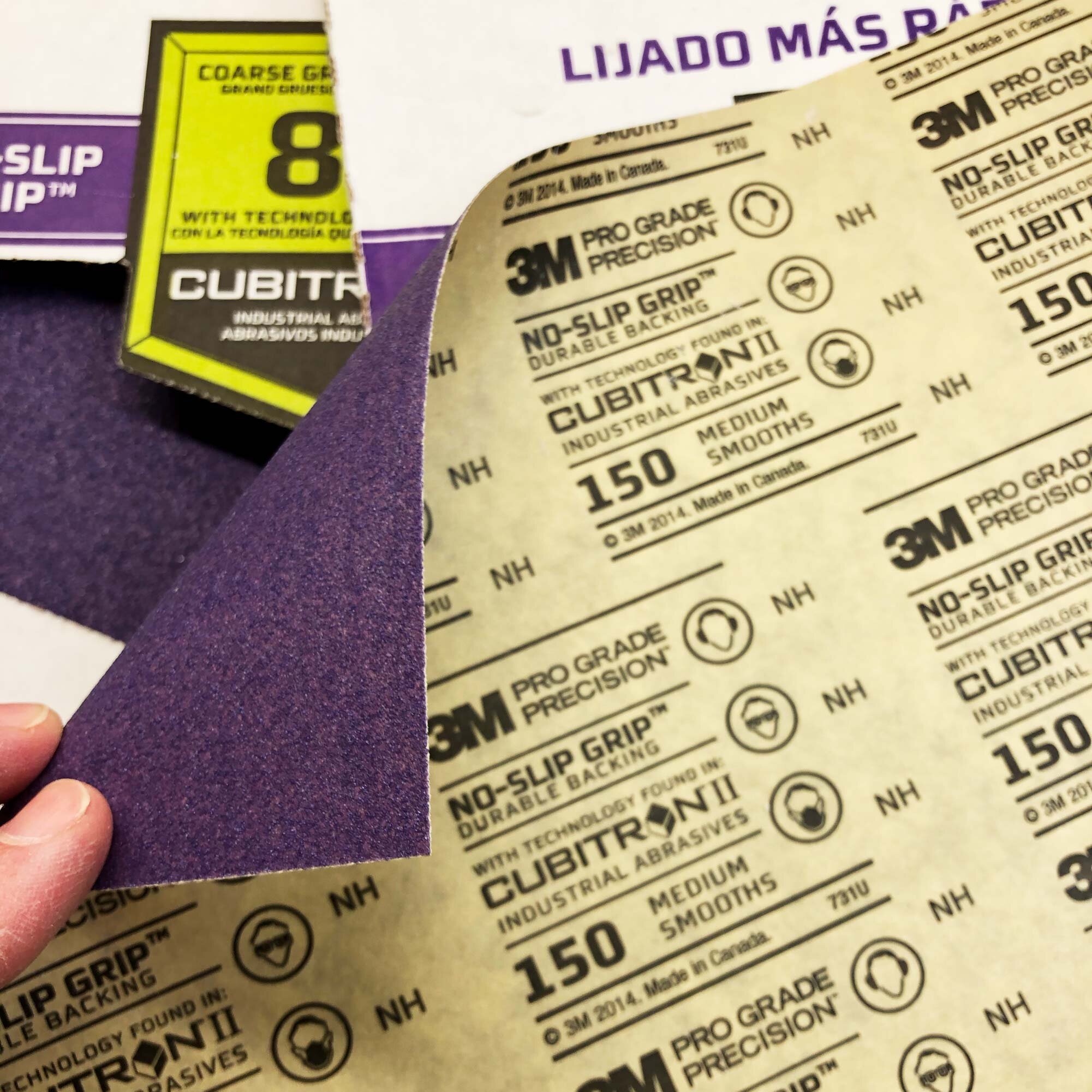
Detail shot of the front and back of the 3M Pro Grade No Slip Sandpaper.
3M Pro Grade Sandpaper
The purple, plastic-backed 3M Pro Grade Sandpaper is the main tool in my sanding arsenal. It lasts longer than other sandpapers and can be used wet or dry. The plastic backing is advertised as “no-slip grip” and it is easy to hold and control, even when wet.
The paper measures 9 x 11 inches and is available in a variety of grits. I generally stock 80 and 150 grit, but a range of 4 grits from 60 to 220 would probably cover most needs.
The sandpaper can be found in smaller packs ranging from 3 to 6 sheets, or bulk packs with 20 or 100 sheets. 20 sheets will last a long time for individual use, or around 6 months for a busy academic or community studio.
3M Pro Sandpaper
6 sheet packs: $9
20 sheet packs: $15-$22
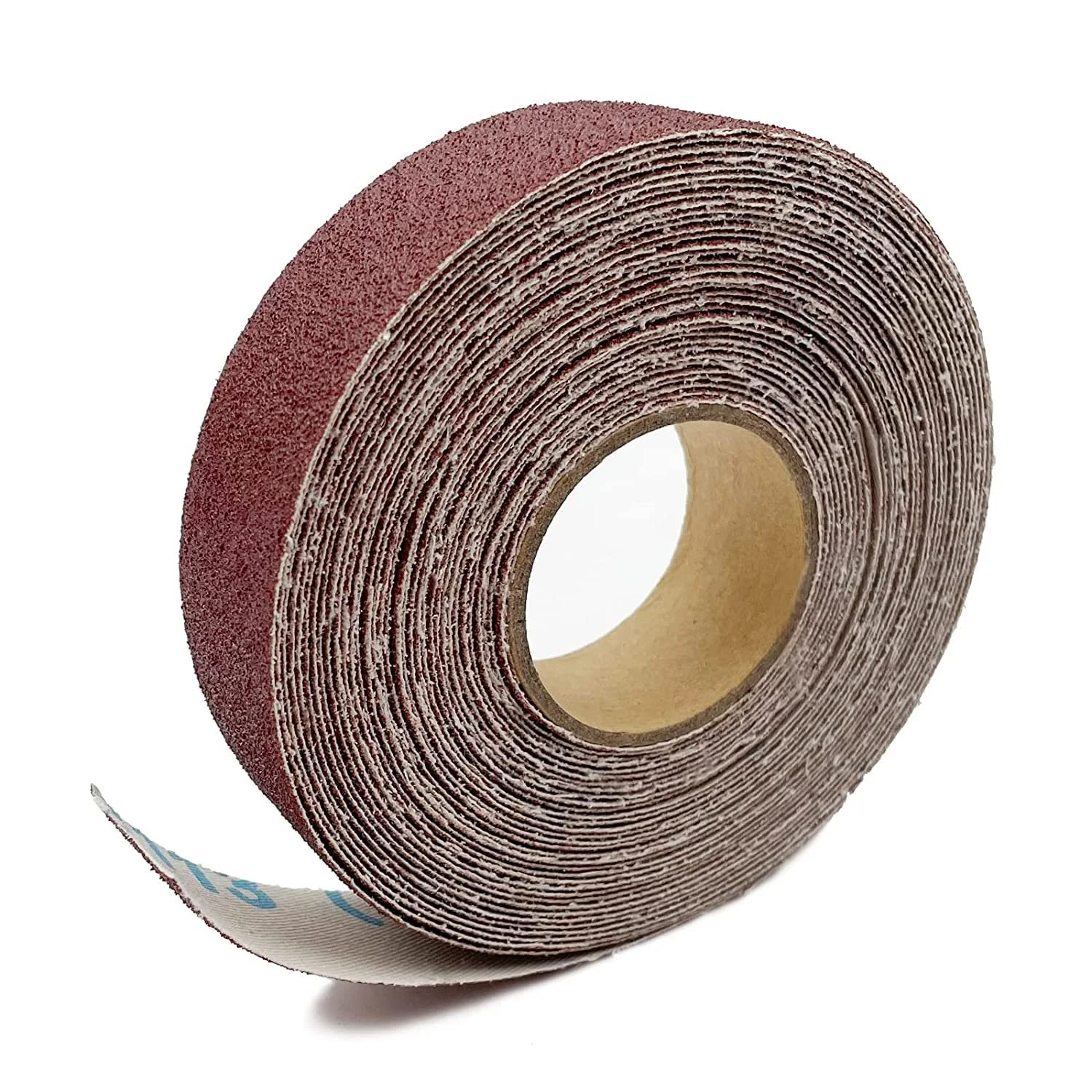
A roll of sandpaper can be economical and functional.
Sandpaper Roll
There are a wide variety of sandpapers out there, and you can probably find what you need at a local hardware store. But an interesting option is a sandpaper roll.
A sandpaper roll is ideal if you need small pieces of paper that you can just rip off. There are even sets where you can get multiple grits.
Sandpaper Roll
1” wide by 20 feet
$8 and up
Grinding Blocks
There are a variety of grinding blocks that are useful in the ceramic studio. A block might be used in place of sandpaper, but I usually stock both sandpaper and blocks. The bigger blocks are especially useful for dealing with glaze drips and cleaning kiln shelves while a whetstone can be used to sharpen tools and clean up pots.

A silicon carbide rubbing block with a handle.
Silicon Carbide Rubbing Block
A silicon carbide rubbing block (or grinding block or brick) is one of the most effective ways to deal with glaze drips and to clean up kiln shelves and kiln posts. The blocks come in a variety of sizes, with or without handles, and some have fluting. The fluting is especially useful for grinding rough kiln shelves flat again. A flat-sided block is better for cleaning up the foot of pots or the bottoms of sculptures.

Detail of the fluted bottom of a typical silicon carbide rubbing block.
Silicon carbide blocks can be used wet, which is a plus for me because I’m always looking for ways to minimize dust in a studio.
A downside of these rubbing blocks is they are prone to cracking if dropped. This is especially a problem if you crack one with a handle. But don’t despair if you crack a block, the pieces are still useful until they are completely ground down
Another downside is they are typically on the rough side, around 20 to 60 grit. This is fine for kiln shelves, but you’ll want to follow up with something a bit finer, such as sandpaper or emory cloth, if you’re sanding the bottom of a pot.
The block with handles are typically 6” x 3” x 1”, but these sizes vary by manufacturer.
60 Grit Rubbing Block with Handle
$22
You can also find 20 grit rubbing blocks for around $15 or a 2 pack of 20 grit blocks for around 20

A longer, thinner, fluted silicon carbide rubbing block without a handle.
120 Grit Rubbing Block
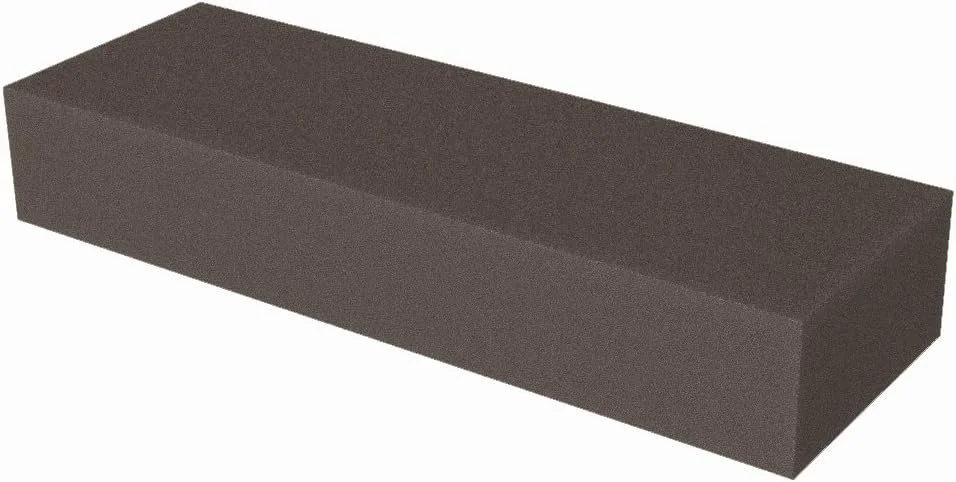
The Bon 120 grit rubbing block
After using a 20 or 60 grit block, a 120 grit rubbing block can help fine tune anything you are rubbing or sanding. At $12, this solid block is a great deal.
Bon 120 Grit rubbing block
$11.75
Aloxite Blocks and Whetstones

An aloxite sanding block.
Available at ceramic suppliers, aloxite (aluminum oxide) blocks are smooth, hard, and extremely durable blocks. They are very long lasting, they don’t “shed” a lot of material when used, and they are especially great for sanding the bottom of pots. (Shop Aloxite block at Laguna)

Silicon carbide whetstone, with two grits — 120 and 240.
Alternately, and easier to find, you can use whetstones designed for sharpening knives. Generally not as hard as aloxite, whetstones are another great option for cleaning small glaze runs, burrs, or rough patches on fired ceramic. They can also be used to sharpen studio tools, such as scissors or fettling knives.
Neither of these smaller blocks are particularly good for cleaning large areas of kiln shelves, but they’re great to use on pots.
Both aloxite stones and whetstones can be used wet, which keeps dust out of the air.
120 / 240 grit Whetstone
$16
Diamond Hand Pads

Semi-hard foam-backed diamond hand pads from Stadea.
Diamond hand pads are the perfect way to sand away burrs, small glaze drips, and rough patches on pots, sculptures, or kiln shelves and posts. Made of industrial-grade diamonds embedded in plastic, these are available from a variety of manufacturers as either soft, flexible pads or semi-hard, foam-backed pads. The foam-backed pads are my favorite because they provide structure and support your hand, but the flexible pads are useful for sanding more complicated shapes. Available as sets or individual pads, my recommendation is to get four individual pads in the range of 50 grit, 100 grit, 200 grit, and maybe 400 grit.

Semi-flexible diamond pads from Diamond Core Tools.
The soft pads are available from Diamond Core Tools, while foam backed pads are available from Diamond Core and other manufacturers such as Stadea or various generic names on Amazon. Expect to spend $15 to $30 per pad, but if used just when needed (use sandpaper for more everyday tasks), they should last for some time, maybe even years.
Like many other tools listed here, these can be used wet, which keeps sanding dust out of the air. And any foam block also float in water, which is great if you drop them while sanding over a bucket.
Shop semi-flexible pads at Diamond Core.
Single Diamond Hand Pads, available in a variety of grits
$18 each
These pads are more expensive because they have a slightly flexible diamond surface
Diamond Hand Pad sets
$14 for 4 pads
These pads are cheaper because they have an nonflexible, small metal plate with the diamond grit glued to the foam pad.
Interchangeable Diamond Hand Pad
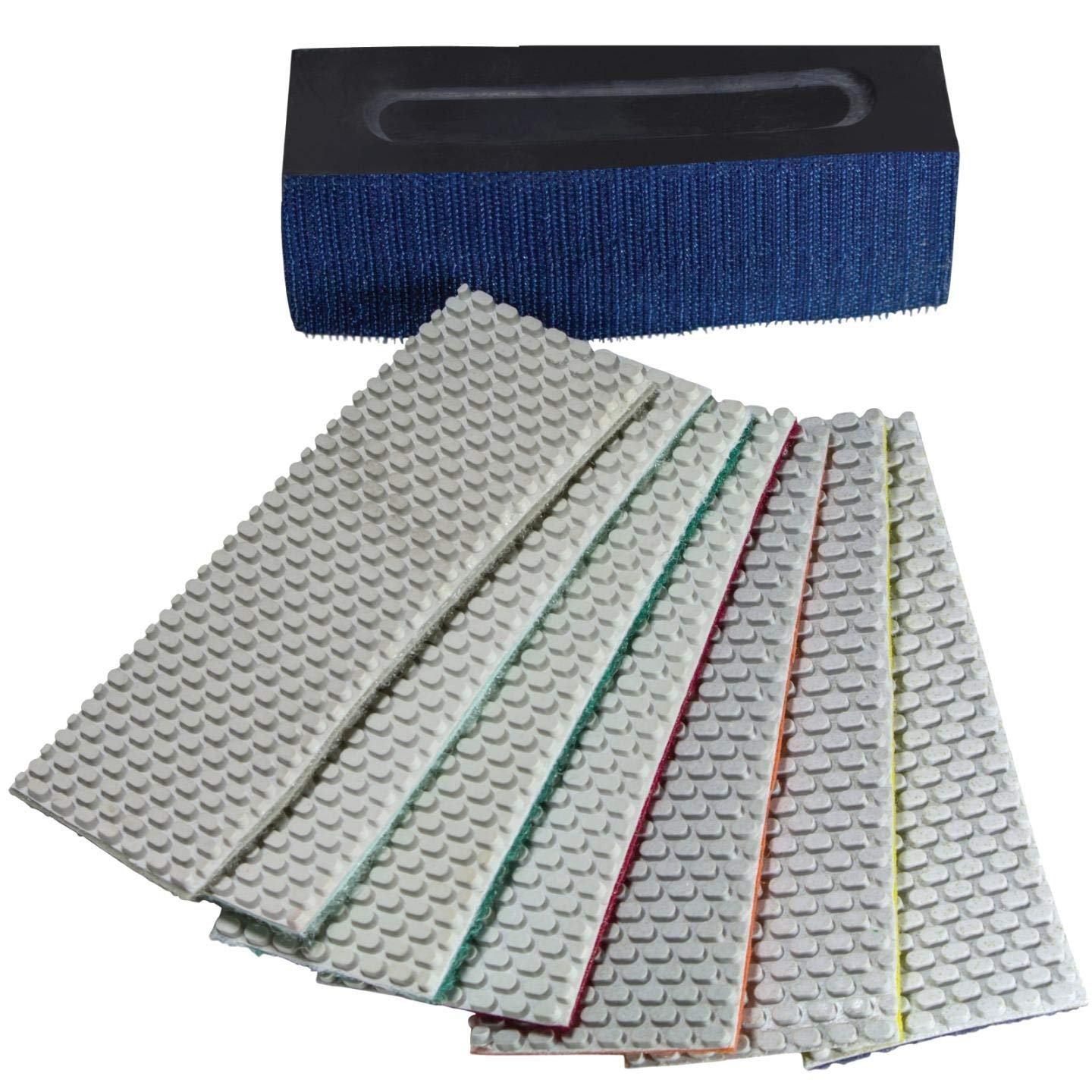
Diamond Hand Pad with seven velcro-backed pads
This set is a really nice option for sanding. For around $40, you get a comfortable foam block and seven velcro backed flexible diamond pads ranging from 50 to 3000 grit. This product seems to show up under a variety of generic names, but the set in my studio has held up under heavy use for a few years.
There is one major caveat with this set: it’s hard or almost impossible to find individual replacement pads. This is not a problem if you use all the pads equally, but in my studio, the 50 and 100 grit pads are what gets the heavy use. I don’t want to spend $30 for a full replacement set when I only need those two.
But, for someone looking for a nice set of pads that doesn’t take up much room, this is a great option.
Interchangeable DIamond Hand Pad kit
$37
Silicon Carbide Grinding Wheels and Cups for Power Tools

A green silicon carbide bench grinder wheel.
If you have a bench grinder or angle grinder, you should get silicon carbide stones that fit these tools. Silicon carbide will grind through material such as glaze and ceramic without producing excess heat, and it’s the appropriate material to use with non-metallic materials including ceramic, stone, and concrete.
This especially comes in to play with using a bench grinder to clean up glaze drips. If it are not using silicon carbide, the wheel and glaze may get too hot, resulting in potentially dangerous melted bits of glaze. Stick with silicon carbide wheels that are properly dressed and kept in shape. (If you don’t have a dressing tool to keep your wheel even, definitely get one of those too.)
Silicon Carbide Grinding Wheel
$23
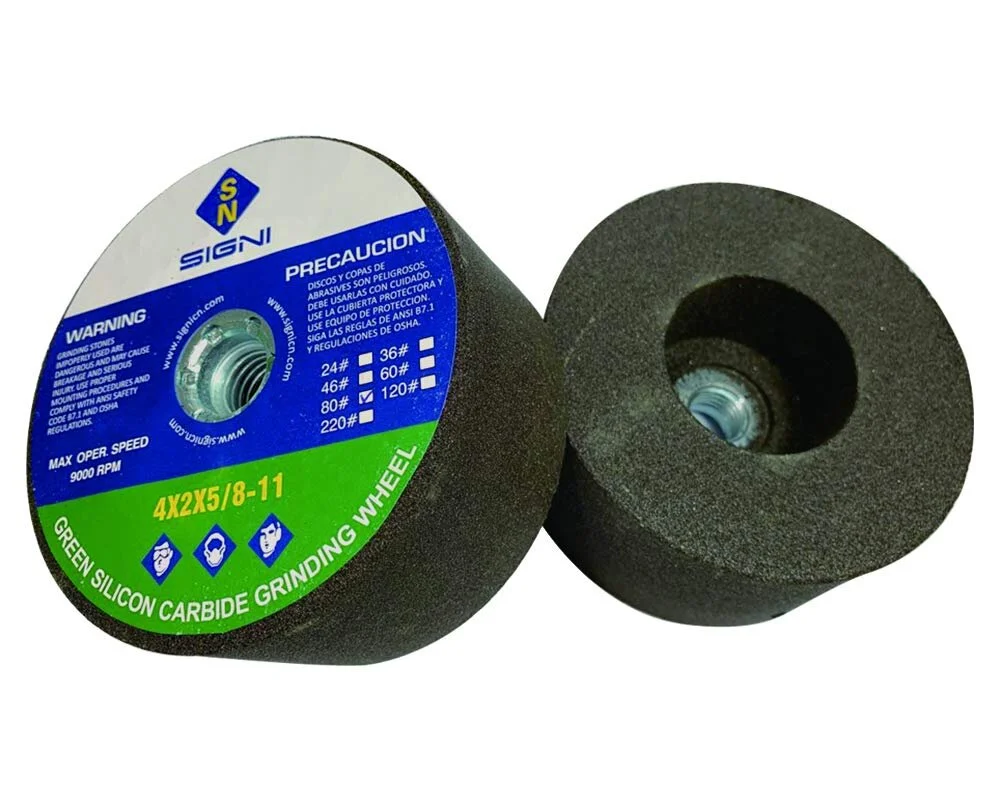
Silicon carbide grinding cups for use with angle grinders.
For angle grinders, there are also silicon carbide cups that can quickly clean kiln shelves. These are especially useful if you need to take off all the kiln wash and start with a fresh coat. Keep in mind that angle grinders produce a lot of dust, so do use this tool with caution. Or see the recommendation below about switching to a wet grinder for these types of uses.
Silicon Carbide Grinding Cups
$25 each
Wet Grinders
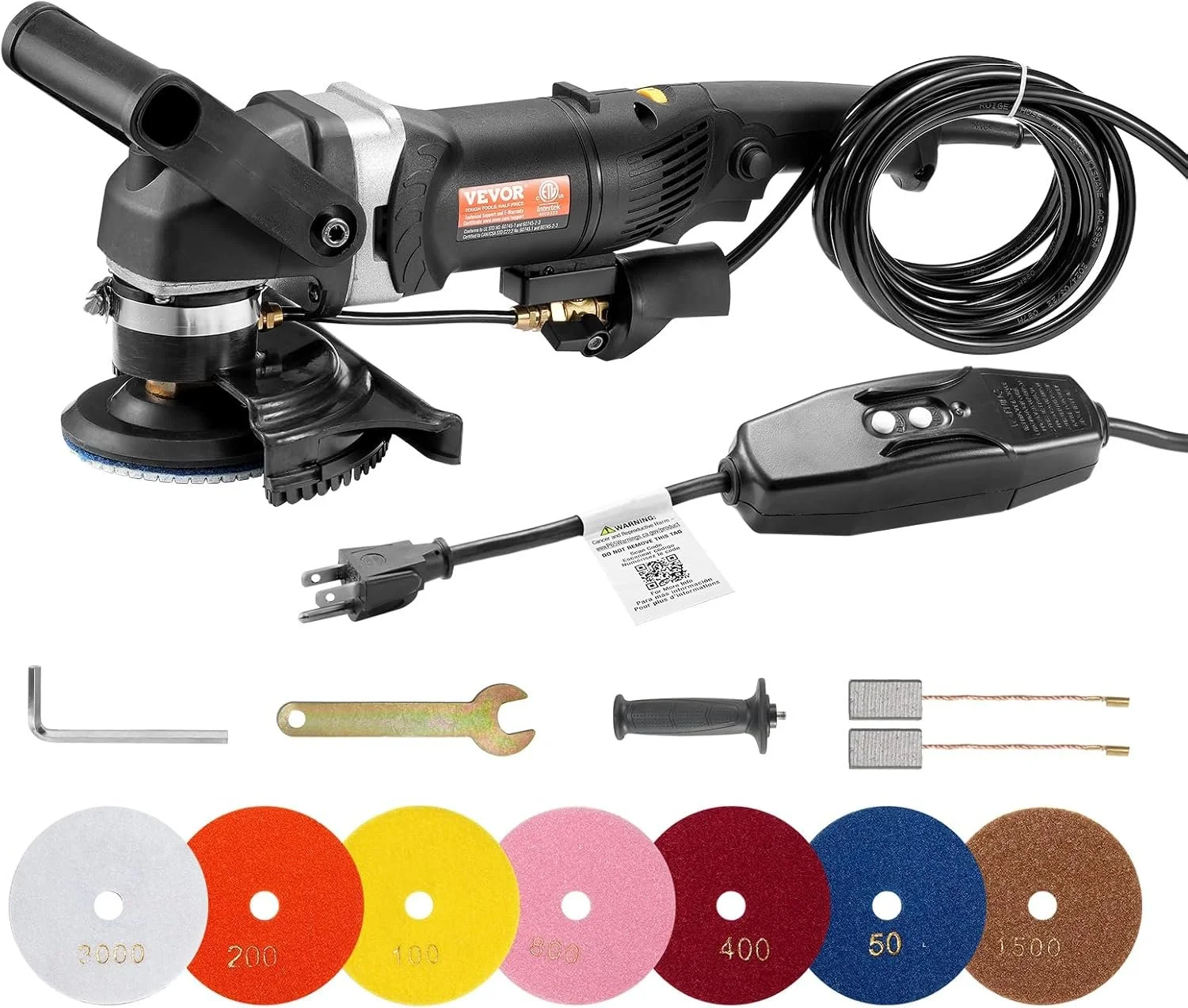
Vevor variable speed wet grinder kit
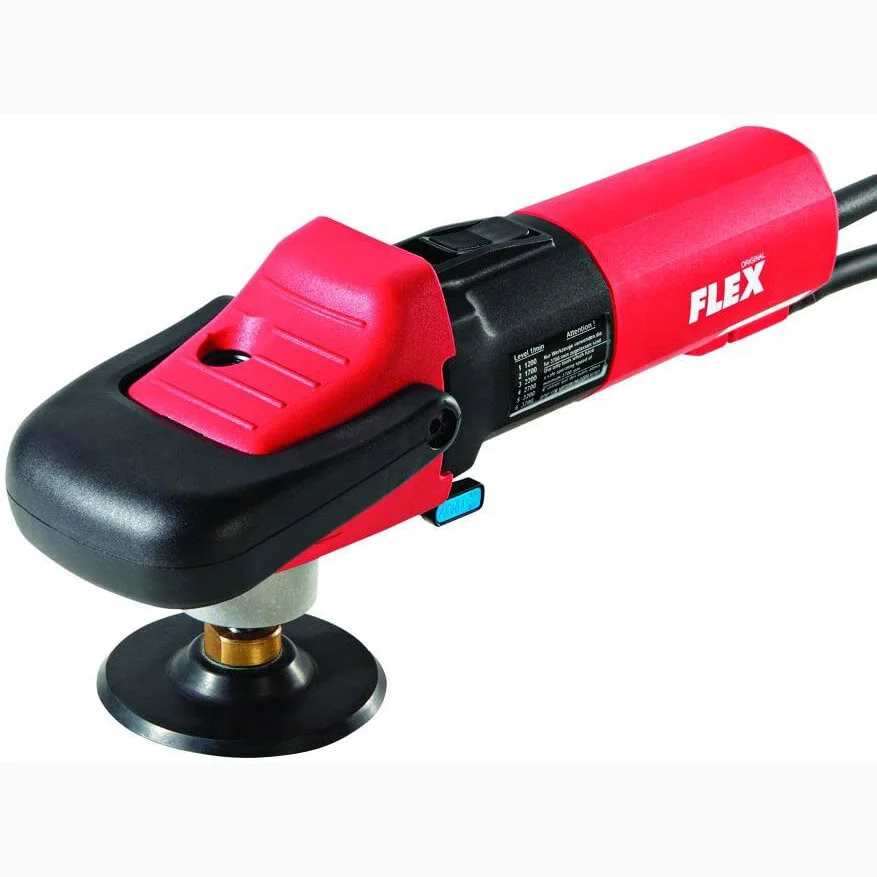
Rather than an angle grinder, which definitely make a lot of dust, consider a wet grinder for quickly dealing with bad glaze runs or cleaning kiln shelves. A wet grinder has a water feed that keeps a stream of water flowing out of the center arbor hole on the grinder. They can spray water and sanded bits all over, but if you have a tub or large sink to catch the water, it is not that bad.
A variable speed wet grinder is the way to go, as that allows you to control the speed. Slower speeds don’t whip as much water around. Wet grinders are generally used with diamond pads. As with hand pads, in my experience a range of grits from 40 or 60 to around 400 get the job done. I’ve had good luck with Stadea pads (shop at Amazon), both the 4 and 5 inch sizes. The lower grits can wear out quickly, depending on use, so you may want to order a few of those. I originally purchased an entire set that goes all the way up to 3000 and buff, but for cleaning up glaze drips, 400 suits me, so I prefer to purchase individual pads to use with the wet grinder.
One drawback with wet grinders is figuring out the right hose connection. Expect to make a few trips to the hardware store to find the right fittings to connect your wet grinder to a hose or faucet.
There have been some changes in the Wet Grinder market in recent years, and our current top pick is the Vevor Variable Speed wet grinder / polisher. At $152, it’s an economical option.
For a complete guide to wet polishers / wet grinders, click here.
Sanding Tips and Tricks
A few ideas to put into practice in your studio:
Broken pieces of kiln shelves, especially silicon carbide shelves, make excellent sanding blocks and stones.
Rub the bottom of two pots together for a quick post-firing sanding / cleanup. To reduce dust, this can be done wet under running water or dip quickly into a bowl of water.
A set of sharp chisels and a rubber mallet can help in removing glaze drips from kiln shelves, then follow up with sanding tools.
Check out our tutorial for a DIY Interchangeable Grinding Disc
Whenever possible, sand wet! It’s the safest way to keep dust out of the air.
Safety Note
Any type of sanding, grinding, or rubbing will create dust. Take appropriate precautions with wearing dust masks or respirators, and eye protection too, when sanding or using power tools.
Summary
This post has covered and reviewed a variety of sanding and grinding tools and abrasives for use with ceramics and pottery.
My most-used tools are sandpaper and a silicon carbide rubbing block, but I also have a wet grinder with diamond pads and hand pads. I also keep broken pieces of kiln shelves to use as grinding tools. All of this is done wet, when possible, or I use proper safety protection such as a dust mask and safety glasses when sanding. Sanding, grinding, and cleanup are an inevitable part of working with fired ceramic and the best tools will get the job done for you in a safe, effective, and long-lasting way.
What sanding or grinding tools do you use in the studio? Let us know in the comments.