Orton Pyrometric Cone Chart in Fahrenheit and Celsius

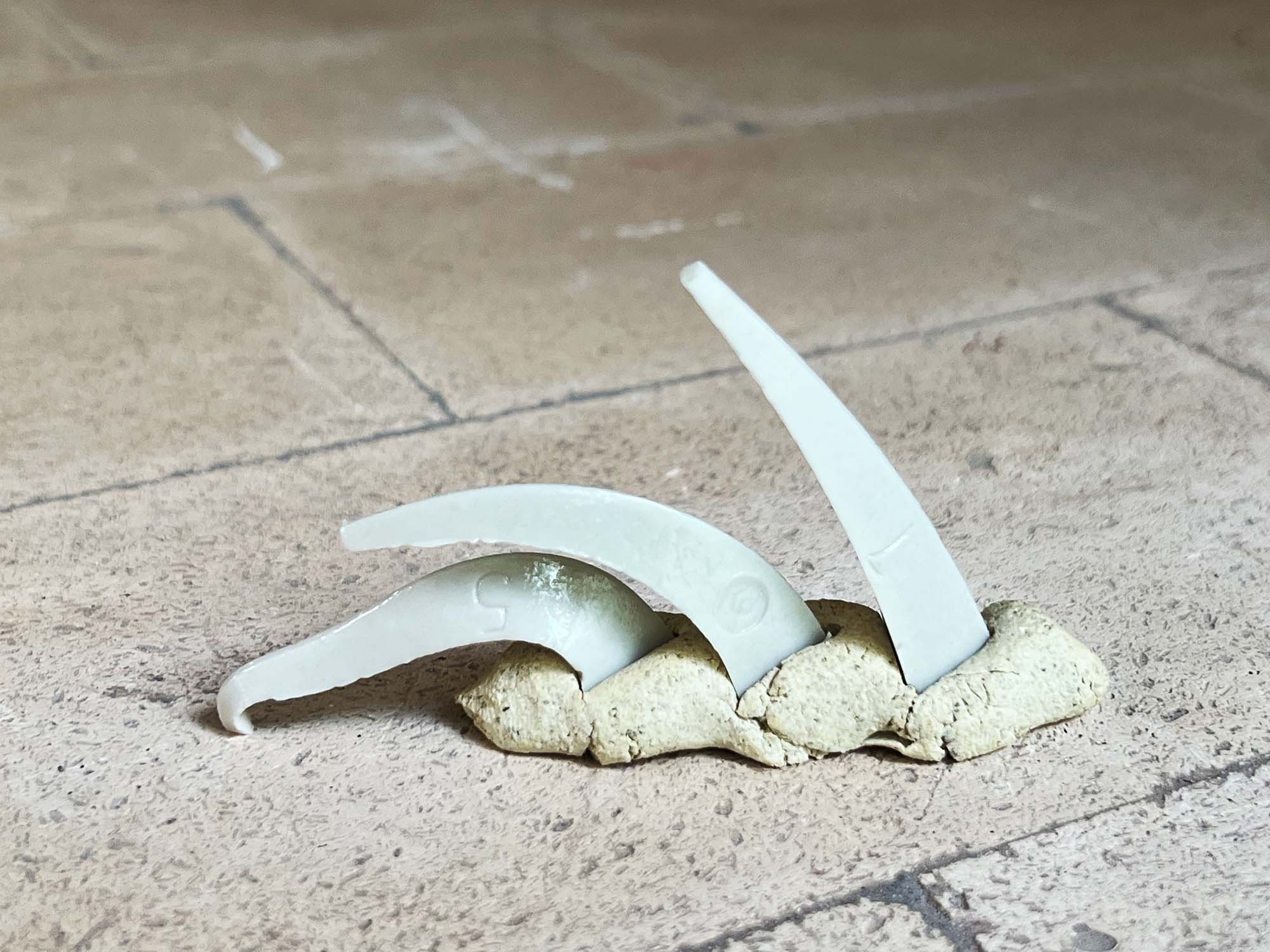
melted orton pyrometric cones 5 6 and 7

Melted large Orton pyrometric cones 5, 6 and 7. Cone pack is pictured after being removed from the kiln.

Pyrometric cones are designed to melt at certain temperatures in a kiln. They measure “heat work” during a firing, or time plus temperature.

A digital pyrometer can give an accurate temperature, but pyrometric cones are useful for determining how the firing went for your ceramic ware, and they can be useful for noting if you have different temperature zones in your kiln.

The rate of the firing, or the speed at which the temperature climbs per hour, can determine when the cone bends.

Generally, a cone accurately measures the temperature when it has bent to approximately “9pm” on the left side. This can vary a bit based on if you are using regular or self supporting cones.

To make a cone pack, generally you will use three cones. One cone, the “guide” cone, is lower than your target temperature. The next cone is your target temperature. And then the next higher temperature cone is your “guard” cone. Make sure all the cones are lined up in the same direction so they will bend in the same direction. In practice, if you were firing to say, cone 6, you would have a cone 5, 6, and 7 cones in your pack.

Self supporting cones can be placed directly on kiln shelves. It’s still a good idea to use the guide and guard cones with self supporting cones.

Pyrometric cones can be purchased at ceramic suppliers, or in the US shop Orton Cones at Blick.

Most kilns now have temperature sensors, but you can also purchase high-temperature thermocouple sensors that can be moved from kiln to kiln. Shop High Temperature thermocouple at Amazon.

Below is a chart of temperature equivalents for cones. This chart is for large cones, and the temperature rate increase measures the speed of firing in the last 90 to 120 minutes of firing.


Orton Pyrometric Cone Chart in Fahrenheit and Celsius

Cone number 60°C/hour 108°F/hour 150°C/hour 270°F/hour
019 676°C 1249°F 693°C 1279°F
018 712°C 1314°F 732°C 1350°F
017 736°C 1357°F 761°C 1402°F
016 769°C 1416°F 794°C 1461°F
015 788°C 1450°F 816°C 1501°F
014 807°C 1485°F 836°C 1537°F
013 837°C 1539°F 859°C 1578°F
012 858°C 1576°F 880°C 1616°F
011 873°C 1603°F 892°C 1638°F
010 898°C 1648°F 913°C 1675°F
09 917°C 1683°F 928°C 1702°F
08 942°C 1728°F 954°C 1749°F
07 973°C 1783°F 985°C 1805°F
06 995°C 1823°F 1011°C 1852°F
05 1030°C 1886°F 1046°C 1915°F
04 1060°C 1940°F 1070°C 1958°F
03 1086°C 1987°F 1101°C 2014°F
02 1101°C 2014°F 1120°C 2048°F
01 1117°C 2043°F 1137°C 2079°F
1 1136°C 2077°F 1154°C 2109°F
2 1142°C 2088°F 1162°C 2124°F
3 1152°C 2106°F 1168°C 2134°F
4 1160°C 2120°F 1181°C 2158°F
5 1184°C 2163°F 1205°C 2201°F
6 1220°C 2228°F 1241°C 2266°F
7 1237°C 2259°F 1255°C 2291°F
8 1247°C 2277°F 1269°C 2316°F
9 1257°C 2295°F 1278°C 2332°F
10 1282°C 2340°F 1303°C 2377°F
11 1293°C 2359°F 1312°C 2394°F
12 1304°C 2379°F 1324°C 2415°F


The Best Cut Off Wire for Ceramic Wedging Tables

 
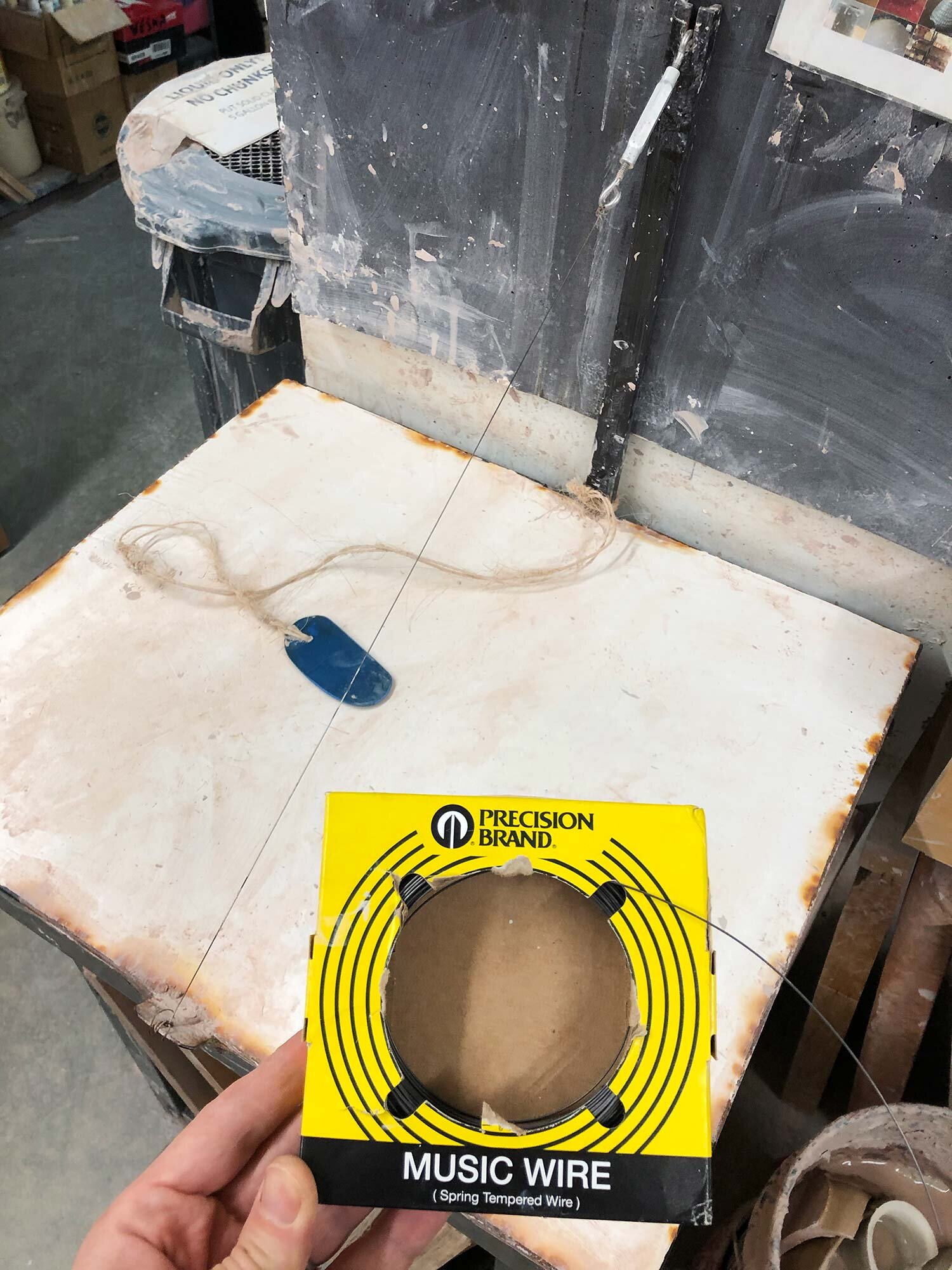
The best wedging table cut off wire is Music Wire or Piano Wire.

The best wedging table cut off wire is Music Wire or Piano Wire.


The best cut off wire for clay is Music Wire or Piano Wire. It’s durable, flexible, and strong enough even with harder clay. Under normal use, a few feet of wire can last for years, making this the perfect choice for a DIY cut off wire or as replacement wire for a wedging table. One package of almost 200 feet of this wire costs about $20 and that might be a lifetime supply of cut off wire for your studio.

Pair it with a 4 or 5 inch hook and eye turnbuckle and you’ve got a flexible, adjustable cut off wire for your wedging table. Images of how to set up a cut off wire are below. (Shop 4 pack of turnbuckles at Amazon) You may have better luck finding a single turnbuckle at a local hardware store.

The 0.031 inch music wire is preferred but if that’s not available, try the slightly thicker 0.045 inch music wire. There are a variety of other thicknesses available.

Precision Brand Steel Alloy Music Wire
0.031 in, approx, 185 feet, $21
0.045 in, approx. 185 feet, $20


There’s a lot more you can do with music wire:

> Use to hang plates, bowls or tiles

> Super-strong picture frame wire

> Attach test tiles to screws on the wall

> ??? Sky’s the limit but some extra wire always comes in handy when you need it

Here’s a few pictures of music wire in use with a wedging table:

musicwire2.jpg
 

Here’s a close up of the eye and eye turnbuckle that can be used to fine tune the tension on the wire. This helps to get the wire very taught.

 
musicwire3.jpg
 

To “tie” the wire to the bottom of the wedging table, we just wrap and twist it a few times. Pliers are helpful for this task. This example is from a Bailey Wedging Table, but you can also screw in an eyelet screw if you have a wooden edge on your wedging table.

 
musicwire4.jpg
 

Our last tip is to take a soft plastic blue rib (shop at amazon), screw a hole in it, and attach it to the table with rope or twine. With this set up, you’ll always have a scraper handy to clean your wedging table.

How do you set up your wedging table? Let us know in the comments.


The Best Banding Wheels for Pottery and Ceramics

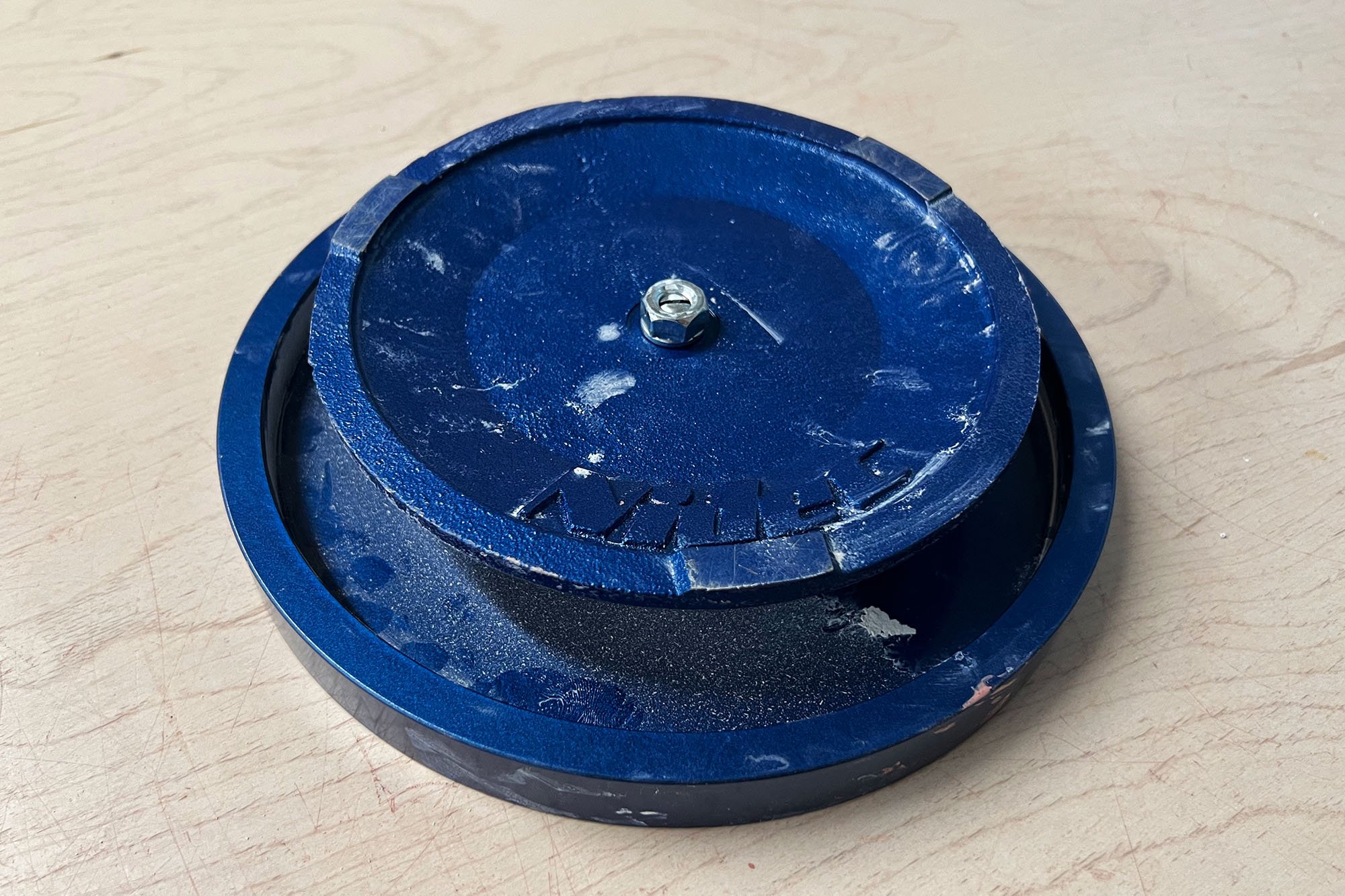
blue nidec shimpo banding wheel

The Nidec Shimpo 9 1/2” wide banding wheel.

Banding wheels are one of the most useful tools in a ceramic studio, especially for handbuilding, decorating, and carving. They allow you to turn a piece while building, and can be extremely useful during the glazing process.

A good banding wheel will spin freely and with some speed, allowing you to hold a brush steady and paint a “band” or line of or underglaze glaze. But they can be so much more than that.

This post will cover quality banding wheels that can handle the weight of clay and be cleaned. You don’t want to mess with cheap plastic options, or lazy susans that aren’t designed to get dirty and be cleaned again. Those cheaper options will often break down or don’t have enough weight to spin freely.

The best banding wheels are heavy and made out of metal, but there are a variety of options to fit each studio and budget. Read below for a full buyer’s guide to banding wheels.

This guide is based on personal experience with all the banding wheels, along with observations of what works and holds up in academic and community ceramic studios, and what tends to fall apart and not be worth the money.


Table of Contents

  1. Top Pick: Shimpo Banding Wheels

  2. Budget Pick: CSI Banding Wheels

  3. Great option: Generic Metal Banding Wheels from Falling in Art etc

  4. Other Banding Wheels

  5. Summary


Top Pick: Nidec Shimpo Banding Wheels

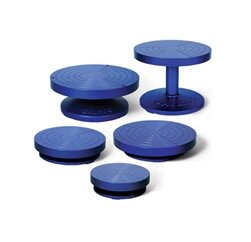
The complete line of Shimpo Banding Wheels.

The complete line of Shimpo Banding Wheels. The three shorter options are 2 1/4” tall while the two “pedestal” banding wheels are 4 3/4” and 7 1/2” tall.

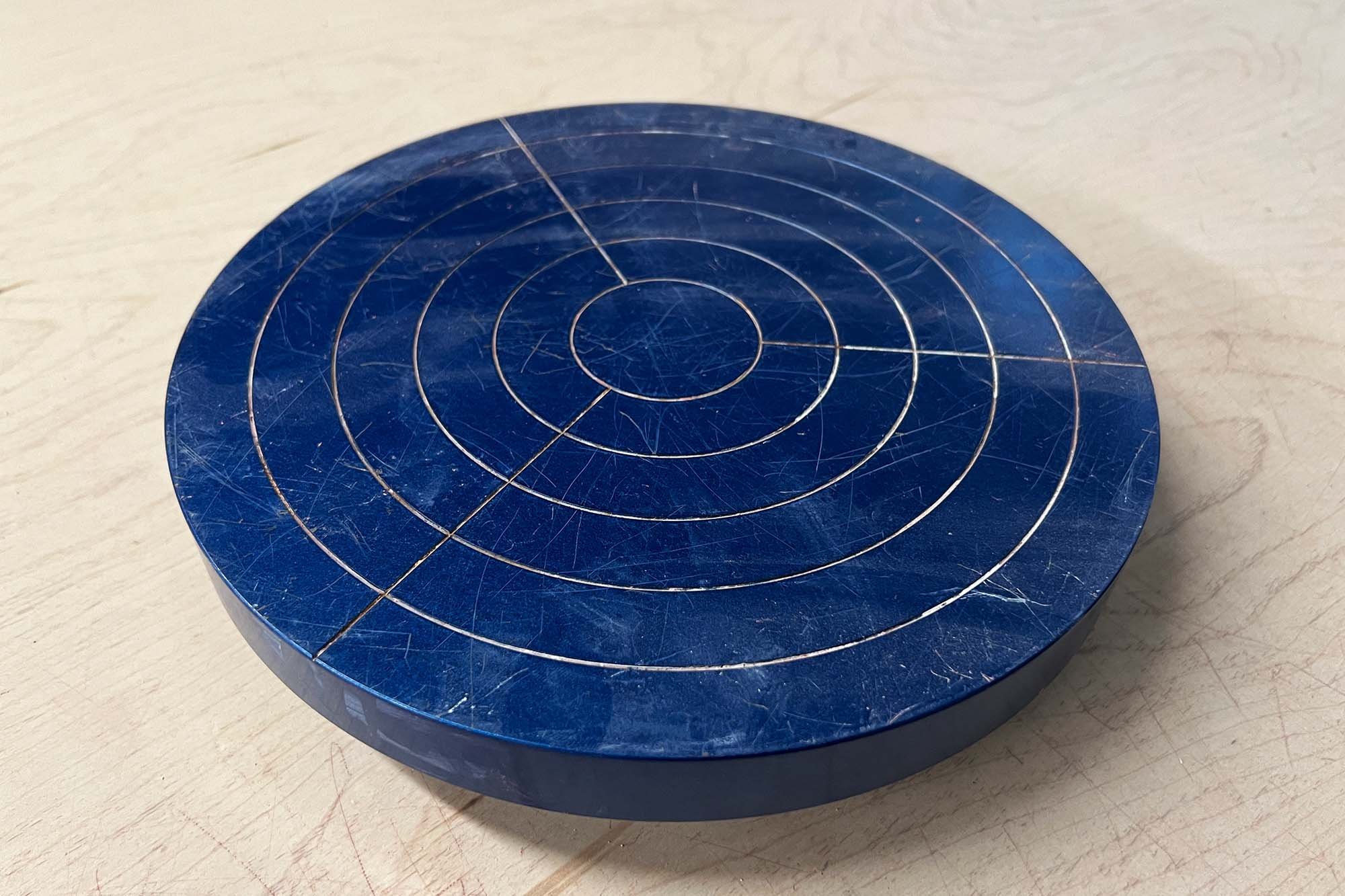
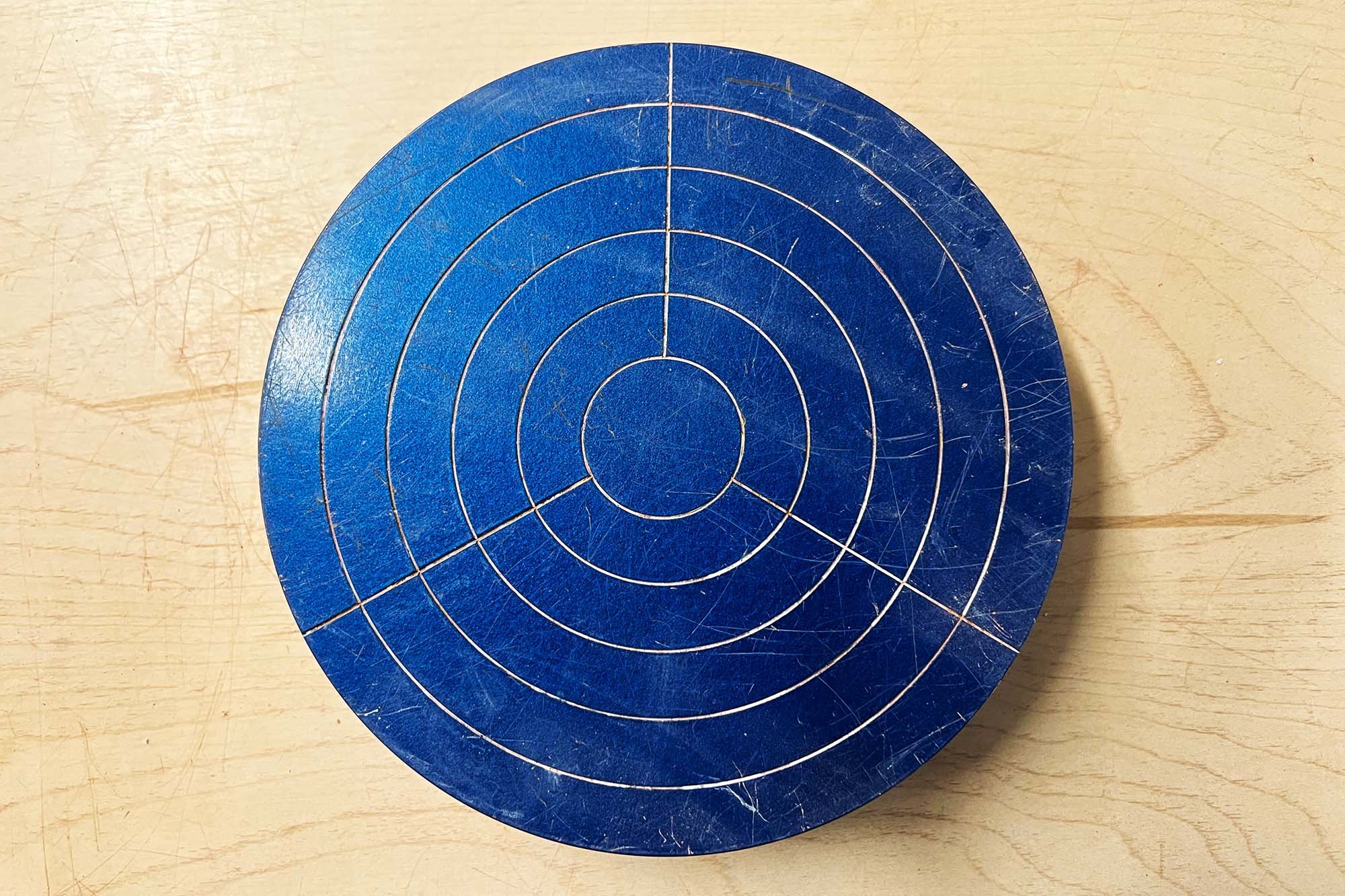
Nidec Shimpo banding wheels are made of cast iron and painted with rust-resisted blue paint and are heavy, durable and will last a lifetime. They have sealed ball bearings, a one-piece design that will not come apart when picked up, and the weight of the cast iron results in a smooth, even spin. These banding wheels are a pleasure to use whether you are coil building, painting, carving, or sculpting.

Once again, these are solid, durable cast iron. Take good care of this banding wheel and it you will be passing it down to the next potter in decades or longer. They are easy to clean, just don’t submerge the whole thing in water.

Shimpo banding wheels come in five sizes ranging from 7” to 11 3/4” wide. The three smaller wheels are all 2 1/4” tall, while the two taller sizes are 4 3/4” tall and 7 1/2” tall.

My preference is for the shorter, lower-profile banding wheels but a pedestal-style banding wheel may work for your studio. Some may find these banding wheels to be on the heavy side, but the weight works to your advantage to create a steady, even, long-lasting spin.

Shopping tip: These banding wheels tend to be cheaper at Blick than Amazon. Yes, the Nidec Shimpo are the most expensive banding wheels out there but they are also the heaviest, most durable, and the weight allows them to spin for much longer than other banding wheels. In the 5 years we have been maintaining this guide to banding wheels, the Nidec Shimpo banding wheel prices have only increased by a few dollars to they have remained a good value.

The Shimpo 25L Banding Wheel is 9 7/8” x 2 1/4” and is the most versatile size.

The Shimpo 25L Banding Wheel is 9 7/8” x 2 1/4”

Shimpo Banding Wheel Specs:
Model number, diameter, height, and weight:

18L 7” x 2 1/4”, 6.5 lbs, $66-$82 (Shop at Amazon | Shop at Blick)

22L 8 3/4” x 2 1/4”, 13 lbs, $77-$90 (Shop at Blick)

25L 9 1/2” x 2 1/4”, 15 lbs, $131 (Shop at Amazon)

25H 9 7/8” x 7 1/2”, 19 lbs, $123-$148 (Shop at Amazon | Shop at Blick)

30M 11 3/4” x 4 3/4”, 28 lbs, $142-$172 (Shop at Amazon | Shop at Blick)

More pics of the Nidec Shimpo banding wheel

Top view nidec shimpo banding wheel

Top view

bottom view of Nidec Shimpo Banding wheel

Bottom view


Budget Pick: CSI Banding Wheels

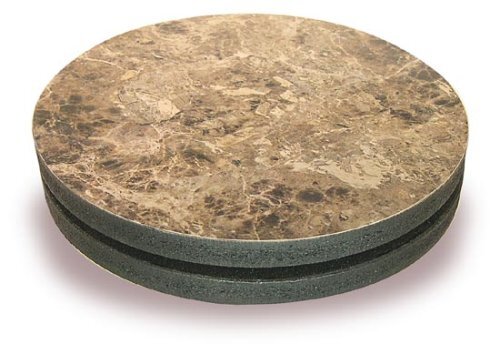
CSI Banding Wheels come in sizes ranging from 8” to 16” in diameter.

CSI Banding Wheels come in sizes ranging from 8” to 16” in diameter.

CSI Banding Wheels are heavy-duty, economical banding wheels made from two Formica-covered particle boards with stainless steel ball bearings. They are 2 inches tall and range from 8 to 16” in diameter. These banding wheels are portable and stackable, and are lighter than cast-iron options such as the Shimpo. They have decent turning capacity but they don’t turn as readily and easily as the Shimpo banding wheels. They are great for everything except a very fast and continuous painting of a line or band.

For heavy sculptures or vessels these are great options for handbuilding where you will be turning the piece slowly. The 8” and 10” wheels have a 200 lb capacity, the 12” is rated to 300 lbs, and the 14” and 16” are rated to an 800 lb capacity.

The CSI banding wheels range in price from around $28 to about $42. That’s an incredibly great deal for a heavy-duty banding wheel, making this a great option for educational studios, beginners, or those more focused on sculpture and handbuilding rather than spinning decoration.


Metal Wheel Budget Pick: Falling In Art Banding Wheel

US Art Supply metal banding wheel.jpg

These generic metal banding wheels, available under a variety of names online such as Falling In Art or US Art Supply, are highly rated and run about half the price of the Shimpo banding wheels. Available in 7” and 12” diameter, with a 4 inch pedestal, and a weight of about 10 lbs, these wheels have a set screw to hold the top and bottom pieces together. They are not quite as heavy as the Shimpo, but much heavier than other options such as the CSI Turntables or plastic wheels. For 1/3 to 1/2 of the price of the Shimpo banding wheels, these are a decent option for any studio, especially if you are on a budget.

As with all the banding wheels, do not submerge these in water for cleaning to avoid damaging the ball bearings.

7” banding wheel, generally $28

12” banding wheel, generally $38-$40


Other Banding Wheels options:


Laguna Banding Wheels

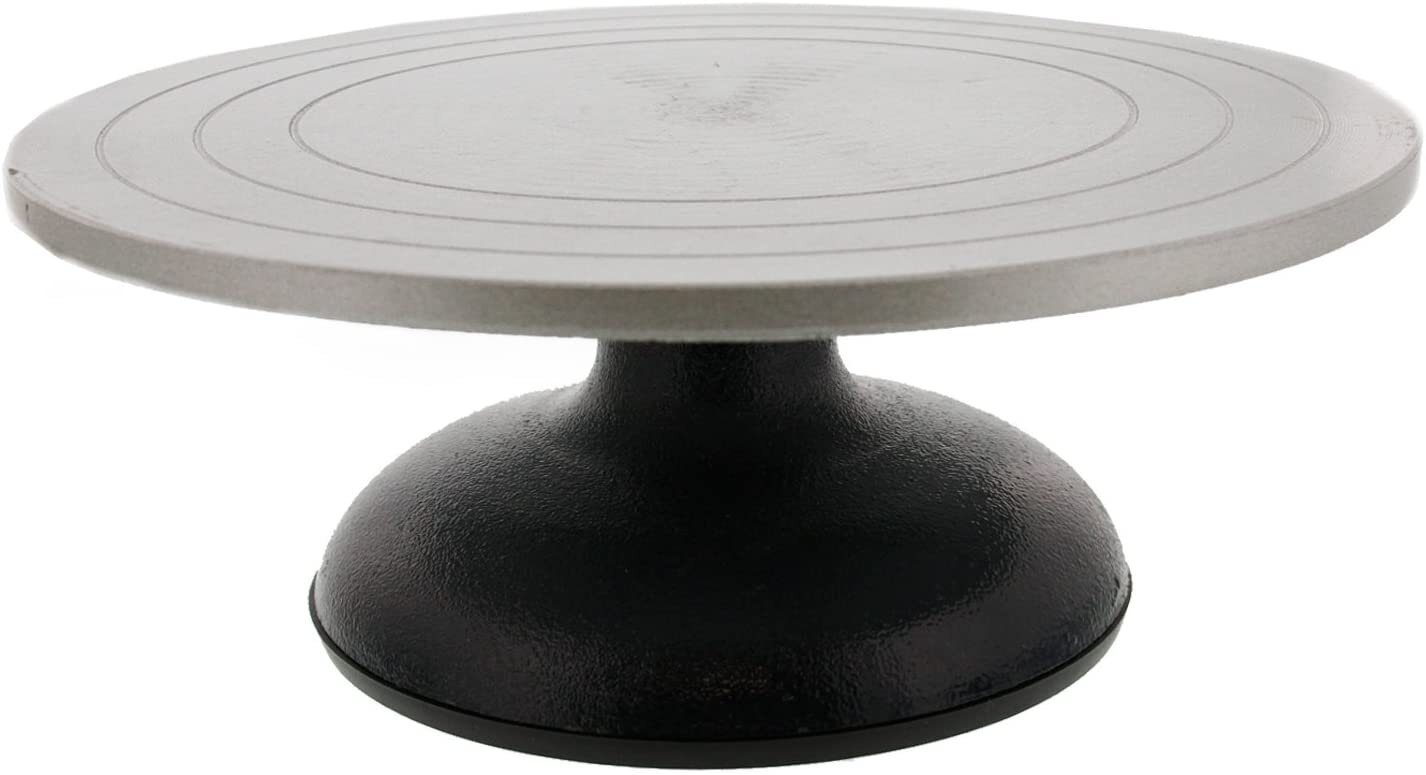
Laguna NL 278 aluminum and cast iron banding wheel turntable 12 inches wide by 2 inches tall with concentric rings on the top wheel head

The Laguna NL-278 Banding Wheel is 12 inches wide and 2 inches tall.

Laguna Clay makes a line of banding wheels with a cast iron base, steel bearings, and aluminum wheel head. Often, the wheel head will be very similar to the wheel head of a regular pottery wheel.

There are 6 options in the Laguna product line; 4 pedestal banding wheels that range from 5” to 6.5” tall, and 2 that are 2 inches tall. My favorite model is NL-278 which is 12 inches wide and 2 inches tall and retails for around $140. It’s basically a full-size wheel head, but as a banding wheel.

Because these are aluminum on top, they don’t spin as long as the Shimpo wheels, but they are well made and hold up. These wheels are available at a variety of ceramic suppliers, or directly from Laguna via their Axner Clay website.


Yncotte 7” Aluminum Banding Wheel

Yncotte aluminum banding wheel for ceramic studios

This light duty banding wheel is 7” wide, made out of aluminum, and is ok for light duty work. It doesn’t spin very long, due to the light weight. But it can be used in either direction and it fits just about anywhere as it is small.

I have used these more recently in a number of academic studios and they are definitely better than a plastic banding wheel, but given the $32 price tag, I would go for either the Falling In Art banding wheel, or spend more and get the Nidec Shimpo Banding Wheel.


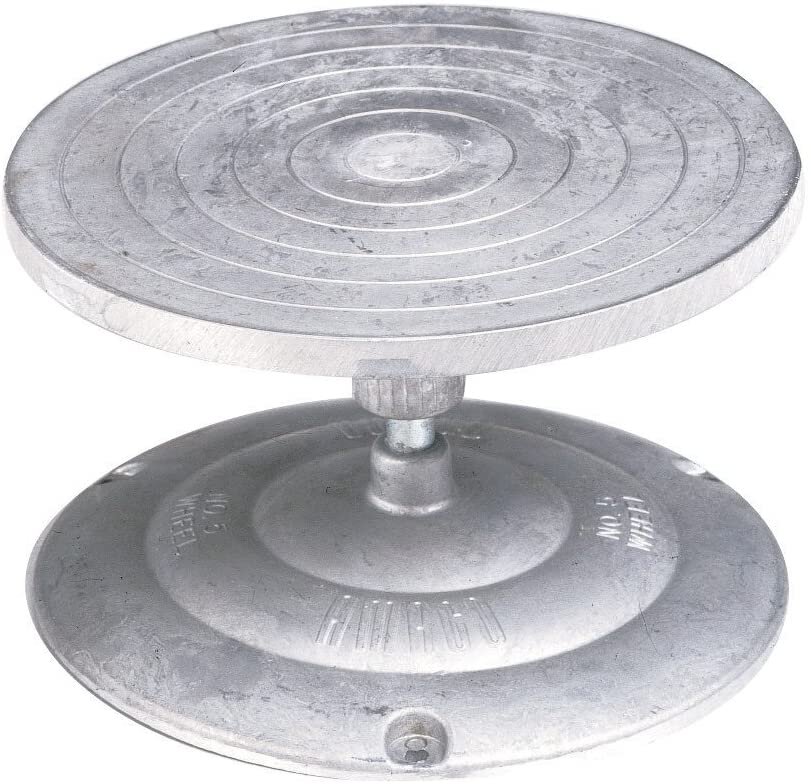
Amaco #5 banding wheel.jpg

Amaco #5 Banding Wheel

The Amaco #5 Banding Wheel is a 7” wide aluminum banding wheel that sits on a pedestal stand. Along with the Shimpo and CSI banding wheels, it’s quite common to see this in many ceramic studios. The smaller size, lighter weight, and pedestal stand makes it popular for decorating, carving, scraffitto work, and painting. It is not designed for heavy weight, but it is sturdy.

The drawbacks with this stand is that it is in two pieces and will separate if picked up by the top piece. There are also a variety of mixed reviews online, mentioning poor construction quality. AMACO may be having production issues with this unit, but in my experience, it’s a quality turntable that is great for small decorative tasks.

As of 2025, this turntable doesn’t appear to be listed on the Amaco website or at any stores. It is most likely out of production, but you may still see it for sale used.


Plastic Banding Wheels

Plastic banding wheel.jpg

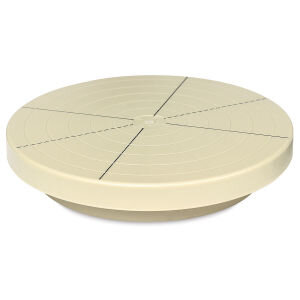
The Richeson Plastic Banding Wheel is 8” wide and 1 1/2” tall.

To be completely honest, I feel that plastic banding wheels are not worth buying. They can’t really be used for painting or banding, as the light weight doesn’t result in any lasting spin. They are also prone to breaking. You’ll be better off spending a bit more to get a CSI wheel or Falling in Art.

The only reason I can see to get a plastic banding wheel is for working with young children. They are lightweight and stackable (but not robust…treat them carefully!) Or the other reason if you just need a lightweight turntable for detail work such as carving or fine detail sculpting.

Given the price of these, ranging from $21 to $36, the money would be better used to get a metal banding wheel.

Richeson Plastic Banding Wheel
8” diameter, 1 1/2” tall, $21

Amaco Decorating Wheel in brown plastic 8" wide

The Amaco Decorating Wheel is 8” wide, all plastic, and is available in brown or off white.

Amaco Plastic Banding Wheel
8” diameter, $36


Jack Richeson Mobile Sculpture Stand and Turntable

Sculpture Stand.jpg

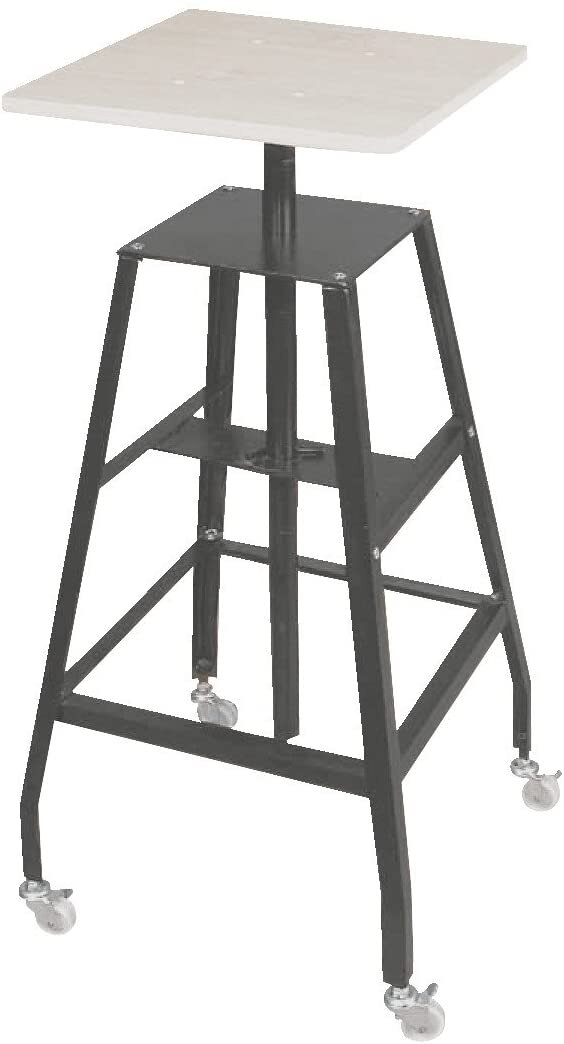
A mobile sculpture stand gives you the freedom to work on pottery and sculptures from all sides, and roll your work station out of the way if needed. This can be a great option for figurative sculpture, or if you want to create an additional workspace without adding another table. To work on this stand comfortably, you’ll need a tall stool or work standing up. The center shaft is adjustable for a working height of 39.5 to 44 inches. The wooden work surface is 12 inches square, and the base is 29 inches square with 4 locking caster wheels. It’s a great stand for working on sculptures, pottery, or as a display stand.

Jack Richeson Mobile Sculpture Stan
$215 to $225.


Summary

This post has covered a variety of banding wheels, turntables, and sculpture stands. In general, the best option is the heavy-duty cast iron Shimpo banding wheels, especially if you need to get a smooth, steady spin for painting pottery. If you are working with heavy sculptures, the CSI Turntables are a sturdy, economical option. And there are other cheaper and lighter options.

What banding wheels do you use? Let us know in the comments.


Best Masks for Silica Dust in Pottery and Ceramic Studios — updated for 2025

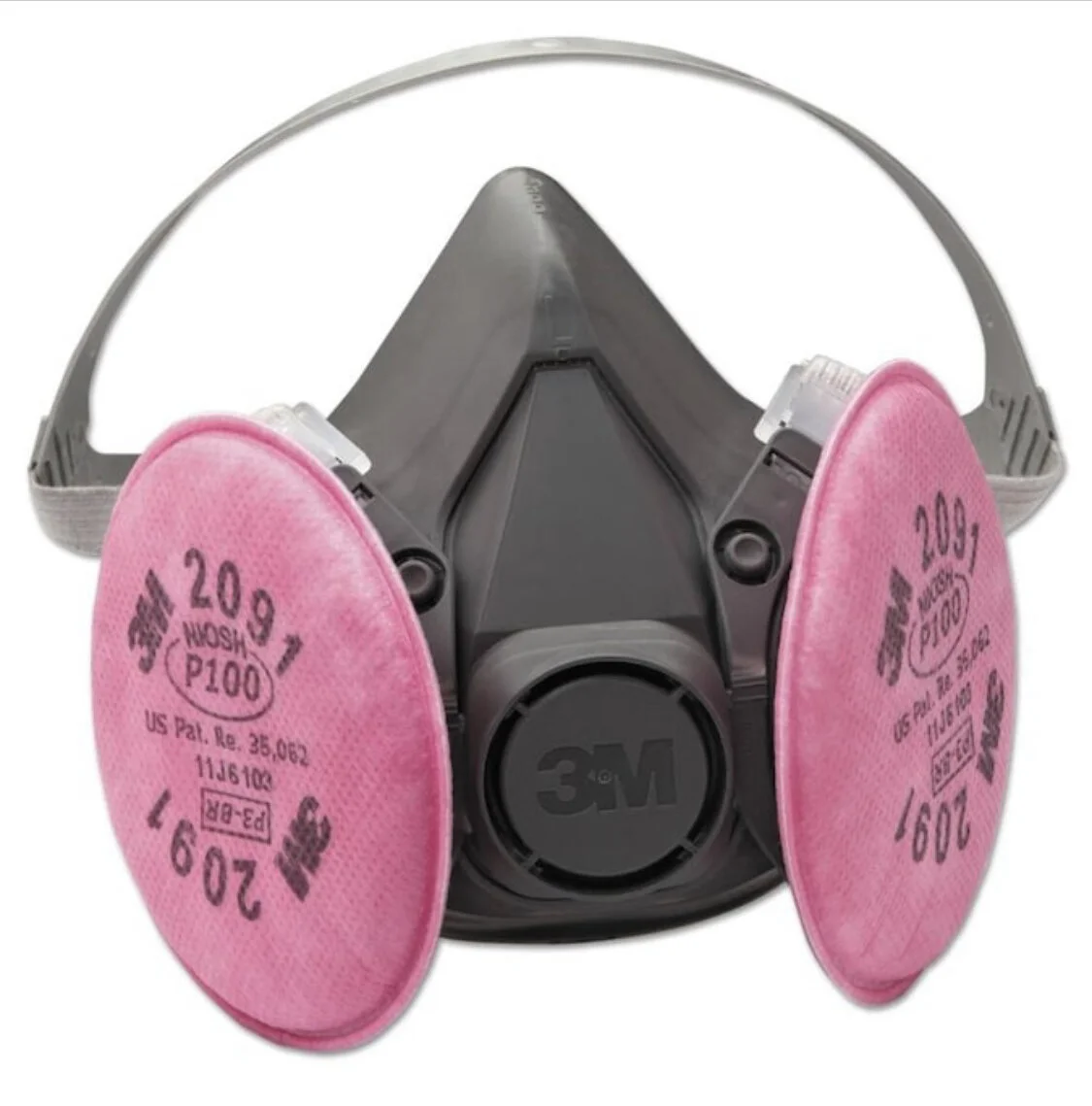
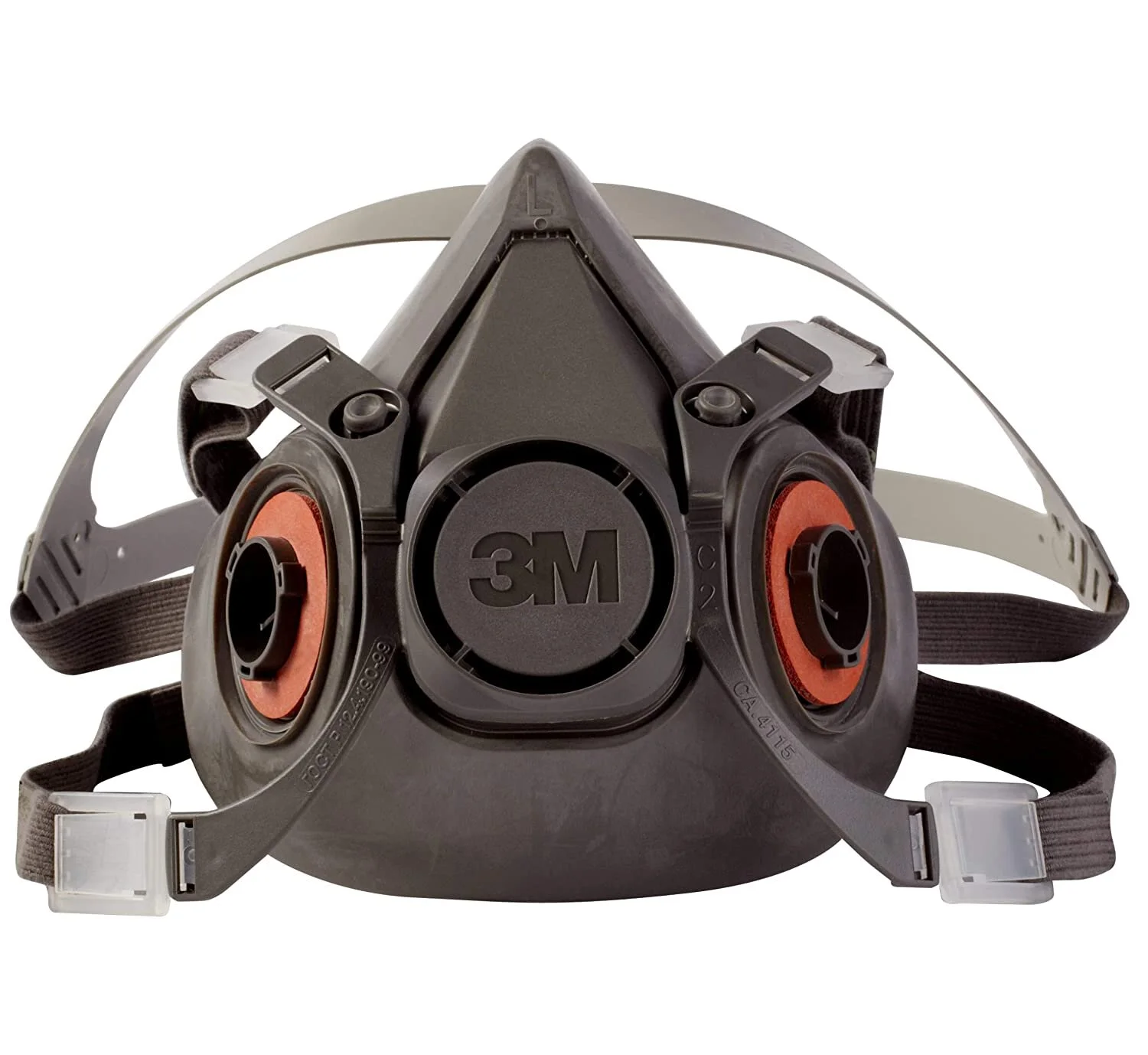
The 3M Half Mask with P100 particulate filters is the best mask option for ceramic studios.

The 3M Half Mask with P100 particulate filters is the best mask option for ceramic studios.

Silica dust is a real hazard in ceramics studios and it’s important to have the right mask. Cloth masks or basic nuisance-grade dust mask will not offer enough protection against silica. The best options are respirators with P100 or P95 filters, or N95/KN95 masks. This is also the level of protection businesses are required by OSHA to provide to employees if silica dust is present.

Respirable silica is very fine with almost invisible particles that can stay airborne for some time, and repeated exposure can lead to silicosis or black lung. To protect against silica, it is important that masks fit correctly. If air can leak around the sides, it really defeats the whole purpose. This is especially of concern if you have facial hair, as that can cause the mask to not be properly sealed to the face. In that case, you may need a full face mask or to trim your beard.

Overall, the best mask is going to be one that you reach for and wear during dust-generating tasks. Any protection is better than none. Personally, I use a respirator with P100 filtration whenever I am working with clay, plaster, wood, or other materials that create dust.

Also consider what is causing dust in your studio and seek to minimize that activity if possible. Keep an organized studio, use wet cleaning and sanding methods, and avoid creating dust. You may want to consider adding a dust collection system. For additional recommendations, visit our guides for cleaning tools and HEPA vacuums.

The reviews in this article are based on personal experience with a wide variety of masks along with experience working in ceramic studios for more than 20 years.

TOP PICK: 3M Half-Facepiece Respirator with P100 Filters

3M 6300 Half-Facepiece Mask without filters attached.

3M 6300 Half-Facepiece Mask without filters attached.

The 3M 6300 Half-Facepiece Respirator is a comfortable, reusable mask with filters that can be replaced as needed. This facepiece will take the round P95 or P100 particulate filters, or the cartridge style filters that are rated for particulates and some types of gases. Either will work, but you might find the round particulate filters to be more breathable. 3M also makes upgraded half masks (see below for more info) but this basic model is affordable, long-lasting, and will get the job done.

The Half-Facepiece respirator can be purchased as a plain mask, or packaged with filters or cartridge filters. Amazon has a variety of options; Home Depot and Lowes and other hardware stores tend to sell the more expensive version with cartridge filters. This may be useful if you also paint or have volatile gases in your studio, but the round P100 filters are perfect for ceramic studios where silica and other airborne dust particles are the main concern.

Note: this half-facepiece mask has unfiltered exhaust valves that are not appropriate for Covid safety in shared spaces.

3M 6300 Half-Facepiece Respirator
Available in size small, medium and large
Typical price
Respirator only: $14-$21
With P100 filters: around $25-$26
With cartridge filters: around $39


The pink, round 3M 2097 P100 filters will fit the half facepiece mask.

The pink, round 3M 2097 P100 filters will fit the half facepiece mask.

P100 Filters and other options

The round, pink 3M 2097 Filters rated to P100 will offer the highest level of particulate protection. You could go with the slightly cheaper, white P95 filters but in my opinion, P100 filters are the way to go.

When using these half masks, there can be some moisture buildup inside, but in general, I find them more comfortable than disposable masks.

Replacement prices:

P100 filters are around $14-$20 for a package of two sets of filters


DISPOSABLE MASK TOP PICK: 3M 8210 N95 Masks

The 3M 8210 N95 mask has straps that go over the head.

The 3M 8210 N95 mask has straps that go over the head.

N95 or KN-95 Masks are NIOSH rated to filter 95 percent of dust particles and are good for multiple uses if kept clean. N95 Masks have straps that go over your head, making them fit more snugly. KN-95 masks typically have ear bands and fit more loosely, however, they often seem to be constructed with a bit more breathing room around your mouth.

A solid option for an N95 is the 3M 8210 N95 Mask. It typically comes in bulk packs where each mask costs about $1 to $1.50 each or around $20-$30 for a box of 20 masks.


ALTERNATE DISPOSABLE PICK: KN-95 Masks

Armbrust KN-95 mask in purple

Armbrust is an Austin, Texas-based mask manufacturer. Their KN-95 masks are available in a variety of colors. Shop at Armbrust

Throughout the Covid pandemic, the availability and quality of masks varied widely, with a variety of manufacturers attempting to fulfill the demand. There also have been reports of fake name-brand masks and other problems. It can be very confusing to buy a “real” N95 or KN-95 mask, as detailed in this NY Times report from 2021.

KN-95 masks, which have ear bands as opposed to the over-the-head N95 style, have become quite common but the number and variety available are confusing. One place to start is by reviewing CDC-approved mask manufacturers as explained here or listed by the CDC here.

The Texas-based, U.S. manufacturer Armbrust makes very high quality surgical masks, KN-95 masks, and kids KN-95 masks. Not only are they NIOSH approved, but the masks are available in a variety of colors and they are made in the USA.

Prices for Armbrust KN-95 range from $15 for a pack of 5 (or $3 per mask) to almost $1,000 for a pack of 540 masks. There are significant discounts if you subscribe to regular mask delivery.


Tightest Fit: Pouch or “Duckbill” Style N95s

The Kimtech Pouch Style N95 has two soft straps that go over your head.

They may look sort of funny, but in my experience, the pouch or “duckbill-style” N95s have the tightest fit of any disposable masks. You can see the mask material move in and out as you are breathing, and it seems to provide excellent coverage for Covid and dust.

A great option for this style of mask is the Kimtech line from Kimberly-Clark. Made in the USA, the Kimtech N95s cost $50 for a box of 50 masks.

More mask reviews below:

Those are my top picks for studio dust masks that are appropriate to use for silica. Keep reading for a deeper look at various half-facepiece masks and other disposable mask options.


Table of Contents

  • Half Facepiece Masks (3M 6300, 3M 6500, 3M 7500)

  • Filters for Half Facepiece Masks

  • RZ Masks

  • Disposable Masks

  • Summary


Half Facepiece Masks: 3M Models

As reviewed above, the top pick for a dust mask for a pottery or ceramic studio is a 3M 6300 Half Facepiece mask. It’s the basic model but will get the job done. But that’s not the only model made by 3M. There is also “upgraded” models made with softer plastic which also have a few different options for valves and latching straps.

The 3M 6300 Half Facepiece Mask.

The 3M 6300 Half Facepiece Mask.

3M 6000 series Half Facepiece Mask

The 6000 series is the standard mask in the 3M line, and seems to be readily available in the 6300 model, but you may occasionally see the 6200 or 6100. From what I can tell, these are all about the same. Made of “thermoplastic elastomer,” the masks will work with 3M filters or cartridge filters, and can be taken apart and cleaned.

The masks are available in size small, medium and large and range in price from around $14 to $20.


3M 6500 Cool Flow Half Facepiece Mask

3M 6503QL Rugged Comfort Quick Latch model.

3M 6503QL Rugged Comfort Quick Latch model.

The 3M 6500 series is termed the “rugged comfort line” and features a softer silicone face seal, a low profile design, a “Cool-Flow” valve, and some models have a quick-latch drop down feature.

The most common and popular model in this series appears to be the 6503QL Rugged Comfort Quick Latch Model. In addition to the silicone lining, this mask features upgraded straps.

Available in small, medium or large sizes, it typically retails for $28 to $31 for the mask and filters are extra. The model sold at Home Depot is around $50 and comes with cartridge-style filters.


3M 7500 Half Facepiece Mask

The 3M 7502 Half Facepiece Mask.

The 3M 7502 Half Facepiece Mask.

The 7500 Half Facepiece line from 3M has the same features as the 6500 line, with the silicone lining and Cool Flow valve, but it has one main difference: the exhalation valve air is routed down to reduce fogging. If you wear glasses or googles, you should consider this mask.

Available in small, medium, and large size, the 7500 line typically retails for $33 to $45 for the mask and filters cost extra. plus filters.


3M Filter Options for Half Facepiece Masks

There are two styles of filters available for 3M masks: round particulate filters and cartridge filters, which work for particulates and gasses. For ceramics, particulate filters are adequate but if you stain wood, paint, or other activities with volatile gases, the cartridges will be a better option.

Particulate Filters

There are two options for round particulate filters: P95 and P100. The P100 offers a higher level of filtration. For a ceramic studio, the 2071 or 2091 filters are your best options. There are a few other filter options aimed at welders, smelting, and chemistry applications.

The P100 filters cost around $14-20 for a box of 4 filters.

p100 filter.jpg
P95_2071_F_F.jpg

3M Cartridge Filters

3M Cartridges are almost all rated P100 and will filter particulates, gases, and vapors. There are a variety of options but the basic 60291 should cover most art studio applications. These are a bit overkill if you are just worried about silica / particulates, but are a good option if you are painting or working with anything that produces volatile fumes. The cartridges are generally about double the cost of particulate filters. At big box hardware stores, they typically only sell the cartridge filters or mask combos, as shown below.

The cartridge filters cost around $20-$30 for a replacement pair of filters. At the time of this write, Home Depot had the best deal on replacement cartridges.

60921_P.jpg
respirator with cartridge filters.jpg

For a complete overview of all the mask and filter options available from 3M, click here or here.


RZ Masks

RZ M3 mask pictured with 2 straps but has 3 strap options

The M3 Mask features 3 strap options. Pictured here is the dual strap configuration.

RZ Reusable Face Masks are an interesting mix of a disposable mask with some features of a respirator. Founded in 2010, you can now find these masks at a lot of hardware and home improvement stores, as well as online. The masks are not yet NIOSH rated but they now have some models with a European FFP2 rating. Full approval of these masks would be helpful in comparing these to other masks on the market, but in general these are great workshop masks and there are a variety of sizes and features. (For technical info on RZ masks and the testing they have undergone, click here. )

The M3 Mask from RZ is the top seller and features 3 different strap options so that you can find the perfect fit. The options include a neck strap, ear loops, or dual head strap (pictured at right). RZ claims a 50% increased airflow with their new filter options, and the same 99% filtration of particles down to 0.1 micron.

The M3 Mask retails for $40 and includes the 3 strap options, a carrying case, and 2 filters. Replacement filters cost $15 for a 3 pack.


The RZ M2.5 Two Strap Mask is an upgraded version of the M2 bask with two head straps.

The M2.5 Two Strap Mask from RZ features a mesh fabric, hook and two straps, with carbon filters that filter 99% of particles down to .1 micron. The filters are somewhat similar to a disposable mask and fit into the bigger mask housing. These masks were designed with unfiltered exhalation valves but the company now makes valve caps for use in shared environments where only filtered exhalation is recommended for the best Covid safety.

You will need to replace the carbon filters over time. Think of this mask as a more comfortable hybrid of a respirator and a disposable mask.

The RZ M2.5 retails for $30 and comes in a variety of colors. Replacement filters are available in a 3 pack for $8 to $15.

The M2 mask from RZ.

The Original M2 mask from RZ has a neck strap.

RZ makes a variety of masks with different strap configurations and colors, along with filter options.

Shop all RZ products by clicking here.


Other Disposable Masks

The 3M N95 and KN-95 masks listed at the top of this post are great options, but there are other disposable masks.

Moldex 2300

The Moldex 2300 Mask.

The Moldex 2300 Mask.

The Moldex 2300 is another N95 particulate respirator that also features an exhaust valve. This helps reduce moisture buildup.

The Moldex 2300 is available in a 10 pack for around $44.

The Moldex 2200 (does not have an exhaust valve) is available in a 20 pack for around $26.


Honeywell Nuisance Masks

Honeywell Nuisance Masks

Honeywell Nuisance Masks

The Honeywell Nuisance Masks are cheap and easy to find, but they are not rated for hazardous dust or particulate use. Too often, I’ve seen these as the masks offered to students in ceramic classes. I guess they are better than no mask but there’s no reason to be casual about silica dust. These might be fine in a pinch, but they are not NIOSH approved and may give a false sense of security. For art studios, it’s best to use the proper N95 or higher masks.

The reason these masks are shown here in this review is that this is what I have seen stocked in many ceramic studios for student use. They are not suitable for silica protection.

These masks cost around $15 for a 50 pack.


Summary

This post has covered a variety of masks to deal with silica and other particulates in a ceramic studio. The first step should be to avoid making dust if possible. But to deal with silica, use a NIOSH approved half facemask respirator, or N95 rated disposable masks. Your long-term health is worth it, and investing in quality personal protective equipment is always a good idea.

What type of mask do you use to protect against silica and other particulates? Let us know in the comments.


Cone 04 Low Fire Majolica Glaze Tests with Oxide Washes


6 test tiles of oxide washes on arbuckle majolica low fire glaze

Tests of Arbuckle Majolica glaze on two different low fire clay bodies, Standard 105 White (top) and Standard 103 Red (bottom). The majolica glaze was mixed to a specific gravity of 1.45. At left shows 2 dips, a 3 second dip over the whole tile and a second 3 second dip angled at the top left. The middle tiles show oxide washes over a 3 second dip of majolica. The tiles at right show oxide washes over two dips of glazes (3 seconds each dip.)

Detail of Arbuckle Majolica over Standard 105 low fire white clay body, fired to cone 04.

This post shares tests of the low fire white glaze, Arbuckle Majolica, along with oxide washes mixed to the specifications found in Linda Arbuckle’s comprehensive Majolica Handout.

Detail of Arbuckle Majolica over a low fire red clay body

Detail of Arbuckle Majolica over Standard 103 low fire red clay body, fired to cone 04.

I have been experimenting with oxide washes at midrange temperatures and wanted to see if I could get similar at a lower temperature. I have also been inspired by numerous artists making great work with low fire clay and glaze, along with the recently published Low-Fire Glazes for Potters and Sculptors by Ben Carter. (shop book at Amazon) This Majolica recipe is found on page 159 of that book, although it is readily available online in many places.


Arbuckle Majolica, low fire white glaze

Ingredient Percentage 1000g batch
Frit 3124 66 660g
Minspar 200 17 170g
Tile #6 Kaolin 11 110g
Nepheline Syenite 6 60g
Tin 4 40g
Zirconium 9 90g
Bentonite 2 20g

Oxide Wash Recipes

The 8 washes made for these tests.

1 part colorant
1 part Frit 3124
1 part Bentonite

Recipe for: Copper Carbonate, Cobalt Carbonate, and Synthetic Red Iron Oxide

For these tests, 20 grams of each were mixed.

The 60 grams of dry materials were then mixed with 250 grams of water.

Cobalt Carbonate wash in a 16 ounce deli container.

1 part colorant
1 part Frit 3110
1 part Bentonite

Manganese Oxide was used in this test

20 grams of each were used in these tests.

The 60 grams of dry materials were then mixed with 275 grams of water.

1 part colorant
3 parts Frit 3124
1 part Bentonite

Chrome Oxide, Light Rutile, Titanium Dioxide, and Mason Stain 6600 Best Black were used in these tests.

20 grams of colorant, 60 grams of frit, and 20 grams of bentonite were used in these tests

The 100 grams of dry materials were then mixed with 300 grams of water.

Note on water:

These were mixed until they seemed usable, based on my experience. You may want a thicker or thinner mix.


Majolica glaze results:
The glaze is an easy to use, durable white glaze that gave me nice results on test tiles. I plan to add it to my studio. As seen on the red clay test tile, a thin coat allows some body color to come through, and a double coat is a more solid white while still seeing some body color where the glaze breaks over texture.

Oxide Wash results:
From previous work at midrange and high fire, I am used to mixing oxides just with water for high fire, or with something that helps the oxide melt at midrange, such as a frit. The recipe from the Arbuckle handout (listed above) includes mostly Frit 3124 along with bentonite to help the oxide stay in suspension and resist smudging after it has dried.

I can attest that the bentonite did result in a brushstroke that resists smudging, but I found the overall mix to be somewhat gelatinous. This resulted in an application that started out thick but quickly became thin throughout the brushstroke. Sometimes I was depositing too much oxide, and others were quite thin. I would like to test again with maybe half the percentage of bentonite, so for example a recipe of 1 part colorant, 1 part frit, and a 1/2 part bentonite.

I would also note that the oxides with the 3 parts frit generally melted better and didn’t have surface breakups. Another point of testing would be to increase the frit percentage for all the oxides.

You can see in test tiles that the oxide effect also varied based on the thickness of glaze. Obviously, I will have to do more testing to get the results that please me, but sharing these results here as they may be a starting point for others to develop what works for them.

Storage: 60 to 100 grams of material with water fit a 16 ounce deli container. This is a LOT of oxide wash for an individual studio. You may want to mix smaller amounts.

The oxide washes at Cone 04 over Arbuckle Majolica (top) and G1619Q / Quigley Clear at bottom

Same recipes over low fire clear: These were also tested over G1619Q / Quigley Clear glaze, and had nice results. Not majolica, but the oxides melted more on the clear and had nice results.


Low fire versus mid range oxide wash test results

Low fire versus mid range: the same recipes were tested over Arbuckle Majolica fired to Cone 04 at left (both a single and double dip) and at right, over the VC Soft Satin 1 Glossy White fired to cone 6.

Same recipes at cone 6: These recipes were also painted on VC Soft Satin 1 Glossy White modified with Frit 3134 and the results were ok, if a bit muted. They might need to be mixed thicker or have a higher percentage of colorant if used at mid-range temperatures.


Individual notes

Light Rutile Oxide Wash: Good straw yellow when applied thickly. Brushstrokes developed when applied thinly. Might need to paint designs twice or use less water.

Copper Carbonate Wash: Oxidized copper green as expected. Where applied very thick, had breakups in final glazed results

Cobalt Carbonate Wash: Worked as expected over clear glaze. Where applied thickly, broke up. Might need more frit, such as a 1 part colorant to 2 parts frit.

Synthetic Red Iron Oxide Wash: Was most iron red on majolica glaze over red clay. Did not benefit from a thicker application of majolica glaze underneath.

Chrome Oxide Wash: Very refractory, as expected. Did melt ok over a thinner glaze application. Did not benefit from thicker majolica glaze. Melted quite well over clear glaze.

Manganese Oxide Wash: Plum to brown with the Frit 3110 mix. Had issues breaking up with both thick and thin application. May need more frit in the mix.

Mason Stain Best Black 6600: Ok black, did not benefit from thicker application of glaze. Already has a high percentage of frit, might need more.

Titanium Dioxide Wash: I knew this would be hard to see on a white glaze, but there was some contrast there. Especially interesting over the clear glaze over red clay, where it’s a pale yellowish white.


Conclusion

The Arbuckle Majolica is a great low fire white. I had mixed results with the oxide washes, but have a direction to go for further testing to get the washes locked in for the results I am looking for. I generally don’t want the brushstroke / washed out look, but that may work for you.

You may also enjoy:

Cone 6 VC Soft Satin 1 Glossy White Glaze Recipe

Gift Guide for Potters

See all Glaze posts

Cone 6 Midrange White Glaze – modified VC Soft Satin Glossy 1


VC Soft Satin 1 with Frit 3134 substituted for Gerstley Borate test tiles. From left: Standard 240 white stoneware, Standard 112 Brown Speckle Stoneware, Stoneward 308 Brooklyn Red Stoneware. The glaze was mixed to a specific gravity of 1.50 and dipped for 3 seconds. An additional dip of 3 seconds is at a diagonal at the top of the test tile.

VC Soft Satin Glossy 1 is a great midrange white glaze that is forgiving and easy to use. It has been my go-to midrange white for almost a decade. Developed by Val Cushing (maybe decades ago?), you can see lots of references to this glaze in books and online. Many report it does well with stains ranging from 2 to 10% mixed in, but I haven’t tested that yet.

I am sharing this post because I had to make changes to the glaze now that Gerstley Borate is no longer available. I’m pleased to report that substituting Frit 3134 for the Gerstley gave the same results for me. I did bump up the bentonite from 2 to 3% as well, to help the glaze stay in suspension and help compensate for the now higher percentage of frits in the glaze .

I know that many are using Gillespie Borate as a substitute for Gerstley, but that hasn’t always worked for me. So I replaced the 14 percent Gerstley one to one with Frit 3134. It wasn’t the most technical change to a glaze recipe, but it worked for me and the glaze seems the same in handling and color effects.

The only other thing I can add to the wide knowledge base around this glaze, is that I once worked at a studio that was adding both the 14% Zircopax and an additional 10% Tin Oxide. That’s a crazy expensive glaze! But it was very bright white and extremely hard and durable at midrange temperatures. If you are not happy with the cool white results of a zircopax glaze and want a more yellow / bright white, you can play around with the percentages of zircopax and tin; maybe try 7% and 7% of each? Or go with all tin oxide. I imagine the glaze would be about the same.

VC Soft Satin Glossy 1 modified with Frit 3134

Ingredient Percentage 1000g batch
Cornwall Stone 46 460g
Wollastonite 10 100g
Kaolin (EPK used in this test) 10 100g
Dolomite 12 120g
Frit 3124 8 80g
Frit 3134 14 140g
Add:
Zircopax 14 140g
Bentonite 3 30g

Mix all the ingredients dry, then add them to water.

Mix and blend the ingredients with the water, screen through 40 mesh and then 80 mesh screens.

Add water if needed to get to a specific gravity of 1.50. Adjust as necessary for your studio.


10 Best New Pottery and Ceramic Books for 2024

There are a lot of great new books focusing on ceramics and pottery this year. This posts covers ten new books on ceramic artists and technique that were published in 2024, and a few from the very end of 2023.


Complete Guide to Low-Fire Glazes for Potters and Sculptors by Ben Carter

An excellent introduction and guide to the world of low-fire glazes by Ben Carter, host of the Red Clay Rambler podcast and author of the popular book Mastering the Potter’s Wheel. This new book covers all aspects of mixing glazes, and includes numerous full-color images of example work along with a variety of recipes.

Low-Fire Glazes for Potters and Sculptors
By Ben Carter
Hardcover, 176 pages
published September 2024 by Quarry Books
Listed at $30 but usually available for $27


Magdalena Suarez Frimkess: The Finest Disregard

Image of art catalog The Finest Disregard covering the work of Magdalena Suarez Frimkess. The red book has pink text and in front of the lettering is a Suarez Frimkess ceramic sculpture inspired by Minnie Mouse

Catalogue from the Los Angeles County Museum of Art retrospective of ceramic artist Magdalena Suarez Frimkess. The 95-year-old artist is definitely having a moment this year and this wonderful catalogue is full of images of work, mostly from the past 10 years, along with essays and more.

Check out this post on the catalogue as well.

The Finest Disregard
Published by Los Angeles County Museum of Art and DelMonico Books, 2024
Hardcover, 128 pages
Listed at $49.95


Toshiko Takaezu: Worlds Within

Another exhibition catalogue that is a worthy addition to any library is Toshiko Takaezu: Worlds Within, which accompanies the traveling exhibition of the same name. A long-due exploration of the artist, who lived from 1922 to 2011, the catalogue includes essays, lots of full-color images, and even some writings by Takaezu herself. The catalogue includes many examples of the “closed forms” which Takaezu is known for, along with other ceramics, paintings, and more.

Toshiko Takaezu: Worlds Within
By Glenn Adamson and others
Published by Yale University Press
Hardcover, 368 pages
Listed at $65 but usually available for less


Glazes for the Contemporary Maker by Louisa Taylor

Glazes for the Contemporary Maker by Louisa Taylor book cover image featuring a variety of cylindrical ceramic vessels in muted colors on a green pedestal on a dark green background

Louisa Taylor is a ceramic stalwart now, having published multiple editions of The Ceramics Bible and Ceramics Masterclass in 2020 (Check out a full review of Masterclass here). In her latest book, Taylor covers everything you need to get started with glazing. Chapters include “Establishing Your Glaze Practice,” studio setup, firing, and more, along with 200 illustrated recipes. Not as specific as the Low-Fire book mentioned above, this is a more general guide for getting started at all temperatures of firing ceramics.

Glazes for the Contemporary Maker
By Louisa Taylor
Published March, 2024 by The Crowood Press
144 pages
Listed $29.99 but usually available for less


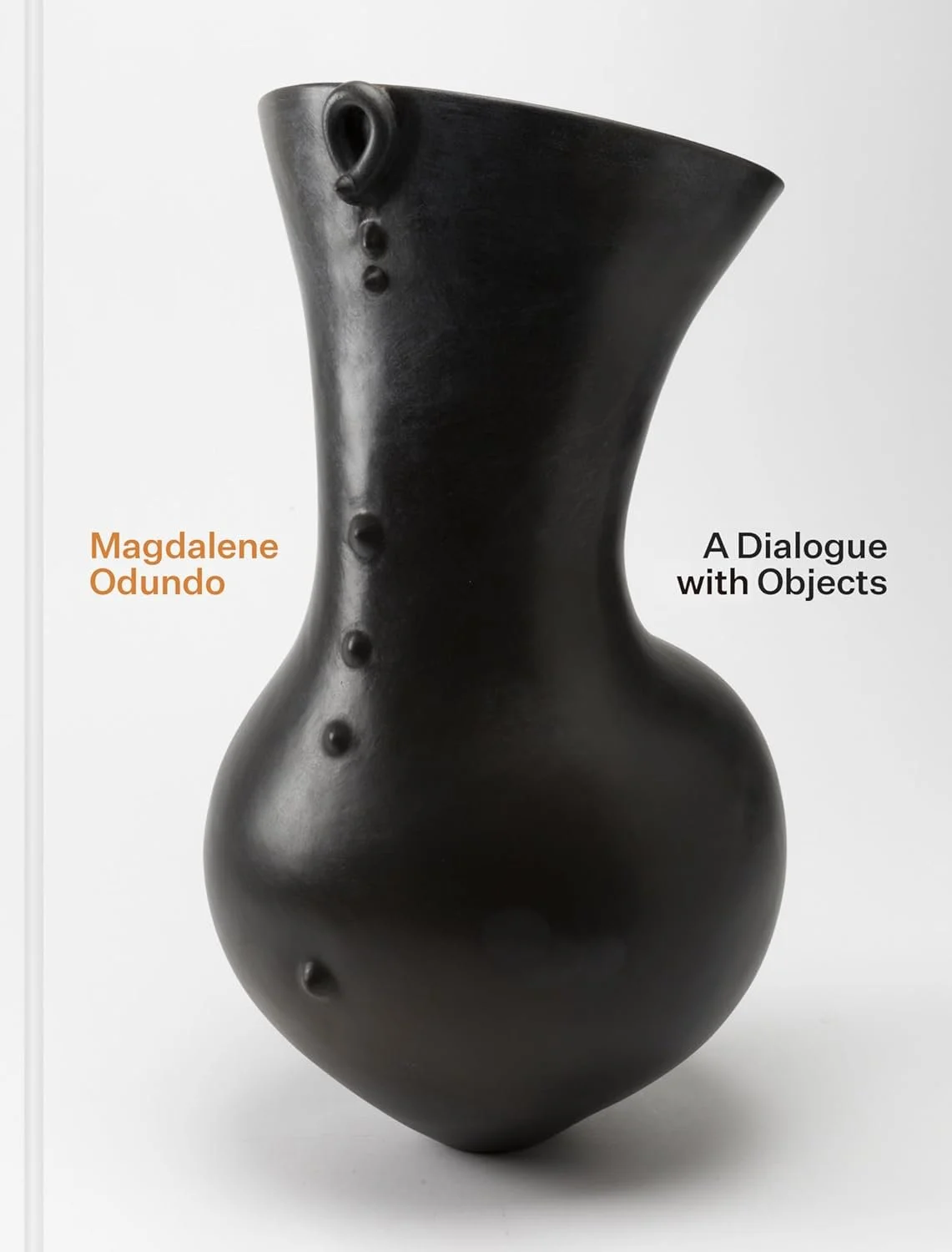
Magdalene Odundo: A Dialogue with Objects

Magdalene Odundo: A Dialogue with Objects featuring a black ceramic vessel by Odundo on a white background

Magdalene Odundo is a Kenyan-born, British artist known for elegant vessels that draw on traditions ranging from Aztec to Chinese to African pottery, and are in dialogue with contemporary traditions including modernism. In this survey work, potter and art historian Sequoia Miller provides a new perspective on Odundo’s work, and includes an in-depth look at Odundo’s prints and sketchbooks. The book includes a foreword by Susan Jefferies and contributions by Nehal El-Hadi, Elizabeth Harney, and Barbara Thompson.

Magdalena Odundo: A Dialogue with Objects
By Sequoia Miller and others
Published September 2024 by Princeton University Press
Hardcover, 112 pages
Listed at $49.95 but usually available for less


Thrown by Lilly Maetzig

Thrown by Lilly Maetzig cover image

Following up 2023’s Handbuilt, Maetzig returns with a new book in a similar format, this time focusing on the pottery wheel. The book includes 20 projects ranging from dinner plates to lamp shades, and includes making, decorating, and firing instructions. If you are a fan of the artist’s Mae Ceramics line, or just looking for an inspirational book, this is a good introduction to functional homewares made on the wheel.

Thrown
By Lilly Maetzig
Published October 2024 by Quadrille Press
160 pages
Listed at $29.99


Radical Clay: Contemporary Women Artists From Japan

Accompanying an exhibition of the same name, this catalogue explores 36 women artists from Japan who have made ceramic work in the past 50 years. Richly illustrated with short texts on each artists, this is a beautiful overview of recent work from Japan. The exhibition was at the Art Institute of Chicago last year, and is currently at the Ringling Museum of Art in Sarasota, Florida, and will travel to The Ackland Art Museum at UNC Chapel Hill in 2025.

Radical Clay: Contemporary Women Artists From Japan
Edited by Joe Earle
Published Novemeber 2023 by the Art Institute of Chicago
128 Pages
Listed at $30 but often available for less

Architectural Pottery: Ceramics for a Modern Landscape

Architectural Pottery: Ceramics for a Modern Landscape book cover with a black and white image of a man holding a ceramic vessel against a wall of large pottery vessels

The book focuses on the firm Architectural Pottery, which launched in 1950 with modernist ceramic objects designed for the new houses being built in America. Accompanying an exhibition at the American Museum of Ceramic Art in Pomona, Calif., this book includes numerous black and white and color images. A must for any fan of midcentury modernism, this work also provides a historical background to the numerous artists and companies making large-scale ceramic furniture and planters today.

Architectural Pottery: Ceramics for a Modern Landscape
By Daniel Chavkin, Jeffrey Head, and Jo Lauria
Published September 2024 by The Monacelli Press
256 pages
Listed $59.95 but usually available for less


Tecla Tofano: This Body of Mine

A small monograph on the Venezuelan artist Tecla Tofano (1927–1995), this book includes essays and images on this innovative artist. Tofano’s work is often totemic but also domestic, and explores issues of maternity, sexism, and socioeconomic status.

Tecla Tofano: This Body of Mine
Published February 2024 by James Cohan Gallery
112 pages, softcover
Listed at $35 but often available for less


Dried Peyote and 7 Up: The Work and Vision of Michael Frimkess

Dried Peyote and 7 Up: The Work and Vision of Michael Frimkess book cover

A limited-edition book (edition of 250), this book focuses on Los Angeles ceramist Michael Frimkess (and spouse of Magdalena Suarez Frimkess). This is the first monograph on the artist’s 60-year plus career.

Dried Peyote and 7 Up: The Work and Vision of Michael Frimkess
Paperback
$100


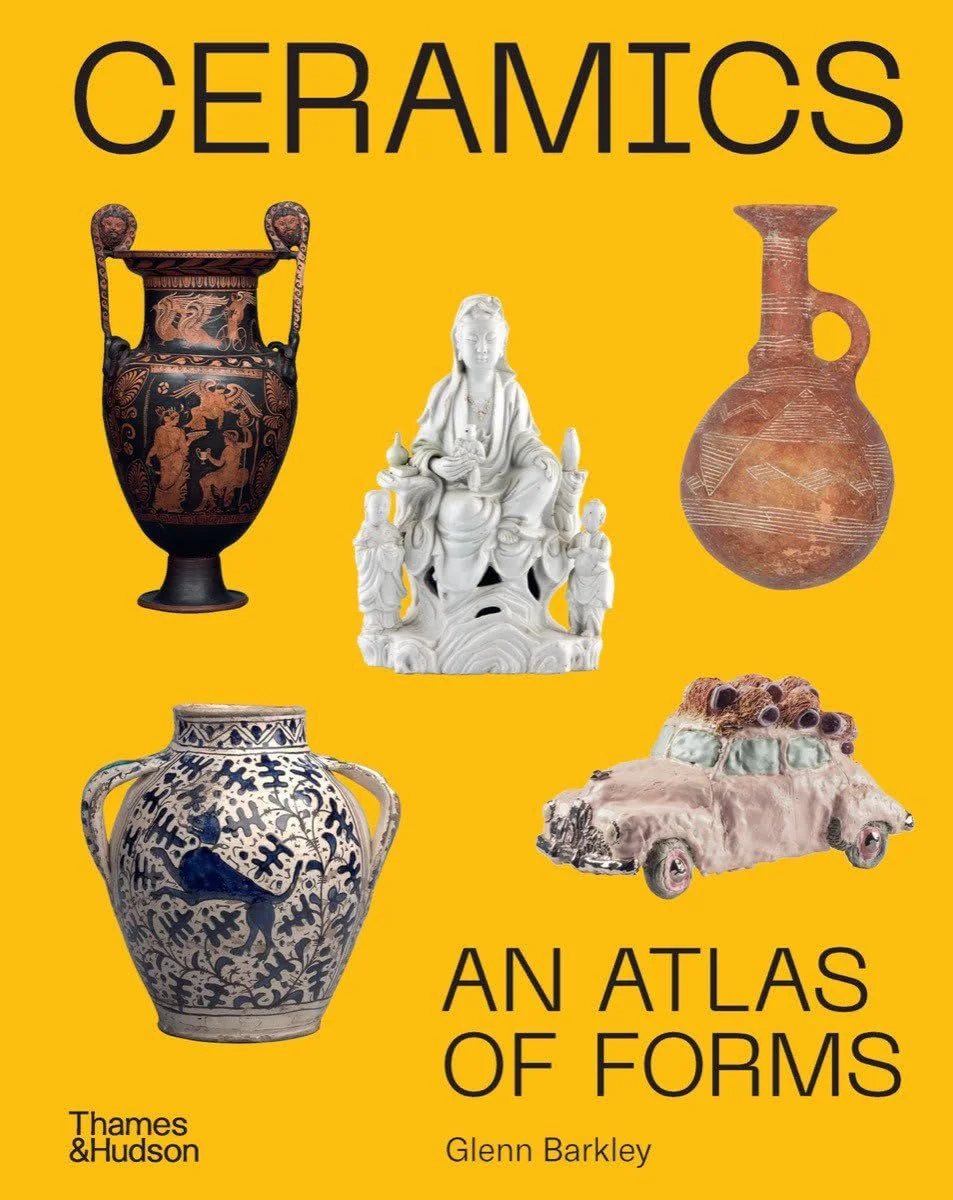
Ceramics: An Atlas of Forms

Ceramics: An Atlas of Forms by Glenn Barkley book cover with a yellow background and five different ceramic objects on the cover

Organized chronologically with 220 color illustrations, artist and curator Glenn Barkley covers global culture by looking at ceramics, telling stories of how things were made, collected, and what roles they played and continue to play. A fascinating examination of the ceramic medium.

Ceramics: An Atlas of Forms
by Glenn Barkley
Hardcover, 320 pages
Published March 2024 by Thames & Hudson
$65


Two Poems by Arthur Sze

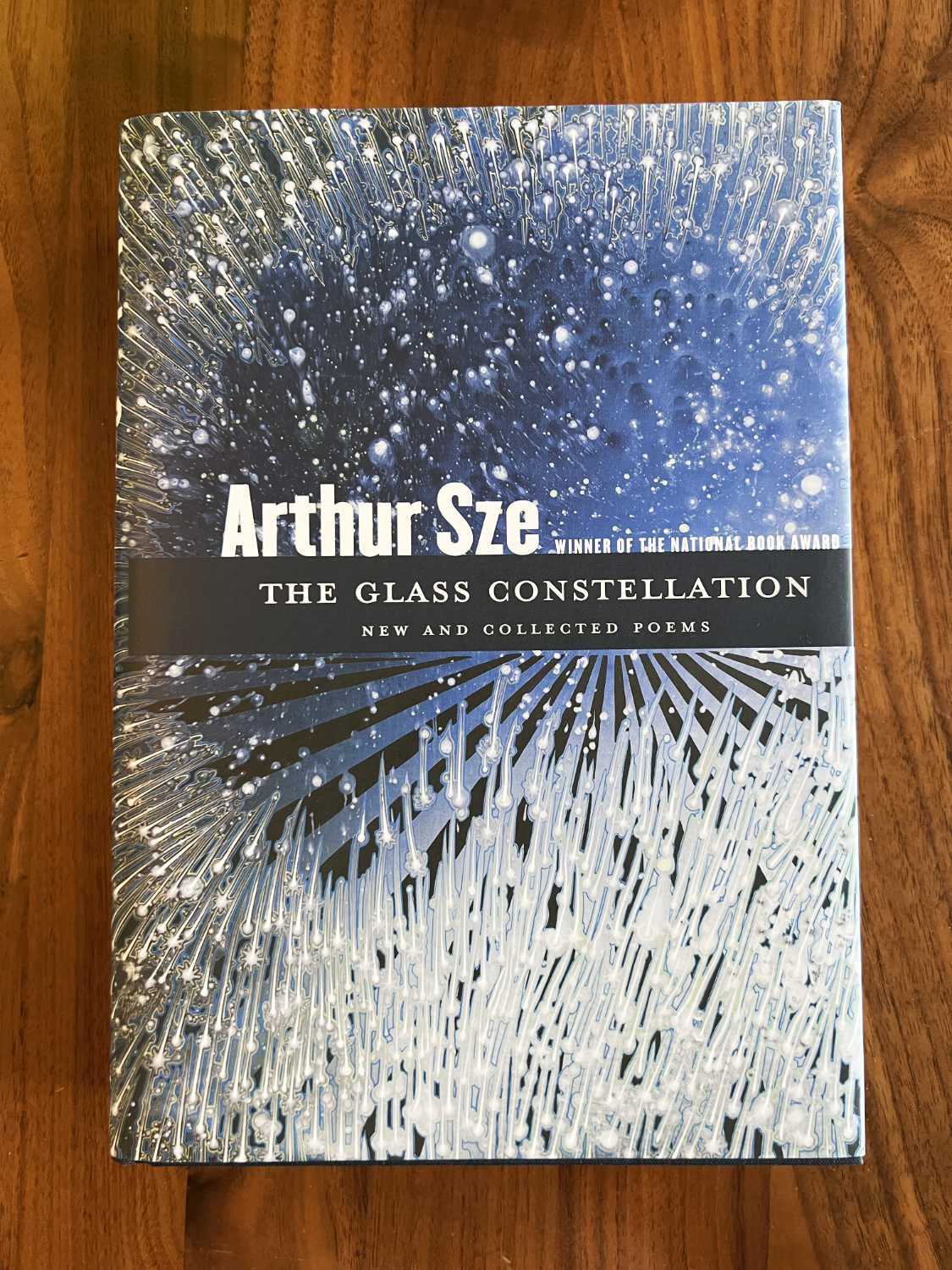
Two poems mentioning clay from The Glass Constellation, a collection of poems by Arthur Sze. Both poems were originally published in Sze’s 2019 book, Sight Lines. Sze is a National Book Award Winner and also received the 2024 National Book Foundation Science + Literature Award for The Glass Constellation.


Doppler Effect

Stopped in cars, we are waiting to accelerate
along different trajectories. I catch the rising

pitch of a train—today one hundred nine people
died in a stampede converging at a bridge;

radioactive water trickles underground
toward the Pacific Ocean; nickel and copper

particulates contaminate the Brocade River.
Will this planet sustain ten billion people?

Ah, switch it: a spider plant leans toward
a glass door, and six offshoots dangle from it;

the more I fingered the clay slab into a bowl,
the more misshapen it became; though I have

botched this, bungled that, the errancies
reveal it would not be better if things happened

just as I wished; a puffer fish inflates on deck;
a burst of burnt rubber rises from pavement.


Salt Song

Zunis make shrines on the way to a lake where I emerge and Miwoks gather me
out of pools along the Pacific the cheetah thirsts for me and when you sprinkle
me on rib eye you have no idea how I balance silence with thunder in crystal you
dream of butterfly hunting in Madagascar spelunking through caves echoing with
dripping stalactites and you don’t see how I yearn to shimmer an orange aurora
against flame look at me in your hand in Egypt I scrubbed the bodies of kings
and queens in Pakistan I zigzag upward through twenty-six miles of tunnels
before drawing my first breath in sunlight if you heat a kiln to 2380 degrees and
scatter me inside I vaporize and bond with clay in this unseen moment a potter
prays because my pattern is out of his hands and when I touch your lips you
salivate and when I dissolve on your tongue your hair rises ozone unlocks a
single stroke of lightning sizzles the earth.

The Glass Constellation: New and Collected Poems
by Arthur Sze
Published 2021 by Copper Canyon Press


The DIY Ceramics Degree

It’s now possible to create your own do-it-yourself ceramics “degree” by utilizing online and text resources. Most of this content is new in the past 5 to 10 years, giving those interested in this medium an unprecedented ability to learn the techniques, history, and critical theory necessary to understand the field of ceramics.

This post will detail videos, books, and more that I believe can give you much of the technical and historical references you might find being taught in an undergraduate ceramics program.

That’s not to say that a DIY program is a complete replacement for in-person learning. I still spend part of each week teaching and demonstrating in academic studios, and the things that happen there are important to one’s development as an artist. These include group discussions and critiques, getting real-time feedback on technical challenges, and learning and sharing from others who are at the same stage.

So with the very large caveat that I believe in-person experiences are vitally important to growth as an artist and maker, here are the resources I believe would make up a DIY ceramics degree:


Techniques and Tutorials

Videos and books to get you up to speed on materials and techniques.

Understanding Pottery series from Washington Street Studios

Understanding Pottery is a 43-part YouTube series posted in 2020 that starts with the video What is Clay? and proceeds to cover every part of the ceramics process in great detail and depth in an approachable lecture format. Even seasoned ceramic artists (talking about myself here!) will learn a few things when watching these videos. Think of these videos as a replacement for a clay and glaze class.

The videos were produced by Washington Street Studios in Bolivar, West Virginia USA.

Click here to see the entire Understanding Pottery playlist.

Washington Street Studios has a few other playlists which can be found here.


John Britt Online Glaze Course

Noted author and glaze formulator John Britt has a 34-part and growing Online Glaze Course posted on YouTube. Started in 2020, Britt continues to expand and update the playlist with more videos. A wealth of knowledge is shared via these videos, and gives a sense of what you might encounter in Britt’s books and in-person glaze classes, and if you watch the whole series, you will most likely have covered more glaze information than is taught in an undergraduate ceramics program!

Click here to see the entire John Britt Online Glaze Course.


Florian Gadsby: Beginner’s Guide to How to Throw a Pot

Florian Gadsby is one of the most popular potters on YouTubes, and is known for numerous, high-quality instructional videos about making pottery and glaze. One playlist, A Beginner’s Guide to Throwing a Pot, is a multi-part series that covers all aspects of getting started on the pottery wheel.

The first video is posted above, or check out the entire playlist here.


Other online references

In addition to the three playlists cited above, there are numerous YouTube, TikTok, Instagram and other online videos that cover just about every aspect of the ceramic process including handbuilding, loading kilns, centering, etc. There are too many to list here, but just search your favorite platform and you’ll be sure to find the advice you need.

Glazy.org is an amazing website full of user-generated glaze recipes and photos. If you are ready to mix your own glazes or are looking for reference images, it’s a great source.

Digitalfire.com is an expansive website written by Tony Hansen. Full of tips, techniques, formulas, recipes, and more, it’s like an ever-expanding ceramic textbook. It’s not necessarily ideal to just browse, but is extremely useful if you have specific questions or are struggling with technical glaze challenges. Just search the site for whatever you are trying to figure out, especially with glazes, materials, and firing.


Textbooks, Ceramic History, and more

Sometimes (often?) it’s better to have a physical reference. Below are a few practical books to start building a reference library in your home and studio.

The Workshop Guide to Ceramics

Academic textbooks focusing on making ceramics are mostly out of print, but you can still find them available used. One of my favorites is The Workshop Guide to Ceramics by Anthony Quinn and Duncan Hooson from 2012. It’s a comprehensive and well-illustrated text that covers all the basics. It seems that a 2017 paperback edition of the book that is the same information but is called Ceramics: The Indispensable Guide, is still in print.

For more textbook recommendations, check out this guide to Ceramic Textbooks from 2020.


The Ceramics Reader

Originally published in 2017, this is a great overview of important texts and ideas relating to contemporary ceramics. I wish this had been around when I was in school! To me, the existence of this book helps solidify the critical foundation of the field of ceramics and hopefully helps build and maintain serious discourse around this medium.

Edited by Andrew Livingstone and Kevin Petrie, the book seems to have limited available at some online shops. Hopefully it stays in print!


Paul Mathieu lectures on the history of ceramics

Departing from books a bit, there is great series of 14 lectures on the history of ceramics from artist and educator Paul Mathieu. The YouTube playlist is titled “Ceramics! The Art of the Future?" and is equivalent to a semester-long ceramic history lecture series. View the first video below or click here for the full playlist. (Mathieu is also known for his great 2003 book Sex Pots: Eroticism in Ceramics)


Ceramic, Art & Civilisation

This 2021 book by Paul Greenhalgh is thicker than most art history textbooks and while it is sort of an academic text, I found it to be a very approachable and entertaining read that covers the entire history of the ceramic medium. With amazing images throughout, Greenhalgh is an engaging companion on this journey that should appeal to anyone interested in clay and ceramics.


Artist Profiles and Conversations

Too numerous to mention them all, but there are now lots of catalogues of museum shows, video interviews, and podcast conversations that can provide you with detailed information about individual ceramic artists from throughout history and today. It is truly a golden time to be interested in learning about this medium.

Here are a few places I check often:

The Brickyard Network: A collection of podcasts (currently 8) produced by the Bray, including Tales of Red Clay Rambler, Clay in Color, For Flux Sake, and more. brickyardnetwork.org

Craft in America: Videos from the PBS show, which features artists from a variety of mediums: youtube.com/user/craftinamerica

Art 21: Videos made for PBS and also direct to online: www.youtube.com/@art21org

For more, check out this list of Ceramic Podcasts from 2022.


Conclusion

If you take the time to watch, listen, and read all the resources detailed above, you’ll be well on your way to “earning” a DIY Ceramics Degree! But there is always more to learn and share. If there is something that you think would make a great addition to this list, let us know in the comments.